
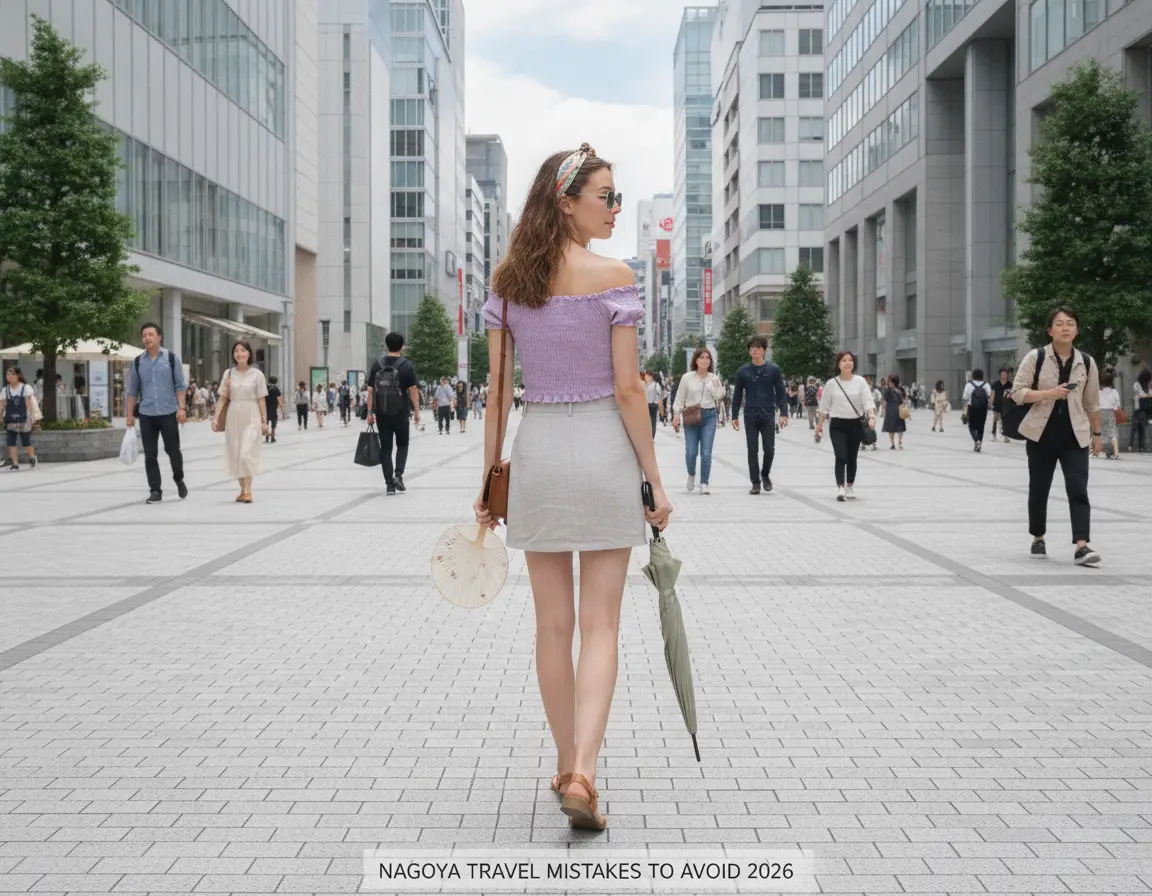
I did this wrong the first time. I treated Nagoya like a place I could power through in a day, and I ended up wasting money, heat, and a lot of walking for very little payoff. My answer now: Nagoya is worth it if you like efficient cities, food, and easy transit, but it’s not for people chasing postcard drama or trying to cram five famous stops into one afternoon. These are the Nagoya travel mistakes to avoid 2026 if you want the trip to feel smoother.
Quick Answer: Keep Nagoya simple: use Nagoya Station for arrival and departure, don’t buy a train pass unless your route really needs it, go to Osu early, and hit Nagoya Castle at opening if you want to avoid the worst crowds.
Main Tips
- My biggest Nagoya mistake was trying to stack too many stops around the station and Osu in the same hot afternoon. I lost 2 hours to backtracking and paid more in taxis and drinks than I needed to.
- I also blew money on a train plan that sounded smart online but didn’t match my actual route. That one cost me ¥1,840 extra, which is annoying when the regular fare would’ve been fine.
- Nagoya works best when I pick one neighborhood, eat well, and move slowly. It gets worse when I try to force it into a “big sightseeing” city.
- If you only have one full day, I’d keep the schedule simple and cut the extra detours. The city is better as a clean, practical day than a scavenger hunt.

I tried to turn Nagoya Station into a sightseeing base, and that was my first bad call

I figured staying near Nagoya Station would make everything easy. Trains, luggage storage, airport access, quick food, all of it sounded logical, and honestly that logic was sound. The problem was that I confused “easy to arrive” with “easy to enjoy.”
The trigger was simple: I kept starting and ending every outing at the station because it felt efficient. I’d pop out for one place, come back, then head somewhere else instead of grouping things properly. On paper, that sounds organized. In real life, it meant I was walking in circles in 23-29°C heat, umbrella in one hand, sunglasses on, sweating through a linen shirt I’d already worn too long.
The consequence was 90 minutes of pointless transit and at least ¥1,200 in extra drinks and one short taxi ride I didn’t need. I also missed the quieter part of the day in Osu because I was too busy resetting at the station. That part mattered more than I expected. The area felt more useful than interesting, and I kept paying for usefulness.
In hindsight, I’d still use Nagoya Station for arrival and departure, but I wouldn’t anchor the whole trip there unless I had a very short stopover. I’d split the day by area instead: station one day, Osu and Sakae another. That keeps the walking sane and stops the city from feeling like a relay race.
Best for: One-night stopovers, early trains, and people with luggage who want a clean arrival.
Skip if: You want atmosphere outside your hotel door. It’s practical, not charming.
My pick: Use the station as a base only if you’re treating Nagoya like a transit city.
I tried to “save time” with a train pass I didn’t actually need
I bought into the idea that a pass would make the trip smoother. I saw a few routes online, assumed I’d hop around more than I did, and thought the math would work out. It seemed fine because I had a full day and didn’t want to think too hard about fares.
The trigger was me buying coverage for a route pattern I never ended up using. Once I was actually in the city, I mostly rode short local segments and walked between nearby spots. The pass sat there doing a lot of nothing while I still paid for smaller transfers anyway.
The consequence was ¥1,840 wasted, plus the mental annoyance of trying to “make it worth it” all day. That’s the part people don’t mention enough. Bad transport choices don’t just cost money. They make you start optimizing your fun like it’s a spreadsheet, and that’s a drag.
My hindsight fix is boring but better: I’d just pay as I go unless I was doing a very specific set of longer rides outside the core city. For central Nagoya, I’d rather keep it simple and use IC card tap-ins. If you’re piecing together activity tickets and timed entries, I’d also book those ahead on Klook when the slot matters, because the line at the counter can be slower than the actual visit.
Best for: Travelers making one or two paid stops and not bouncing all over the prefecture.
Skip if: Your route is mostly downtown. You probably won’t earn the pass back.
My pick: Pay per ride in the city and save passes for trips with clear, expensive long-distance legs.
I overplanned Osu and ended up paying for the weather instead of the neighborhood

I expected Osu to be one of those places where you can drift around all afternoon, eat snacks, and let the streets do the work. That part was true. What I didn’t plan for was how much the weather would shape the day. It was hot, partly cloudy, and the rain from earlier in the week had left the sidewalks sticky in that annoying way that makes you feel damp even when it’s not raining.
The trigger was arriving too late in the morning and trying to keep my original plan anyway. I wandered into a few shops, bought a drink I didn’t really want just because I needed the cold bottle, then kept moving instead of slowing down. I should’ve sat first. I didn’t.
The consequence was two wasted hours and about ¥900 on random drinks and a convenience-store lunch that I ate standing up. I also skipped the part of Osu that actually has texture: the small food stalls, the secondhand stores, the side streets where people are just living their day. I kept chasing “more” and got less.
Hindsight: I’d go to Osu in the late morning, eat first, then stay put for a while. If I had to do it again, I’d spend ¥600 to ¥1,000 on one snack and one coffee, then walk slowly instead of trying to cover the whole district. Osu is worth it, but only if I stop treating it like a checklist.
Best for: Slow wandering, cheap food, and a low-pressure afternoon.
Skip if: You only like major landmarks. This area works by small details, not one big reveal.
My pick: Arrive hungry and early enough to sit before the heat gets annoying.
I went to Nagoya Castle at the wrong hour and paid for the crowds twice
I thought Nagoya Castle would be a clean, efficient stop. Big enough to matter, famous enough to justify the time, and easy to slot into a city day. That assumption was partly right, which is why this mistake annoyed me so much. The castle itself wasn’t the problem. My timing was.
The trigger was showing up when other people clearly had the same idea. I got there late enough that the lines, the walking, and the photo stops all started to stack up. I waited 25 minutes just to get through one bottleneck area, then another chunk of time disappeared while I tried to move around groups with no real pace. It felt less like visiting a site and more like standing in a slow-moving crowd with a castle in the background.
The consequence was 1 hour 45 minutes spent on something that could’ve been a cleaner 45-minute stop. I also paid ¥500 for entry and left feeling like the exterior was the real attraction. Not a disaster, just not worth the time I gave it.
My hindsight fix is specific: I’d go right at opening, or I’d skip the interior entirely and just walk the outside if I’m short on time. If the line looks longer than 30 minutes, I’m out. That rule saves me from pretending a crowded attraction is still a good use of the day.
Best for: Early risers and people who genuinely like castle interiors.
Skip if: You’re already tired from a packed sightseeing schedule. The payoff drops fast once the crowd builds.
My pick: Go early for the grounds, not late for the full interior experience.
I treated Nagoya food like a side quest, and that was the dumbest part of the trip

I figured I could eat wherever and focus on the sights first. That was the wrong order. Nagoya makes more sense through food than through a long list of “attractions,” and I didn’t get that until I’d already wasted time on generic meals near the station. One breakfast was a bland ¥780 set I barely remembered ten minutes later. That’s on me.
The trigger was skipping a proper lunch break because I thought I’d get to a better spot later. Later never came. I got hungry, grabbed whatever was closest, and then got annoyed that I was in a city with a real food identity but eating like I was anywhere else.
The consequence was ¥2,100 across two forgettable meals and one too-quick snack, plus the bigger loss: I missed the whole point of being there. The food I should’ve centered—hits like miso-katsu, hitsumabushi, and tebasaki—would’ve given the day more shape than another temple or shopping detour. I don’t love admitting that, but it’s true.
Hindsight: I’d build the day around one good lunch and one good dinner, then let the rest of the schedule bend around those meals. That’s the better use of Nagoya. It’s worth it if you’re willing to eat locally and not act like food is filler.
Best for: Travelers who care about lunch and dinner more than souvenir stops.
Skip if: You want a city that performs for you visually. Nagoya is better on the plate than in the skyline.
My pick: Plan the food first, then fit the sightseeing around it.
For a deeper look at nagoya hotel prices 2026, I covered this in my Nagoya Hotel Prices 2026.
For a deeper look at nagoya cherry blossom 2026 tips, I covered this in my Nagoya Cherry Blossom 2026 Tips.
If nagoya solo female travel tips 2026 matters to your trip, my Nagoya Solo Female Travel Tips 2026 has the specifics.
For a deeper look at nagoya capsule hotel guide solo 2026, I covered this in my Nagoya Capsule Hotel Guide Solo 2026.
If nagoya capsule hotels for budget travelers 2026 matters to your trip, my Nagoya Capsule Hotels For Budget Travelers 2026 has the specifics.
I tried to squeeze too much into one day, and Nagoya pushed back
I kept thinking I could do the station area, Osu, Nagoya Castle, and one more stop if I moved fast. That was the fantasy. The city is compact in some ways, but it still punishes sloppy routing. Every time I made a detour, I paid for it in heat, time, or a random snack I didn’t need.
The trigger was adding one more stop after I was already tired. I thought I could “just pop over” to another area because it looked close on the map. It wasn’t close once I factored in waiting, walking, and regrouping. Maps love to lie by omission.
The consequence was a full 2-hour chunk of the afternoon disappearing into transit and recovery. I also missed the calmer part of the city when it was actually pleasant to walk. That’s the real loss. Not one landmark. The feeling of the day.
My hindsight answer is simple: two major areas max in one day. Three only if one is a very short stop. And if I’m already carrying a fan, umbrella, and a half-melted bottle of water, I’m done adding things. That’s the line.
Best for: Short, focused city days where you want to leave with energy left.
Skip if: Your travel style is “cover everything.” Nagoya will make that feel inefficient fast.
My pick: Choose fewer stops and eat better. The city rewards restraint.
What I’d do differently next time
I’d slow down on purpose. That’s the main change. I’d also stop trying to make every transport choice “optimal” and just accept a few normal fares if the route is simpler.
I’d plan Nagoya around one food-heavy neighborhood, one castle or museum stop, and one flexible block for wandering. That would’ve saved me a couple of hours and probably around ¥3,000 in useless little expenses. Not a huge disaster, but enough to matter on a trip where I’m spending carefully.
Best for: Travelers who want an efficient city, good meals, and low-friction transit.
Skip if: You only care about big-ticket sightseeing and don’t want to plan around food or timing.
Next time: I’d do Nagoya in fewer blocks, eat better, and stop pretending the station should be my whole base.
Nagoya is worth it when I treat it like a city to move through, not a trophy to collect. If I had more time, I’d stretch the food stops and cut the extra sightseeing. That’s the cleaner trip for Nagoya travel mistakes to avoid 2026.
I thought staying near Nagoya Station would make everything convenient, but I ended up using it as a reset point between every single outing instead of planning a proper route through neighborhoods. That meant 90 minutes of wasted transit time and an extra ¥1,200 on drinks and taxis I didn’t need, plus I completely missed the quieter morning hours in Osu when it actually feels worth visiting.
I figured a rail pass would save money since I’d read so much about Nagoya’s train system online, but it cost me ¥1,840 extra because my actual route didn’t match the coverage I paid for. The lesson is simple: calculate your real movements first, then decide on a pass—don’t buy the pass and hope it fits.
I usually book Nagoya tours on Klook — the best time slots go fast, especially in peak season.
FAQ
Is Nagoya worth a full day, or should I just pass through?
Yes, it’s worth a full day if you like food and easy transit. I wouldn’t give it more than that unless you’re adding specific museums or side trips, because the city works best when the schedule stays simple. If your trip is packed already, I’d keep it to one day and move on.
Do I need a train pass for getting around Nagoya?
No, I wouldn’t buy one for central Nagoya alone. My own mistake was paying extra for a pass that didn’t match my actual route, and I wasted ¥1,840 doing it. An IC card and pay-as-you-go fares make more sense unless you’re making longer out-of-city rides.
Is Nagoya Castle worth the entry fee?
Yes, but only if you go early. I paid ¥500 and the castle was fine, but the crowd made the whole visit drag once the line started building. If you arrive late, I’d skip the interior and just walk the grounds.
What’s the biggest mistake first-time visitors make in Nagoya?
The biggest mistake is trying to fit too much into one day. I lost about 2 hours to backtracking and extra transit when I tried to stack too many stops, and the whole trip felt more tiring than it needed to be. Two main areas in a day is the limit I’d use.
Should I focus on sightseeing or food in Nagoya?
Food, easily. I got more out of the trip when I centered meals like miso-katsu and tebasaki instead of treating food as a break between sights. If I were going back, I’d build the day around lunch and dinner first, then fit the rest around that.
 Emma Hayes