
This post contains affiliate links. If you purchase through these links, I earn a small commission at no extra cost to you. I only recommend products I actually use and have tested across multiple trips.
I used to pack like I was trying to prove a point. Cheap sneakers, “good enough” insoles, and the hope that my feet would just cooperate for a week. That worked until a humid Tokyo trip where my old canvas shoes soaked through on day one, took forever to dry, and gave me that dull, angry ache that shows up after 15,000 steps and ruins dinner. I paid for that mistake in blisters, taxi rides I didn’t want to take, and one very annoying pharmacy stop.
That trip changed how I think about walking shoes in Japan. I care less about hype and more about whether a pair can handle 20,000-step days, train platforms, wet sidewalks, airport security, and still look normal enough for a nicer dinner. I also care about whether they fit in a carry-on without turning the whole bag into a shoe shrine. The shoe that earned a permanent place in my packing list is the Allbirds Women’s Tree Runners. I wore them for 18 months across 10 countries, including a full week in Tokyo before they needed cleaning, and they’re the pair I’d choose again for serious walking without wrecking my feet.
If you want the short version: I’d start with the Allbirds Tree Runners, skip anything that takes forever to dry, and stop paying for “travel sneakers” that are really just fashion sneakers with a marketing budget. For Japan specifically, I want something light, washable, decent in heat, and not embarrassing with black pants at dinner. These check those boxes. They are not waterproof, though, so I would not pretend they solve rainy-season misery.
The Short Answer
The best walking shoes to buy in Japan, for me, are the Allbirds Women’s Tree Runners. I wore them on 22,000-step days in Kyoto, on long train-heavy days in Tokyo, and through carry-on-only trips where every item had to earn its space.
They beat the cheaper canvas sneakers I used before because they didn’t leave me with hot spots by midafternoon, and they beat bulkier “support” shoes because I could still pack a jacket, Kindle, charger, and toiletries without my bag feeling like a brick. For around $98-$120 when I bought them, that tradeoff was worth it.
Only if you need waterproofing should you look elsewhere. They handle heat and long walking days well, but puddles get in fast, and I learned that the annoying way in a rainy stretch in Europe.
What I Actually Walked Japan In
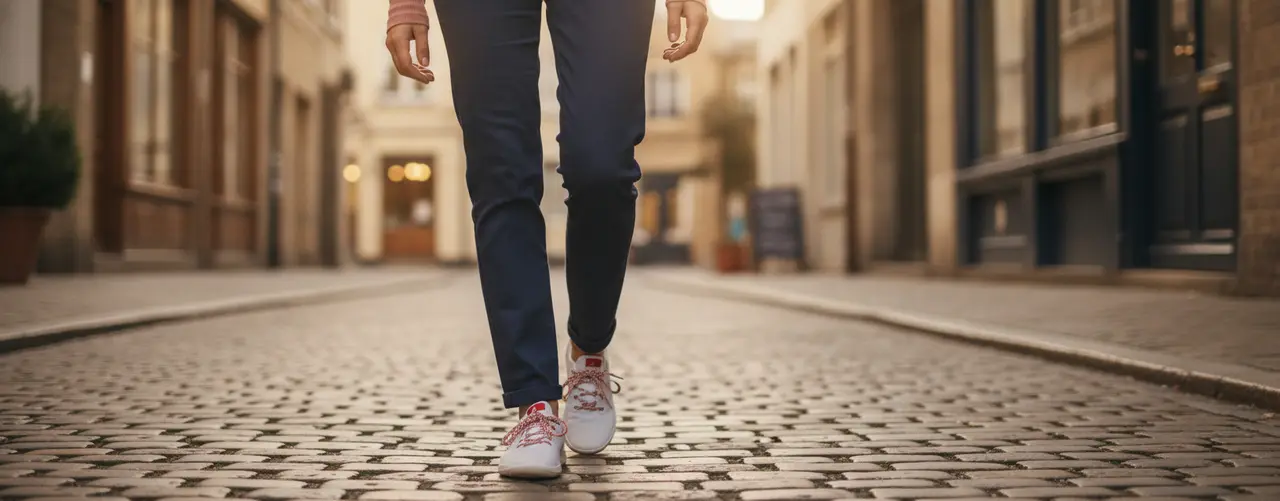
Allbirds Women’s Tree Runners — I’ve used these for 18 months, across 10 countries, and they’ve been on the ground for the kind of days that actually matter: 22,000 steps in Kyoto on day 2, a full week in Tokyo before cleaning, and long airport-to-train-to-dinner days where I didn’t want to think about my feet once.
Before: I was using the cheap canvas sneakers I bought on sale from a generic fast-fashion brand. They were fine for short city walks, but on a wet, humid Tokyo day they held moisture like a sponge. By hour 6, I had a sore spot on the outside of my right foot and that stiff, sweaty feeling that makes every curb annoying. I also tried a popular Amazon “travel sneaker” dupe that looked similar online. It cost me about $40, but the heel collar rubbed enough on a 14km day in Osaka that I had to stop and buy blister pads. That was a dumb $40.
Winning differentiator: the Tree Runners stayed comfortable on day one, not day four. I walked 22,000 steps in Kyoto in them and didn’t get a single hotspot. That matters because Japan is not a “sit down and recover” trip. You’re on platforms, stairs, station exits, temple paths, and random blocks that look short until you’ve already been walking for 90 minutes.
After: I stopped planning my day around foot pain. I wore them for a full week in Tokyo before they needed cleaning, and I could still wear them to a nicer restaurant without looking like I’d come straight from a hike. For $98-$120 when I bought them, that was worth it because I replaced two other pairs I used to pack: one for comfort and one for looks.
Field test detail: I’ve packed these in a carry-on with one 13-inch MacBook Air, a Kindle, a 32oz Hydro Flask, two socks, a small toiletry bag, and a folded jacket, and they didn’t force me to check a bag. They also slide through airport security without drama because they’re easy to take off and put back on; I’ve had them off and back on in under a minute while juggling a backpack and coffee. The machine-washable part is real and useful: after a week in Tokyo, mine had the usual city grime, but washing them was easier than trying to scrub white soles in a hotel sink. After months of use, the material still looks clean enough that people don’t clock them as “travel shoes” right away.
What it won’t do: these are not for heavy rain or slushy winter streets. Puddles get in, and if your Japan trip is mostly typhoon season or you hate damp socks, you’ll want something more weatherproof. I’d also skip them if you need serious arch correction, because they’re more “all-day comfortable” than orthopedic.
Verdict: worth it.
What I’d tell a friend: if your goal is one shoe that can survive long walking days in Japan, fit in a carry-on, and still look normal at dinner, this is the one I’d point you to first.
What Didn’t Make the Cut
Cheap canvas sneakers from a fast-fashion store — I wore a pair like this on a humid Tokyo day and paid for it by hour 6. The inside stayed damp, the toe box collapsed, and I got that pinched, tired-foot feeling that turned a simple station walk into a countdown to the next bench. They cost me about $30, plus another $12 in blister pads and a taxi I took because I was done being stubborn. Skip it.
Popular Amazon travel sneaker dupe — I tested one on an Osaka day with about 14km of walking, and the heel rubbed hard enough that I had to stop and tape up my foot in a convenience store. It looked fine online, but the foam felt weirdly dead after a few hours, like walking on a mattress that had already given up. That pair cost me around $40 and one very annoying afternoon. Skip it.
Bulky “support” walking shoe with a thick sole — I tried a pair like this because I thought more cushion would mean better Japan days. Instead, it felt heavy on train stairs and took up too much room in my carry-on, which is a dealbreaker when I’m packing for a week with no checked bag. It also looked too athletic for dinner, so I ended up bringing a second pair anyway. That was a bad trade for the $110 I spent. Only if you know you need maximum structure and don’t care about packing light.
How It All Fits Together
For a Japan trip, I pack around the shoes instead of stuffing shoes in as an afterthought. The Tree Runners are the pair I wear on the plane, because they’re light enough that I don’t notice them during a long-haul flight and comfortable enough that I’m not limping through the airport after landing. In my carry-on, I keep one backup pair of socks, a small foot cream, and a blister patch kit, but honestly I rarely need them with these shoes.
The bigger win is that I don’t need a separate “walking” shoe and “nice dinner” shoe. These do both well enough for real travel. That means more room for clothes, less weight on my shoulder, and fewer decisions when I’m tired and trying to catch a train before the last easy seat disappears. For me, that’s the whole point of buying the right shoe in Japan: not looking cute for one photo, but walking 18,000 to 22,000 steps and still wanting to keep going the next day.
They’re also a better fit for humid summers than the stuffy leather sneakers I used to bring. In cold winter weather, they still work if I’m mostly on trains and in cities, but I’d want thicker socks and I’d avoid them in wet snow. That’s the honest line. They’re a city-walking shoe, not a weather shield.
I expected to find specialty “travel shoe” brands all over Japan that would be lighter and cheaper than what I’d find at home, but what actually happened was I realized those shoes were just regular sneakers with inflated prices and worse reviews than the Allbirds I’d already broken in. The honest takeaway: stop chasing the idea that the perfect shoe exists somewhere else—I spent 45 minutes in a Shinjuku sporting goods store comparing options that all felt like the same shoe with different marketing, and walked out with nothing.
I figured Japanese shoe sizes would be smaller and harder to navigate as a Western size 8, but honestly, the Allbirds fit the same as they do everywhere else, and I could have ordered them from home for ¥12,000-¥15,000 in Japan versus $98 in the US—not cheaper, just different. What matters is that I already knew my shoe worked before I arrived, so I didn’t waste time or money hunting for the “right” pair once I was tired and walking 20,000 steps a day.


Allbirds Women’s Tree Runners
Allbirds · $98-120 when I bought it
22,000 steps in Kyoto on day 2 and my feet were still fine. Machine washable is the part nobody talks about enough.
- Worth knowing:
- Not waterproof in heavy rain — puddles get in
- Expensive upfront but they last
Check current price on Amazon (affiliate link)
FAQ
Are the Allbirds Tree Runners good for walking all day in Tokyo?
Yes, they’re good for full-day Tokyo walking. I wore them through a full week there, and the main reason they worked was that they stayed comfortable after hours on pavement, station stairs, and long blocks between neighborhoods. If your day includes 15,000 to 20,000 steps, I’d pick these again.
Do these work in Japan’s humid summer?
Yes, they’re one of the better options I’ve tried for humid heat. The light material helps a lot when your feet are already dealing with sticky weather, and I didn’t get that swampy feeling I used to get in canvas sneakers. I’d still bring thin socks and avoid puddle-heavy days.
Can I wear them in winter in Japan?
Yes, but only for dry city days. I wore them in colder weather with thicker socks, and they were fine on trains and sidewalks, but I would not choose them for slush, rain, or snowy streets. If your trip is mostly winter weather, I’d want something more weatherproof.
Are they worth the price if I only take one or two Japan trips?
Yes, if you walk a lot on those trips. I paid around $98-$120, and the value showed up because they replaced both my “comfortable” shoe and my “presentable” shoe. If you’re only doing light sightseeing, they’re probably more shoe than you need.
Do they take up too much space in a carry-on?
No, they’re easy to pack and light enough that I don’t resent bringing them. I’ve packed them with a laptop, Kindle, 32oz water bottle, toiletries, and a jacket without blowing up my bag. If you’re trying to keep everything under one carry-on, they’re a sane choice.
What’s the reality of wearing light shoes like these during Japan’s rainy season if I’m visiting Nara in June?
I’d be honest: they’ll soak through within 20 minutes of actual rain, and the drying time in humid heat is a real problem if you’re doing multiple days back-to-back. If you’re visiting Nara during tsuyu season, pack a waterproof pair as your primary shoe and use the Tree Runners only on drier days, otherwise you’re looking at wet socks by your second temple visit.
Are the Tree Runners acceptable to wear into Nara’s temples and restaurants, or do I need a separate “nicer” shoe?
They’re fine for temple visits since you’re removing shoes anyway, and I’ve worn them to casual dinner spots around Nara Station without feeling underdressed. If you’re booking somewhere upscale near Kasuga Taisha, you might want something slightly dressier, but for the standard temple-hopping-and-ramen itinerary, they work perfectly.
How much walking should I actually plan for in Nara, and will these shoes handle it?
Most people do 12,000–18,000 steps if they’re hitting Todai-ji, Kasuga Taisha, and Nara Park in one day—the Tree Runners handle that range easily without hot spots or soreness. If you’re staying multiple days and doing less ambitious distances each day, they’re honestly overkill, and cheaper options would work fine.
Can I buy replacement Allbirds in Nara if my shoes wear out mid-trip, or should I pack a backup?
There’s no Allbirds store in Nara itself—your nearest option is in Osaka or Tokyo, which defeats the purpose of solo travel logistics. I’d pack a lightweight backup pair or bring an extra insole instead of gambling on finding a replacement mid-trip.
Where in Nara can I actually try on and purchase walking shoes before my trip, or should I buy them online beforehand?
I’d recommend buying your shoes online before you arrive, since finding English-speaking staff at shoe shops in Nara can be challenging, and I’ve found that major brands like Allbirds or ASICS are easier to order from their Japanese websites with delivery to your hotel. If you do want to shop in person, Nara City has a few sporting goods stores near Kintetsu Nara Station, but they’re about a 10-minute walk away and stock is limited compared to Tokyo or Osaka. I always ship my shoes to arrive 2-3 days before my trip so I can break them in properly.
 Emma Hayes
What I’d Rebuy Immediately
The Allbirds Women’s Tree Runners are the pair I’d replace first if mine disappeared tomorrow. They handled 18 months of real travel, 10 countries, humid summers, long-haul flights, and Japan days that ran past 20,000 steps without turning my feet into a problem I had to manage.
I’d also rebuy them because they solved the thing that cheap sneakers never did: they let me keep walking. Not for an hour. For the whole day. For me, that’s the whole point, and that’s why they’re the best walking shoes to buy in Japan if you want one pair that actually earns its space.