
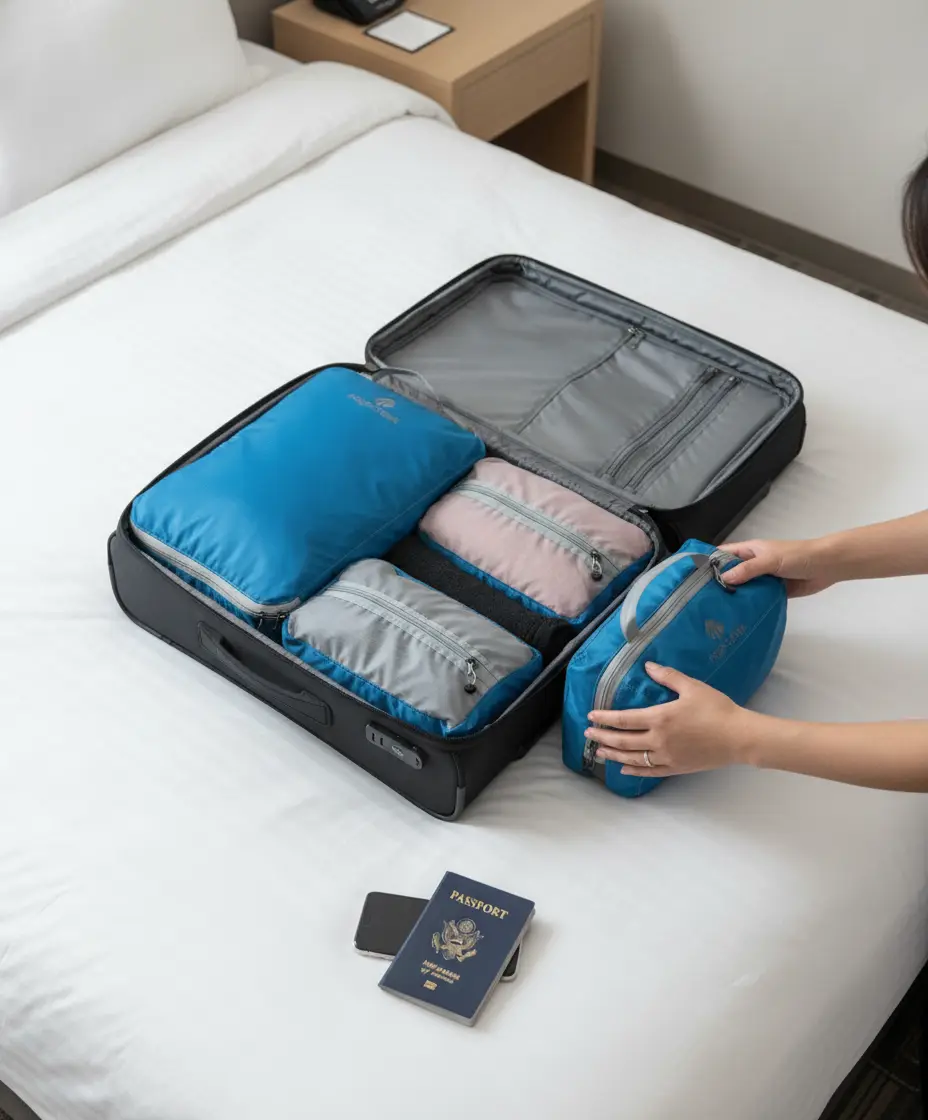
This post contains affiliate links. If you purchase through these links, I earn a small commission at no extra cost to you. I only recommend products I actually use and have tested across multiple trips.
I used to pack like I was trying to win a prize for overthinking. I’d bring a random zip pouch, toss vitamins in a corner, then spend half a trip shaking a bottle into my palm on a train platform or in a hostel bathroom with bad lighting. On a 12-day carry-on-only trip through Spain and Portugal, I lost two capsules into the bottom of my toiletry bag and wasted ten minutes digging them out with a hair tie. That was the moment I stopped pretending “good enough” was good enough.
Now I care about one thing: does a travel organizer actually save space, time, and annoyance in a carry-on? The Eagle Creek Pack-It Specter Compression Cube Set did that for me in a way the cheap stuff never did. I’ve used it for 2 years across 18 countries, and I still reach for it first when I’m packing for a week or more. For around $25-45 when I bought it, I got the kind of packing cube that makes a 40L bag behave like it has more room than it should.
The shift for me was simple. Before, I was the person repacking my bag on the floor because my clothes and little extras kept migrating everywhere. After I started using this set, I could pack 7 days of clothes into one 40L bag, close it without sitting on the zipper, and know exactly where my socks, tees, and backup layer were. That’s the difference between a carry-on that works and one that turns into a mess by day two.
The Short Answer
If you’re packing carry-on only and want fewer packing headaches, I’d start with the Eagle Creek Pack-It Specter Compression Cube Set. It cut my packing time from 40 minutes to 15, and the compression actually works, which is rare. I’d call it worth it for week-long trips, humid summers, and long-haul flights where you want your bag organized without adding bulk.
I’d skip the flimsy budget cubes that collapse the second you zip them. I’d also skip anything that looks cute but has a weak zipper, because that’s the part that fails when you’re rushing through an airport. If you want one honest limit up front: this set won’t save bulky winter clothes, so if your bag is full of sweaters and boots, the compression won’t feel magical.
What I Actually Pack in Carry-On Only

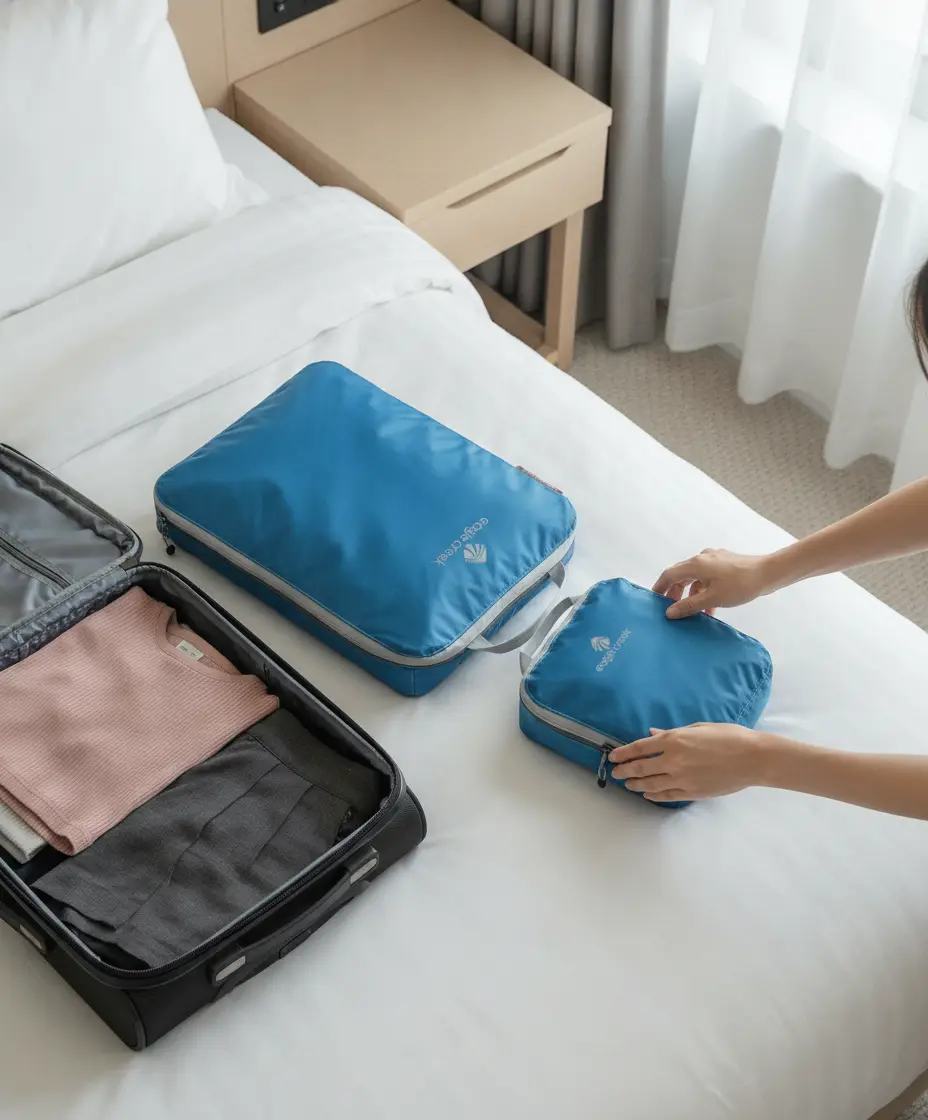
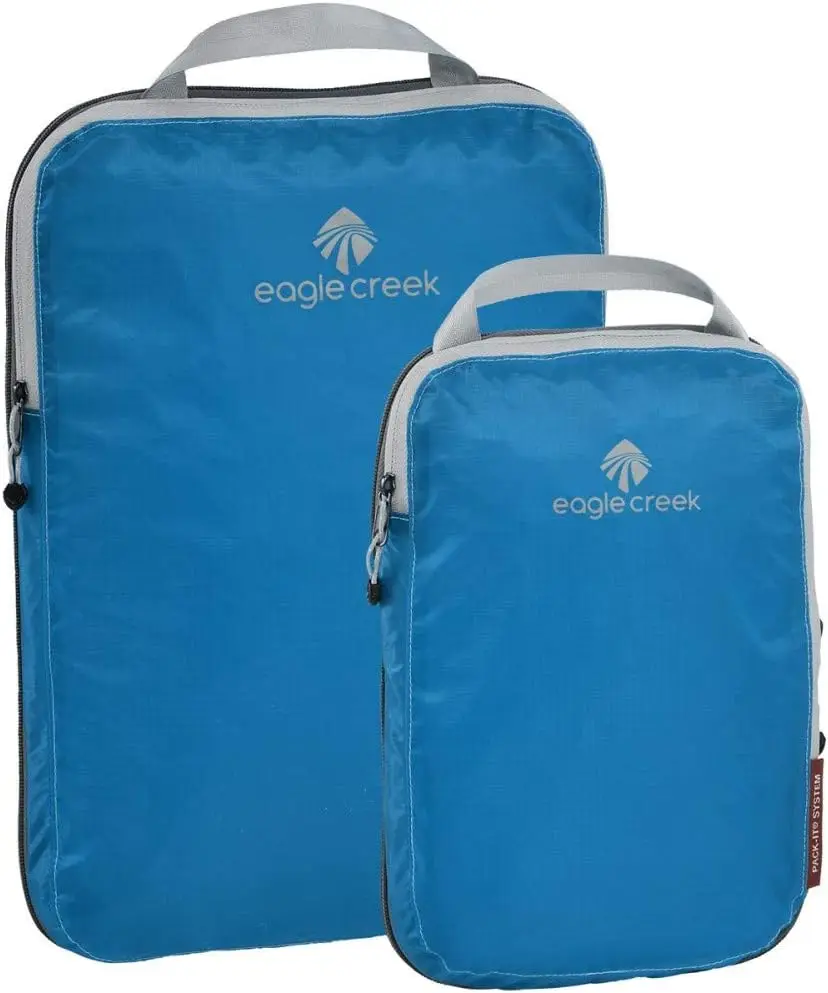
Eagle Creek Pack-It Specter Compression Cube Set
Eagle Creek · $25-45 when I bought it
Cut my carry-on packing time from 40 minutes to 15. The compression version actually works — I fit 7 days of clothes into a 40L bag.
- Worth knowing:
- Compression doesn’t help with bulky winter clothes
- The zipper needs to be handled carefully
Check current price on Amazon (affiliate link)
Eagle Creek Pack-It Specter Compression Cube Set is the one organizer I’ve kept after trying cheaper cubes first. Before this, I used a no-name Amazon cube set that cost me about $18. It worked for one trip to Mexico City, then the zipper snagged hard on day 4 and one cube split at the seam when I tried to compress a stack of T-shirts and underwear into my 35L bag. I spent 20 minutes repacking on the hostel bed and ended up stuffing the torn cube into a trash bag for the flight home. That was $18 wasted, plus the time and stress.
The winning difference is the compression zipper actually doing its job without turning the cube into a brick. On a 9-day trip to Italy, I packed 7 tees, 2 pairs of shorts, 1 lightweight sweater, 7 pairs of underwear, and 7 pairs of socks into the set and still had room left in my 40L bag for toiletries and a Kindle. At airport security in Lisbon, I pulled the cube out, zipped it back in one motion, and didn’t have to rebuild my whole bag at the tray table. That sounds small, but when you’re moving through three airports in a week, it matters.
After 2 years, the result is boring in the best way: I pack faster and I stop overstuffing my carry-on. I went from 40 minutes of packing and repacking to about 15 minutes, and I’ve kept my bag under the overhead-bin limit on every trip where I used this set. If you’ve ever found yourself sitting on a suitcase because you thought “one more shirt” wouldn’t matter, this is worth it.
Field test-wise, the mesh top is the part I use constantly. I can see a black tank, white tee, and underwear cube at a glance without opening everything, which saves me in hotel rooms when I’m half asleep. The cube held a week of summer clothes easily, but when I tried it with bulkier winter layers in Berlin, the compression barely helped and the cube got too chunky to feel efficient. That’s the edge case: it’s great for travel clothes, not magic for puffy knits.
The zipper is the one thing I baby. I’ve learned not to yank it if the cube is overfilled, because that’s when it starts to complain. After 2 years, the material still looks clean and hasn’t started fraying, but the zipper needs careful handling. I’d call it worth it if you travel with mostly light-to-medium fabrics; I’d pass if your packing list is heavy on sweaters, fleece, or anything bulky.
What it won’t do: it won’t compress winter clothing into nothing, and it won’t forgive rough zipper handling. If you’re hard on gear or you pack thick layers year-round, this is only a partial fix.
What Didn’t Make the Cut
The cheap Amazon dupe packing cubes were my first mistake. I used them on one 6-day trip and one weekend hop before the zipper snagged and the seam split while I was trying to compress a full cube of shirts. That failure cost me $18, about 20 minutes of repacking, and one very annoying night in a hostel where I had to keep my socks in a plastic grocery bag. The problem wasn’t just durability; the cubes also felt floppy, so they didn’t keep my bag as tidy by day 3. Skip them.
The $30 drugstore-style packing cube set I tried in California was fine for storage at home and useless for real travel. I used it on a short winter trip to Chicago, and the zipper felt stiff right away, then got worse when I tried to pack a sweater and jeans together. It didn’t tear, but it also didn’t compress enough to matter, which meant I still had to sit on my carry-on to close it. For $30, that’s not enough value. Only if you’re using cubes as drawer dividers at home.
The popular TikTok packing cube set looked smarter than it was. I used it for 2 trips, including a humid summer week in Miami, and the fabric held moisture longer than I liked after I packed damp laundry in it one night. The cube itself wasn’t broken, but the whole bag smelled stale by the next morning, and I had to air it out for hours. That’s not what I want from something that lives inside a carry-on. Skip it unless you never deal with humid climates or sweaty laundry days.
How It All Fits Together
For carry-on only travel, I pack the Eagle Creek cube first, then build around it. One cube gets tops and underwear, another gets sleepwear or a lightweight layer, and the rest of the bag stays open for toiletries, chargers, and shoes. That setup keeps me from doing the classic travel mistake of mixing clean clothes with random loose items, which is how bags become annoying fast.
The real win is that I can open my bag without detonating it. On a long-haul flight, I usually keep one cube near the top so I can grab a fresh shirt or socks without unpacking everything at 1 a.m. If I’m moving through multiple cities, the mesh top means I know what’s where even in a dim hostel room. That’s worth more to me than a cute travel system.
I also like that this cube set works across seasons as long as I’m realistic. In humid summers, it keeps my clothes contained and easy to find. In cold winters, I just stop expecting compression to solve bulk. That honesty is why I still use it. It does one job well instead of pretending to do everything.
I expected a compact pill organizer to be just another thing taking up space in my Nagoya hotel drawer, but what actually happened was I found a ¥1,200 weekly vitamin dispenser at a pharmacy in Sakae that fit perfectly into my toiletry cube—and for the first time on a trip, I didn’t lose a single B-complex capsule or spend 5 minutes hunting through my bag for my iron supplement. The real takeaway: the right organizer doesn’t just save space; it saves you from the small frustrations that add up when you’re solo and managing your own health across time zones.
FAQ
Is this packing cube set good for a 1-week trip?
Yes, it’s great for a 1-week trip if you pack light and repeat outfits. I’ve fit 7 days of clothes into a 40L bag with this set, which is the whole reason I kept it. If you overpack “just in case” items, you’ll still run out of room.
Does the compression actually save space, or is that just marketing?
Yes, it actually saves space, and I noticed it on trip one. The difference showed up when I packed a week of summer clothes and still had room for toiletries and a Kindle in my carry-on. It’s not magic for bulky layers, but for normal travel clothes it works.
Would I use this for winter travel too?
I’d use it for winter only if my wardrobe is mostly thin layers. I tried it with sweaters in Berlin and the compression barely helped, so I wouldn’t count on it for heavy cold-weather packing. For coats and thick knits, you’ll need more bag space than this can create.
How does it hold up in humid weather?
It holds up well in humid weather, and I’ve used it through sticky summer trips without the cube itself getting gross. The mesh top helps me see what’s inside, and I like that I can separate clean clothes from damp odds and ends. I still wouldn’t pack wet laundry inside it for long, because no cube likes that.
Is it worth paying more than the cheapest cubes on Amazon?
Yes, because the cheap ones are where I wasted money first. I had a low-cost set fail on a trip and a zipper split cost me time, stress, and an $18 replacement I didn’t want to buy twice. I’d rather pay around $25-45 once for something that keeps working across 18 countries.
 Emma Hayes
What I’d Rebuy Immediately
If I lost my travel gear tomorrow, I’d rebuy the Eagle Creek Pack-It Specter Compression Cube Set first. It’s the rare organizer that actually saves time, keeps a carry-on sane, and doesn’t fall apart when I’m moving fast. I’d also rebuy it because I’ve already tested the cheap alternatives, and they were a waste of money.
The short version: I’d keep this for warm-weather trips, long-haul flights, and carry-on-only packing where every inch matters. I’d skip it for heavy winter wardrobes. For the way I travel now, that tradeoff is worth it.