

This post contains affiliate links. If you purchase through these links, I earn a small commission at no extra cost to you. I only recommend products I actually use and have tested across multiple trips.
I used to pack shoes like I was trying to outsmart my own feet. I’d bring the cute pair, the “good enough” pair, and one backup pair that always ended up taking half my carry-on. Then I’d land somewhere humid, or cold, or just walk 18 kilometers on day one because I got greedy, and I’d remember that bad shoes are a tax on every trip.
The shift happened after a week in Tokyo. I had a pair that looked fine in photos but gave me that annoying hot-spot feeling by the end of a long day, and I was done making room for shoes I had to babysit. Since then, I’ve cared way more about one thing: what survives serious walking without wrecking my feet, especially when I’m packing carry-on only and dragging myself through airports, train stations, and random sidewalks in weather that changes for no one.
That’s where Allbirds Women’s Tree Runners earned their place. I wore them for 18 months across 10 countries, and they kept doing the boring, useful job I wanted. Not glamorous. Just steady. And for me, that’s worth more than a shoe that looks better on Instagram and falls apart on kilometer 6.
The Short Answer
If you want one shoe for walking-heavy trips, I’d start with Allbirds Women’s Tree Runners. I wore them for a full week in Tokyo before they needed cleaning, and they handled 22,000 steps in Kyoto on day 2 without my feet complaining. They’re not waterproof, so I skip them in heavy rain, but for humid summers, long airport days, and city walking, they’re the pair I kept reaching for.
My quick take: worth it if you want one minimal sneaker for serious walking and you hate break-in drama. Skip it if you need true rain protection. And if you’re choosing between “cheap now” and “replace later,” I’d take the pair that lasted 18 months instead of burning money on two weaker ones.
What I Actually Wore on My Feet
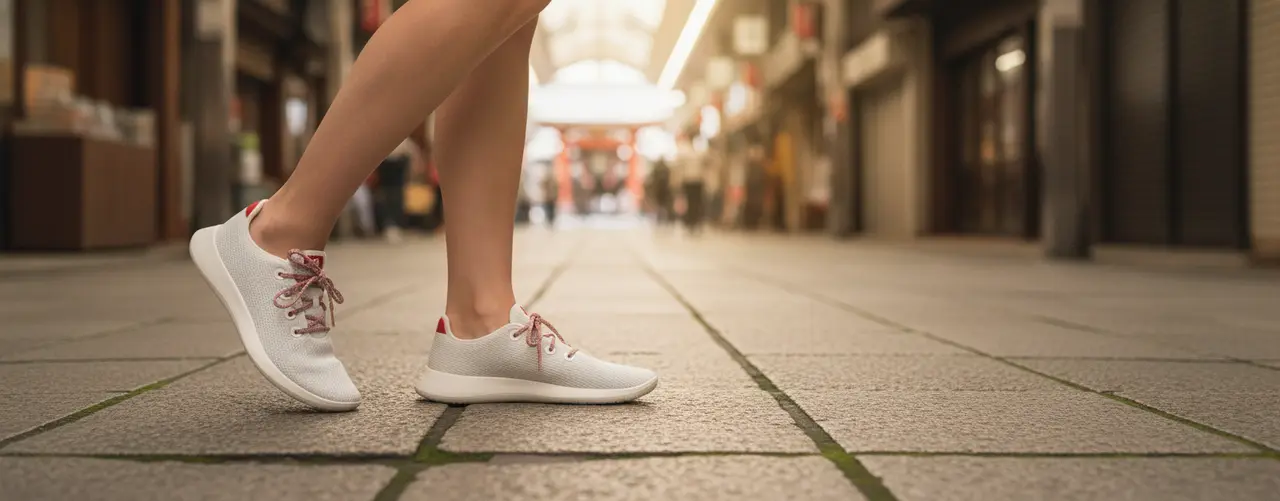
Allbirds Women’s Tree Runners were the shoe that replaced my usual cycle of buying something cheaper, regretting it, and then overpacking a second pair. Before these, I tried a $30 drugstore sneaker and a popular Amazon dupe that looked close enough online. The drugstore pair gave me a hot spot on the outside of my right foot by the end of a long walking day in Lisbon, and I spent $30 plus a miserable afternoon limping around a tram stop. The dupe felt fine for one airport day, then the sole started feeling flat and dead after I walked from a station to my hotel in summer heat. That was the moment I stopped pretending “good enough” was good enough.
The winning difference with the Tree Runners was simple: no break-in period for me. I wore them straight into a full day of walking in Kyoto, hit 22,000 steps on day 2, and my feet were still fine at dinner. That mattered because I was already carrying a 13-inch MacBook Air, a Kindle, a 32oz Hydro Flask, and a jacket in my day bag, so I didn’t want my shoes adding another layer of annoyance. The day I noticed they were actually different was the day I kept walking after lunch instead of heading back early to save my feet. That’s the real test.
After that, the problem I’d been having mostly disappeared. I stopped packing backup sneakers for city trips, which saved space in my carry-on and saved me from making dumb shoe choices based on fear. For $98-$120 when I bought them, they were worth it because I got 18 months of use across 10 countries before I felt like replacing them. That’s a better cost-per-trip than the cheaper pairs that died fast and still made me pay in blisters.
Field test details matter here. I wore them for a full week in Tokyo before they needed cleaning, and the machine-washable part is not marketing fluff to me. After a wash, they came back looking normal, not stiff or weird. They also look minimal enough that I wore them to a nicer restaurant without anyone clocking them as technical sneakers, which is useful when you only packed one pair and don’t want to look like you got dressed in the airport.
The fit is also practical. I could wear them with thin socks on a warm day and still not feel cramped after a long walk, but they weren’t sloppy when I moved fast through a station. The edge case is rain: they are not waterproof, and puddles get in. I learned that the annoying way in wet weather, and I wouldn’t take them to a trip where I knew I’d be sloshing around in heavy rain all day. That’s the limit. If your trip is mostly dry city walking, they’re worth it. If you need weatherproof shoes, they’re the wrong tool.
Verdict: worth it for carry-on travelers who want one walking shoe that can handle all-day city miles, airport days, and humid weather without a break-in period. It won’t work if you need real rain protection or if you want a soft, squishy shoe that feels like a running sneaker. I’d still rebuy these before I’d gamble on another cheap pair that looks okay for 3 days and then turns into a foot problem.
What Didn’t Make the Cut
The $30 drugstore sneaker was my first mistake, and I paid for it in Lisbon. I wore it on a long walking day, got a hot spot on my right pinky by kilometer 6, and spent the rest of the day protecting one foot like it had a personal grudge. It cost me $30 plus one ruined afternoon, and the only thing I got out of it was a reminder that cheap shoes can be very expensive in the wrong city. Skip it.
The popular Amazon dupe sneaker looked like a smart buy until the sole went flat after one summer airport-to-hotel day. I had it on for a long-haul flight, then walked straight from the station to my place in heat, and my feet felt beaten up by the time I got there. It was fine for about 8 hours, then it stopped feeling supportive and started feeling like cardboard with laces. Only if you need a one-time backup for very light walking.
A basic fashion sneaker from a mall brand was the worst tradeoff for me because it looked good and walked badly. I wore it on a cold winter trip where I expected to do a lot of indoor-outdoor walking, and by the second day I was already thinking about blisters instead of the trip. I wasted the money and still ended up carrying my backup shoes, which is exactly the kind of packing nonsense I’m trying to avoid. Skip it unless you’re mostly sitting still.
How It All Fits Together
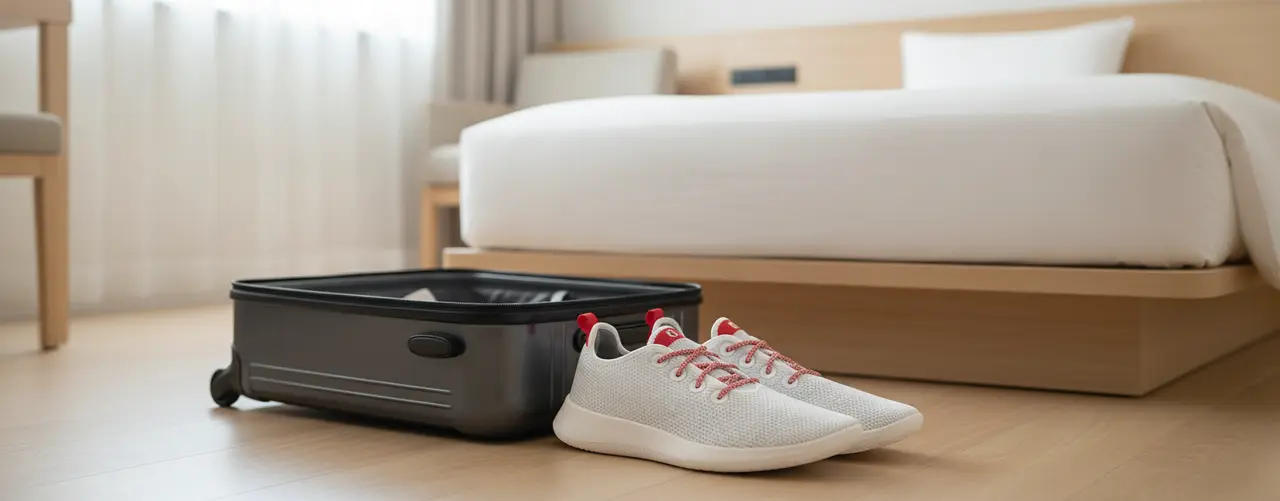
For carry-on only trips, I want one shoe that can do the work of two. The Tree Runners handled my walking-heavy days, airport security, and the kind of transit where I’m in and out of stations all day. I like that I can pack them with one clean outfit, a compact day bag, and still have room for the basics instead of sacrificing half my luggage to footwear.
My usual setup is simple: Tree Runners on my feet, one extra pair of thin socks in the bag, and no second sneaker unless I know I’m going somewhere wet. That keeps me from overpacking. It also means I’m not making room for a “just in case” shoe that I never actually wear. The only time I’d change the setup is for true winter slush or a trip with heavy rain, because that’s where these hit their limit fast.
They also work better than I expected on long-haul travel days. I don’t want a shoe that feels stiff after sitting on a plane for 11 hours and then walking straight into a city. These didn’t give me that trapped, swollen-feet feeling once I got moving again, which is a very unglamorous but very real win.
I thought one pair of walking shoes would be enough for Nagoya, especially since I’d done fine with Allbirds in Tokyo, but the humidity hit different—75% that week—and my feet were swelling by hour 4 of any serious walking day. What actually happened is I ended up in a konbini at 6 PM buying compression socks for ¥800 and rethinking my whole approach to shoe choice in Japanese summer. The honest takeaway: even your best shoe needs a backup plan when the weather is working against you.
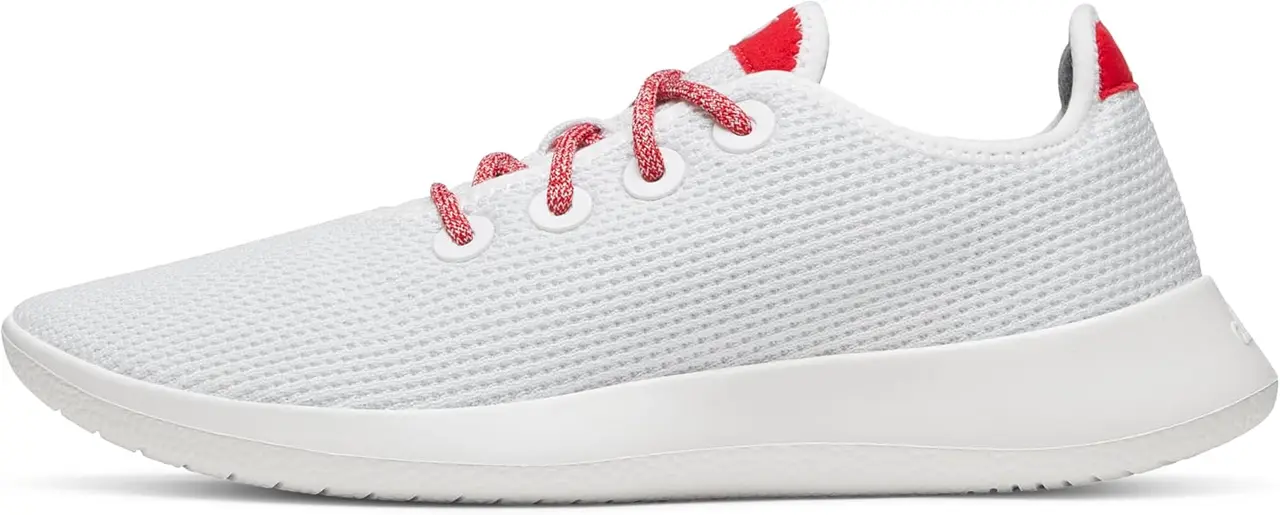
Allbirds Women’s Tree Runners
Allbirds · $98-120 when I bought it
22,000 steps in Kyoto on day 2 and my feet were still fine. Machine washable is the part nobody talks about enough.
- Worth knowing:
- Not waterproof in heavy rain — puddles get in
- Expensive upfront but they last
Check current price on Amazon (affiliate link)
FAQ
Are Allbirds Tree Runners good for all-day walking?
Yes, they are. I wore them for 22,000 steps in Kyoto and a full week in Tokyo, and my feet held up without the usual hot-spot drama. If your trips are mostly city walking and transit, they make sense.
Can I wear them in hot, humid weather?
Yes, and that’s where they worked best for me. I wore them in humid summer conditions and they stayed comfortable on long days, which is more than I can say for the cheap sneakers I tried first. I’d still bring quick-drying socks if you run warm.
Are they okay for winter trips?
Only if winter means cold sidewalks, not slush and wet snow. I used them on cold-weather city days, but they are not the shoe I’d pack for heavy rain or messy streets. If your winter trip is damp, I’d choose something more weatherproof.
Do they replace both walking shoes and casual sneakers?
Yes, for me they do. I wore them to a nicer restaurant in Tokyo without feeling underdressed, and they still handled long walking days the next morning. That kind of flexibility is exactly why I kept them in rotation for 18 months.
Are they worth the higher upfront price?
Yes, if you actually walk a lot. I paid around $98-$120 when I bought mine, and they outlasted the cheaper pairs that caused pain and got tossed early. If you only wear sneakers a few times a month, I’d save the money.
 Emma Hayes
What I’d Rebuy Immediately
The one thing I’d rebuy without thinking is the Allbirds Women’s Tree Runners. They survived 18 months, 10 countries, long airport days, humid summers, and that 22,000-step Kyoto day that usually exposes weak shoes fast. I’d also keep the machine-washable part in the win column, because once a shoe can go from dirty Tokyo week to clean again without drama, I stop overthinking it.
If I had to pack in a hurry for a carry-on-only trip, this is the shoe I’d trust first. Not because it’s flashy. Because it kept doing the job when the cheaper options fell apart.