
This post contains affiliate links. If you purchase through these links, I earn a small commission at no extra cost to you. I only recommend products I actually use and have tested across multiple trips.
I used to think packing cubes were one of those travel things people bought because travel blogs told them to. For two years, I ignored them, rolled my clothes badly, and spent the first 20 minutes of every trip playing suitcase Tetris on the floor. That worked fine until I started doing more carry-on-only trips and got tired of opening my bag in tiny Kyoto rooms just to find one clean shirt.
Now I pack differently. I care less about owning a lot of gear and more about whether one item actually saves me time, space, and dumb little frustrations. Kyoto is a good place to test that mindset because I’m usually moving between trains, walking a lot, and trying not to drag a heavy bag through crowded stations. If something adds bulk or makes repacking annoying, I notice fast.
For me, the main shift was this: I stopped packing for fantasy versions of myself and started packing for the actual version who wants a fast morning, a light bag, and zero chaos. The Eagle Creek Pack-It Specter Compression Cube Set is one of the few things that earned a permanent spot in my carry-on system. It’s not glamorous. It just works.
The Short Answer
If I’m packing carry-on only for Kyoto, I want a setup that keeps me moving fast and keeps my bag from turning into a mess. The one thing I’d point people to first is the Eagle Creek Pack-It Specter Compression Cube Set, because it cut my packing time from 40 minutes to 15 and let me fit 7 days of clothes into a 40L bag. I’ve used it for 2 years across 18 countries, and for $25-45 when I bought it, that’s a real value.
I still care about a few basics more than fancy travel gear: cubes that don’t make me dig through everything, a zipper that doesn’t fight me, and a system that works for a week-long trip without forcing me to overpack. For minimalist carry-on travel, the best packing cubes are the ones that save space without making your bag harder to live out of. That’s the whole game.
If you want the quick version, my carry-on setup is basically: one compression cube set, a bag that can actually handle 40L worth of stuff without exploding, and a packing style that keeps outfits grouped instead of tossed in randomly. I’m not interested in gear that looks cute on Instagram and slows me down in real life.
What I Actually Use: Best Packing Cubes for Carry-On Travel
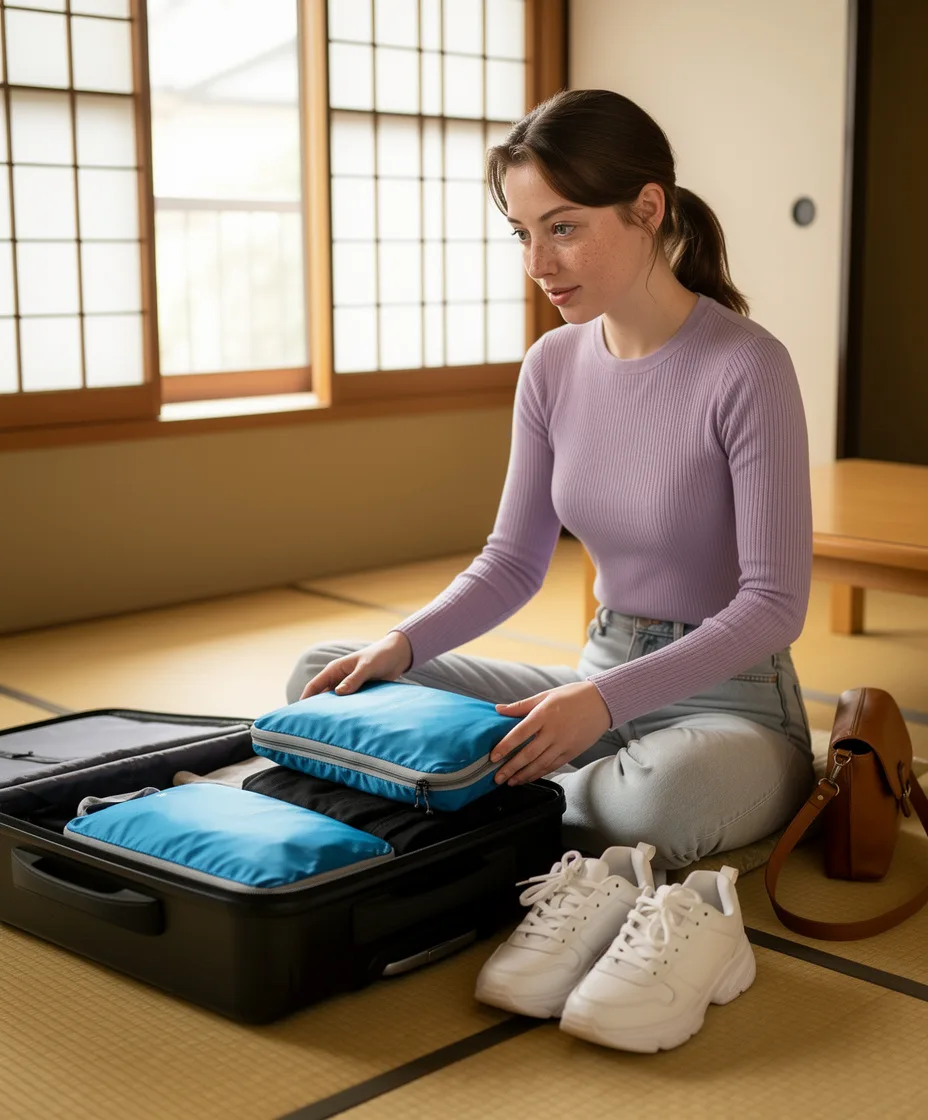
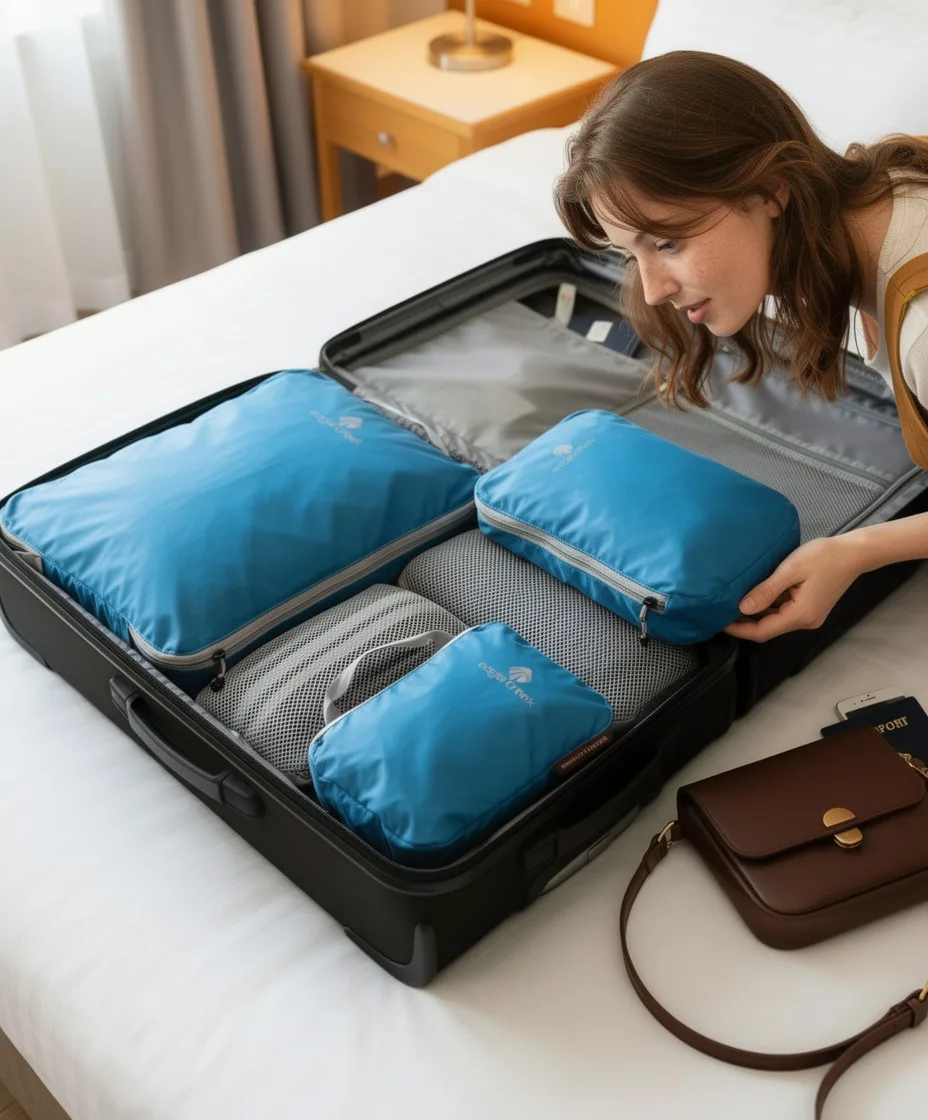
The Eagle Creek Pack-It Specter Compression Cube Set is the only packing cube set I’ve kept using long enough to trust. I’ve taken it on 18 countries’ worth of trips over 2 years, including short city breaks and longer one-bag trips where I needed to make a 40L carry-on work for a full week. In Kyoto, that matters because I’m usually packing for changing weather, lots of walking, and a schedule that doesn’t leave room for repacking my entire bag on the floor every morning.
What sold me was the compression. I resisted packing cubes for 2 years because I thought they were just extra little bags that added another step. I was wrong. This set actually compresses my clothes enough that I can fit 7 days into a 40L bag, and that changes the whole tone of a trip. I’m not stuffing things in at the last minute or sitting on my suitcase to close it.
The mesh top is the other reason I keep using it. I can see what’s inside without unpacking everything, which sounds small until you’re in a Kyoto guesthouse room trying to find one specific top before heading out. That visibility makes the cube set more useful than the generic opaque ones I tried before. For $25-45 when I bought it, I’d call it worth it because it saves me time every single trip instead of only once in a while.
The downside is real, though. Compression doesn’t do much for bulky winter clothes, so I don’t expect it to magically fix sweaters or heavy layers. And the zipper needs to be handled carefully, which matters if you’re the type to yank on everything when you’re tired. I treat it like gear that works well when I’m not rough with it. That’s annoying, but not enough to make me stop using it.
Verdict: worth it. If you travel carry-on only and actually want to stay organized, this is one of the few packing cube sets that earns its space in my bag. I’d rather have this than a bunch of random organizers I forget to use.
What Didn’t Make the Cut
I stopped using cheap packing cubes after a few trips, mostly because the ones I bought from Amazon Basics behaved like soft little boxes that lost the argument with my suitcase every time. On one Japan trip, I was trying to find a clean T-shirt in a Kyoto hotel at 7 a.m., and it took me five minutes of unzipping, re-zipping, and tugging at half-collapsed cubes before I gave up and pulled everything out onto the bed. That is not organization. That is just a slower way to make a mess.
The problem was never that they were expensive to begin with. It was that they made me feel sorted out without actually compressing anything or helping me pack better. I still had to flatten shirts by hand and repack the whole bag if I wanted the zipper to close cleanly. Once I switched to the Eagle Creek Pack-It Specter Compression Cube Set, the difference was obvious because the compression actually changed how much fit in my carry-on. For me, that makes the Eagle Creek set worth it and the cheap floppy cubes an easy pass.
I also tried over-cubing, which is what happens when you decide every sock needs its own tiny apartment. That lasted exactly one trip. In Kyoto, I spent too long remembering which cube held what, and the whole thing slowed me down more than it helped. I don’t need a cube for every category. I need a couple that keep clothes neat, visible, and compact. Too many organizers just turn packing into a puzzle I didn’t ask to solve.
How It All Fits Together
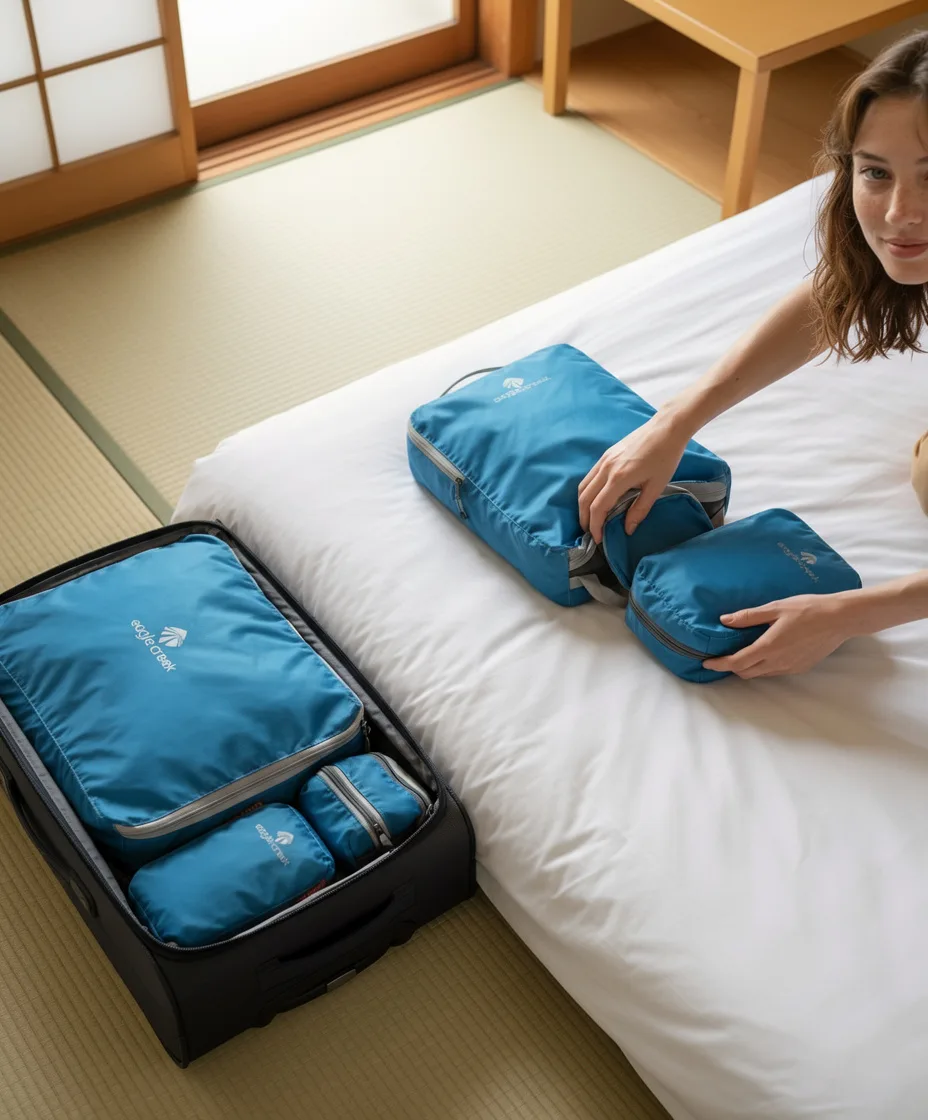
My carry-on setup works when each piece has one job. The Eagle Creek cubes handle clothes, and they do it in a way that keeps the bag compact and readable. That means I can pack for a week, zip everything up, and still get to my stuff without ripping the whole bag apart in a Kyoto room the size of a shoebox.
I usually pack by outfit group, not by category obsession. One cube might hold tops and light layers, another handles bottoms and sleep stuff, and I keep the clothes I’ll need first near the top. That sounds basic, but the compression makes it much easier to keep the bag from ballooning. Without that, carry-on-only travel gets annoying fast, especially if I’m moving between trains and walking more than I want to admit.
What I like most is that the cubes reduce mental clutter as much as physical clutter. I don’t waste time wondering where something is. I don’t unpack everything just to find one item. And I don’t end up overpacking “just in case” because the bag has enough structure to show me when I’m trying to bring too much.
For Kyoto specifically, that matters because I want my bag to stay manageable on transit days and easy to stash when I’m out all day. I’m not carrying luxury gear. I’m carrying a system that keeps me from wasting time on stupid packing mistakes.
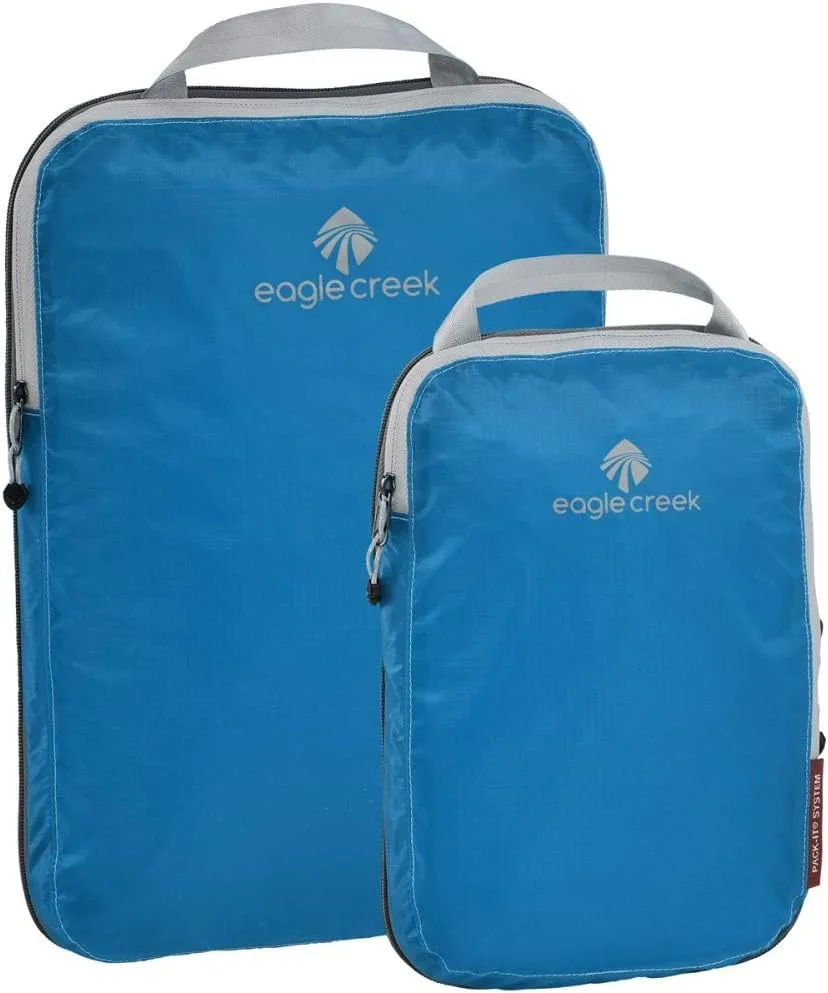
Eagle Creek Pack-It Specter Compression Cube Set
Eagle Creek · $25-45 when I bought it
Cut my carry-on packing time from 40 minutes to 15. The compression version actually works — I fit 7 days of clothes into a 40L bag.
- Worth knowing:
- Compression doesn’t help with bulky winter clothes
- The zipper needs to be handled carefully
Check current price on Amazon (affiliate link)
FAQ
Do packing cubes actually help with carry-on only travel?
Yes, if you use the right kind. I’ve had the best results with compression cubes because they save space and keep my clothes from turning into a loose pile inside my bag. If you only buy flimsy cubes that don’t compress, I think the benefit drops fast.
Are compression cubes worth it for a trip to Kyoto?
They are if you’re trying to keep your bag small and you don’t want to unpack and repack every day. Kyoto trips usually mean a lot of walking, transit, and small rooms, so a compact, organized bag makes life easier. I’d skip compression only if you pack a lot of bulky winter layers, since that’s where the payoff drops.
How many days can you fit in a 40L bag with these?
I’ve fit 7 days of clothes into a 40L bag with the Eagle Creek set, and that’s the main reason I kept it. The catch is that I pack fairly intentionally and I’m not bringing a pile of extra “maybe” outfits. If you overpack by habit, no cube set will save you.
Do you need more than one cube set?
Usually no, not for the way I travel. One good set is enough for my clothes, and adding more just creates more compartments to ignore. I’d rather have one set that compresses well than a drawer’s worth of tiny organizers.
What’s the biggest mistake people make with packing cubes?
They treat cubes like magic instead of a tool. If you throw random stuff into them, you still end up with a mess, just a smaller one. I get the best results when I pack by outfit or by use case and keep the heaviest items from fighting the zipper.
 Emma Hayes
Honest hotel reviews and real budget travel advice from someone who’s actually there.
What I’d Rebuy Immediately
If I lost everything and had to rebuild my carry-on setup tomorrow, I’d rebuy the Eagle Creek Pack-It Specter Compression Cube Set first. It’s the rare travel item that saves me time, saves space, and still feels useful after the third trip, which is usually when these things start revealing themselves as expensive optimism.
That’s really the standard I use now, especially for Kyoto, where I’m usually trying to keep one bag light enough for train stations and temple steps and still have room for a sweater I’ll end up carrying anyway. If a product doesn’t make packing faster, keep my bag lighter, or make life easier once I’m on the road, I don’t keep it. This one does all three. The last time I zipped it shut was on the floor of a small hotel room near Kyoto Station, with a half-finished tea on the desk and my passport already buried somewhere I could find it later. That’s the kind of memory that makes me buy the same thing again.