

I almost wasted a full extra day in Sapporo by treating it like a bigger version of “just wander and eat.” That plan sounds fine until you’re standing in the cold with a scarf in one hand and a map in the other, realizing the city rewards a little structure. I’d do 3 days for most first trips, 4 if you want a slow food day or a half-day outside the center. If you’re wondering how many days in Sapporo makes sense, that’s my honest answer.
Direct answer: I think 3 days is the sweet spot for Sapporo. It’s enough time to see the city, eat well, and do one easy side trip without turning the trip into a transit project.
Best for: First-timers who want good food, easy train access, and a trip that doesn’t feel rushed.
Skip 4+ days if: You only want the central sights and don’t care about day trips or slow meals.
My pick: If I had 2 days, I’d keep it tight. If I had 4, I’d use the extra day for Otaru or a slower ramen-and-cafe day, not another “see everything” loop.
I compared the options in How To Get Around Sapporo — useful if you haven’t booked yet.
Quick Answer
If you’re wondering how many days in Sapporo is enough, I’d say 3 days feels right. That gave me time to see the main city sights, eat properly, and take one easy side trip without spending half the trip on trains.
For first-time visitors, that’s usually the sweet spot. You get good food, simple train access, and enough breathing room that the trip doesn’t start feeling scheduled to death.
I wouldn’t stretch to 4+ days unless you want day trips or you like moving slowly. If all you care about is the central sights, that extra time can start to feel thin.
If I only had 2 days, I’d keep it focused and not try to force everything in. With 4 days, I’d use the extra one for Otaru or a slower food day — not another round of “we’re here, so we should see it” sightseeing.
The short answer: 3 days is enough, 4 is better if you like breathing room
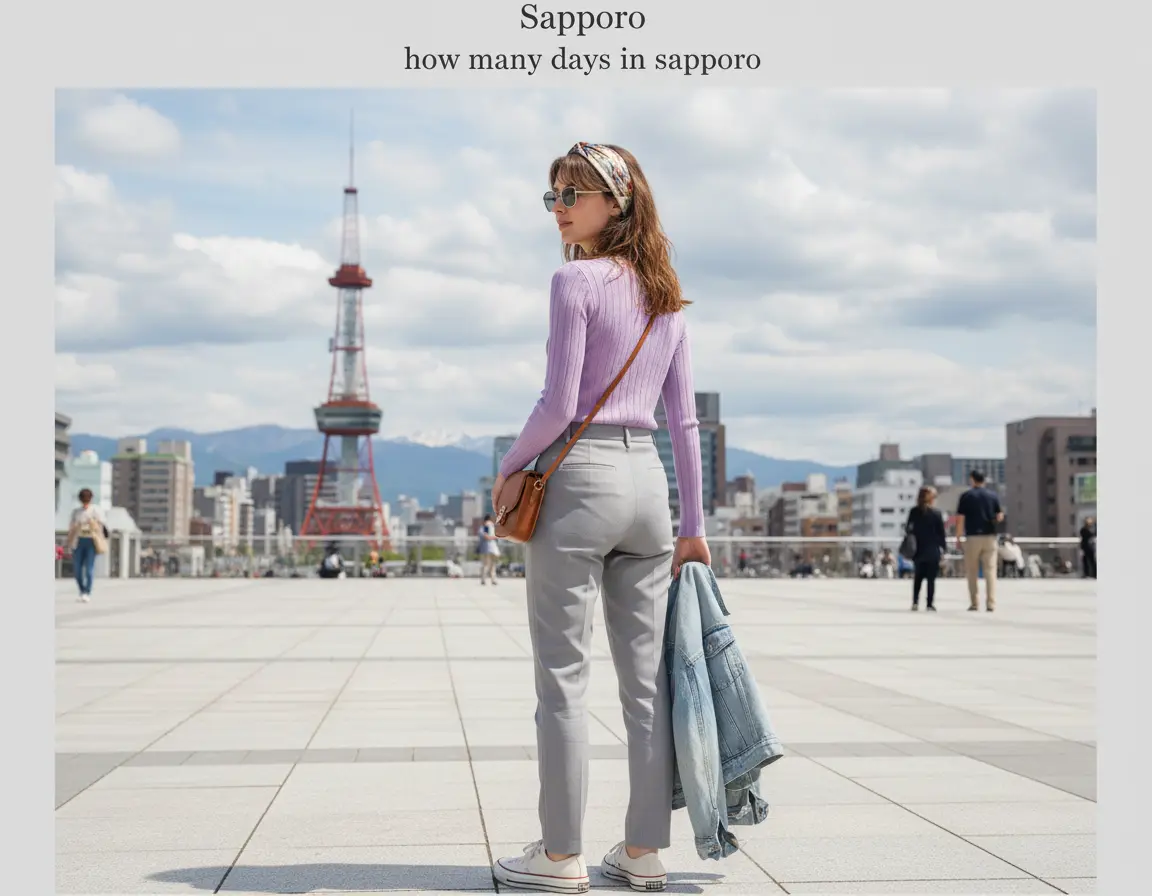
My honest take is simple: 2 days felt a little thin, 3 days felt right, and 4 days gave me enough slack to stop rushing between meals and subway stops. I paid ¥210 for a subway ride from Odori to Susukino and then walked the rest of the evening, which is basically how Sapporo works best for me. The city is spread out enough that you notice transit, but not so huge that you need to be in motion all day.
Two days works only if you’re treating Sapporo as a quick stop between other Hokkaido places. You’ll see the basics, eat soup curry or ramen, maybe climb up to a city view, and leave. That’s fine. It’s just not enough if you want to feel like you actually used the city well.
Worth it for 3 days: Yes, that’s the clean answer.
Only 2 days? Keep it tight and skip anything that requires a long cross-town ride.
4 days? Better if you want one slower morning and one side trip.
What I’d do with 2 days, 3 days, and 4 days
If you only have 2 days
I’d stay near Odori or Susukino and keep the plan simple: one city walk, one food-heavy evening, one observation point or park, done. I spent ¥1,200 on a bowl of soup curry at GARAKU and didn’t regret it, but I did regret trying to stack too many neighborhoods into one evening. Sapporo is not the place to burn energy on taxi hops between “must-see” spots.
Best for: A stopover or a first night in Hokkaido.
Skip if: You want a day trip and a relaxed dinner without watching the clock.
My pick: I’d cut one museum or one shopping stop before I’d cut a good meal.
If you have 3 days
This is the version I’d book again. Day one can be central Sapporo, day two can be food and a park or hill view, and day three gives you room for Otaru or a slower neighborhood day without feeling like you’re packing every hour. I wore a light spring jacket with a long-sleeve top in the morning, and by lunch the jacket lived in my hand more than on my body. It was around 6–15°C while I was there, so the weather pushed me toward cafes and indoor stops more than I expected.
Best for: Travelers who want a balanced trip without wasting time.
Skip if: You’re the kind of person who needs one big “wow” landmark every day.
My pick: Three days is the first length that felt like a trip instead of a checklist.
If you have 4 days
Four days is where Sapporo starts making sense as a base, not just a city to pass through. I’d use the extra day for Otaru, or I’d keep one slow day with coffee, shopping, and a long lunch somewhere like a local curry or ramen shop. I thought I’d get bored by day four. I didn’t. I just got pickier, which is a different problem.
Best for: Slow travelers, food-focused trips, and anyone adding a day trip.
Skip if: Your budget is tight and you don’t want to pay for an extra hotel night just to move slower.
My pick: If you can afford the extra night, 4 days is easier on your shoulders and your schedule.
Where the time actually goes in Sapporo

Sapporo looks compact on a map, then you start adding real stops and the timing gets less cute. Odori, Susukino, and Sapporo Station are connected well enough, but once you tack on a park, a market, a brewery, or a hill view, the day fills up faster than you think. I paid ¥230 for one subway ride and then walked 20 minutes between food stops because that was faster than changing lines for a short hop.
The biggest time sink isn’t distance. It’s decision fatigue. I lost more time choosing between ramen places than I did riding the subway. That’s the strange thing about Sapporo: the city is easy, but the food options make you second-guess yourself constantly. Fine problem to have, honestly.
Worth it: A central base saves real time.
Not worth it: Chasing too many neighborhoods in one day.
My pick: Stay near the center unless you have a very specific reason not to.
What I booked ahead, and what I bought on arrival
I booked my hotel ahead because Sapporo prices moved more than I expected once I started checking dates. A mid-range business hotel near Susukino was around ¥9,800 a night when I looked early, and the same kind of room was already pushing past ¥12,000 closer to my dates. I almost tried to wing it. That would’ve been a bad call. I’d book lodging before arrival, especially if you’re coming in winter, during festivals, or on a weekend.
I did not book most transit or food in advance. That would’ve been pointless. I bought subway tickets as needed and used my phone map for walking routes. I also grabbed drinks and snacks from Lawson more than once, including a 160-yen onigiri that saved me from overpaying for a mediocre lunch when I was between neighborhoods. That kind of convenience matters more than fancy planning.
Book ahead: Hotel, and any specific day trip if you’re set on doing one.
Buy on arrival: Transit, snacks, most meals, and city admissions.
Skip this: Pre-booking every meal or every local movement. That’s busywork.
See all Sapporo hotels on Agoda before you commit to dates — Sapporo rates jump faster than I expected once weekends and events get involved.
The one side trip I’d add if you have enough days
If you have 3 days, I’d seriously consider Otaru. It’s the easiest extra add-on because it doesn’t turn your trip into a logistics puzzle. I took the JR train and the ride was straightforward enough that I didn’t have to think about it much, which is exactly what I want from a side trip. The canal area is fine, not magic, but the city worked better for me than I expected because it gave Sapporo a little contrast.
I expected Otaru to be one of those places people overhype because the photos are easy. It kind of is, at least in the busiest parts. Still, I liked having it on the itinerary because it broke up the Sapporo rhythm and gave me a different kind of afternoon. That’s the real value: not some dramatic “best place ever,” just a clean change of pace.
Worth it if: You have 3 or more days total.
Skip if: You only have 2 days and would rather spend them eating well in Sapporo itself.
My pick: I’d do Otaru once, but I wouldn’t build the whole trip around it.
I didn’t book a guided tour there, and I’m glad. The train was cheap enough and simple enough that a group tour would’ve just added cost and a fixed schedule. If you want the canal area, the glass shops, and a slower lunch, do it on your own and keep the day flexible.
Food, money, and the traps I’d skip
Sapporo can get expensive if you let food decisions drift into tourist territory. I paid ¥1,600 for a bowl of ramen near a busier area once, and it was good but not enough better than the ¥900–¥1,100 bowls I found in less obvious places. That math never works out for me. Same with hotel breakfasts. I skipped them every time and spent less on a better breakfast from a bakery or convenience store.
My best money-saving move was keeping lunch casual and putting the budget toward one better dinner. Soup curry, ramen, and seafood are easy to find without booking anything or waiting forever. I’d skip any place with a 30-minute line unless it’s the one thing you came for. I’m serious. Sapporo is full of good food that doesn’t require a queue.
Worth it: One nicer dinner, many simple lunches.
Skip this: Hotel breakfast, unless it’s included for free.
Only if: The line is short and the price isn’t inflated by location alone.
The mistake I made the first time I planned Sapporo
I thought I could treat Sapporo like a city I’d “figure out on the ground.” That sounded efficient in my head. The trigger was simple: I arrived with too many open hours and not enough booked structure, then realized the city is better when you already know which neighborhoods and meals are worth your time. I spent an extra ¥2,000 on a last-minute room upgrade because the cheaper place was farther from the station than I wanted with my bag, and I lost almost an hour changing plans around check-in.
The consequence wasn’t catastrophic, but it was annoying and avoidable. I also wasted time wandering instead of eating, which is the opposite of why I was there. Next time I’d book one central hotel, pin two or three food spots, and leave the rest loose. That would’ve saved money and energy.
Failure lesson: Sapporo rewards a light plan, not no plan.
Better move: Book the base, then let meals and one side trip fill the gaps.
My pick: I’d rather over-plan lodging than waste an afternoon dragging luggage around.
What I’d do differently next time
I’d stay one night longer only if I had a real reason for it, like Otaru or a slower winter schedule. I’d also keep my hotel even closer to Odori or Susukino, because the small walk savings add up when it’s chilly and you’re carrying layers. And I’d stop pretending I need to “save” every meal for a special occasion. In Sapporo, the ordinary meals were the point.
Best for: Travelers who want a clean, food-first city trip with one easy side trip.
Skip if: You only want one quick overnight and don’t care about exploring beyond the center.
Next time: I’d do 3 nights again, book the hotel early, and keep the rest loose.
Rough daily estimates from my own trip. Prices shift by season.
I expected Sapporo to be a quick 2-day stop on my way through Hokkaido, but after 48 hours I realized I’d only scratched the surface and actually wanted to stay longer. The flip: I ended up spending 4 days there instead, and on day 3 I finally stopped feeling like I needed to check boxes and just sat in a café for 90 minutes watching people. The honest takeaway is that Sapporo doesn’t reward rushing—it rewards showing up with loose plans and letting a good ramen shop or neighborhood slow you down.
If how much does sapporo cost per day matters to your trip, my How Much Does Sapporo Cost Per Day has the specifics.
I wrote a more detailed breakdown in Best Things To Do In Sapporo — worth reading if you’re still deciding.
For a deeper look at sapporo itinerary 3 days, I covered this in my Sapporo Itinerary 3 Days.
If 3 days in sapporo itinerary winter matters to your trip, my 3 Days In Sapporo Itinerary Winter has the specifics.
I compared the options in Sapporo In February — useful if you haven’t booked yet.
For a deeper look at sapporo, I covered this in my Sapporo In December.
See current Sapporo hotel prices on Agoda →
I usually book Sapporo tours on Klook — the best time slots go fast, especially in peak season.
FAQ
Is 2 days enough for Sapporo?
Yes, but only if you want a quick city stop and not a full Hokkaido base. I’d use 2 days for one central walk, one good dinner, and maybe one easy viewpoint or park. If you want a side trip, 2 days starts feeling cramped fast.
Would 3 nights be too much?
No, 3 nights is the length I’d book again first. It gives you time to eat well, move around without rushing, and still keep one flexible slot for weather or a last-minute plan. I found that to be the point where Sapporo stopped feeling like a transfer city.
Is Sapporo worth a full week?
No, not on its own. A full week only makes sense if you’re using it as a base for repeated day trips or you move very slowly. Otherwise, I’d rather spend those extra days in another part of Hokkaido.
Should I stay near Sapporo Station or Susukino?
I’d pick Susukino if food and evening convenience matter more to you. Sapporo Station is practical for rail connections, but Susukino felt better for walking out to dinner without making the night feel sterile. If you’re carrying luggage a lot, station access wins by a bit.
Can I do Sapporo without a car?
Yes, and I think that’s the better way for a short trip. I used trains, subways, and my feet, and I never felt stuck. A car only starts making sense if you’re building the trip around outer-area sightseeing.
 Emma Hayes