
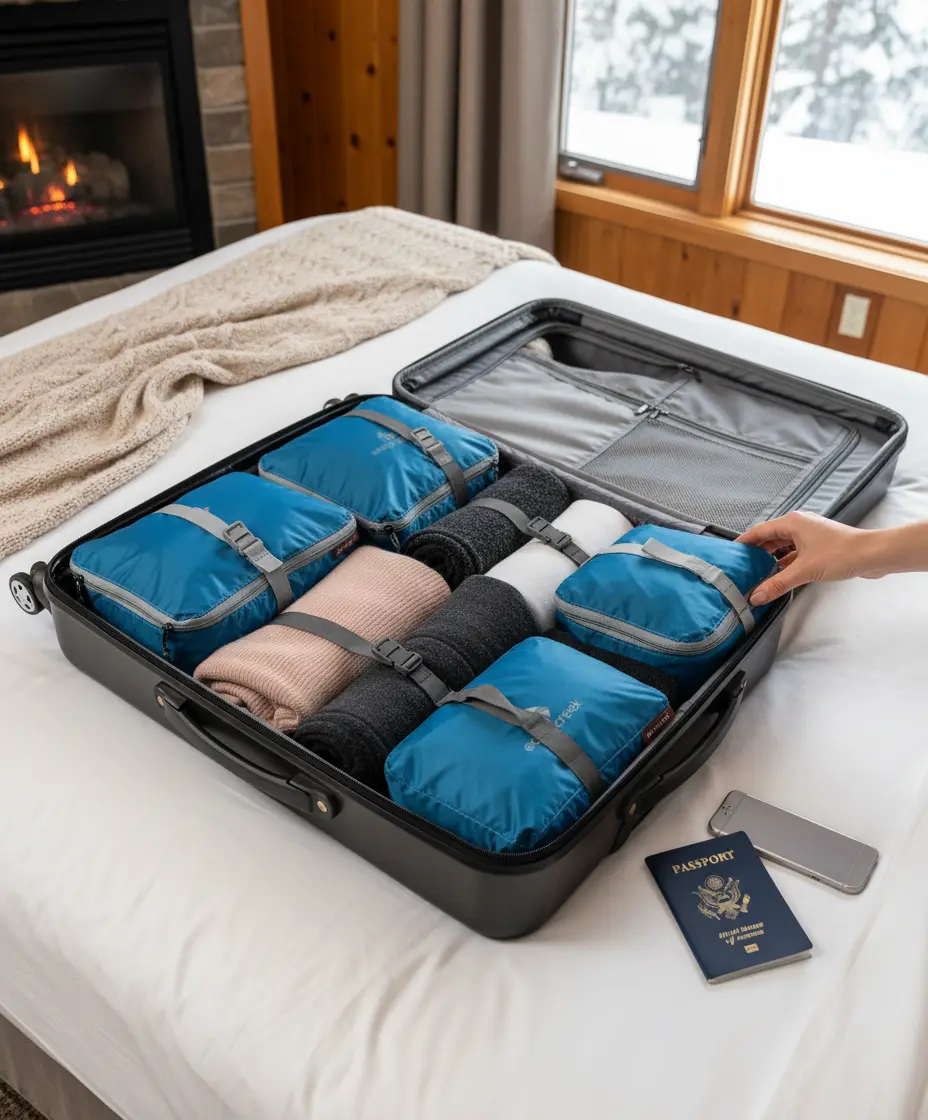
This post contains affiliate links. If you purchase through these links, I earn a small commission at no extra cost to you. I only recommend products I actually use and have tested across multiple trips.
I used to pack like I was trying to win a game against my own suitcase. Everything got shoved into one flat pouch, then I’d dig for toothpaste at 6 a.m. in a tiny hotel bathroom and end up dumping half my toiletries into the sink. On a carry-on-only trip to Lisbon, I wasted 12 minutes doing that in a humid bathroom that already felt too small for me and my bag. That was the moment I stopped pretending a random zip pouch was “good enough.”
For the last 2 years, across 18 countries, I’ve been using the Eagle Creek Pack-It Specter Compression Cube Set as part of how I pack, and it changed the way I think about space. I resisted packing cubes for 2 years because I thought they were just another travel accessory people overbuy. I was wrong. The compression version actually works, and on a 7-day carry-on trip I fit all my clothes into a 40L bag without sitting on the zipper. That’s the kind of boring win I care about.
And for this kind of trip, boring wins matter. I don’t want a bag system that looks cute on Instagram and falls apart when I’m in a cold airport at 5 a.m. or sweating through a humid summer in Bangkok. I want something that saves time, keeps my stuff visible, and doesn’t make me repack my life every morning.
The Short Answer
If you’re doing carry-on only travel and want fewer packing headaches, the Eagle Creek Pack-It Specter Compression Cube Set is the one I’d point you to first. I used it for 2 years, on 18-country trips, and it cut my packing time from 40 minutes to 15. The mesh top lets me see what’s inside without detonating my bag, and the compression side actually helps when I’m packing 7 days of clothes into a 40L carry-on.
Worth it if you keep overpacking “just in case” clothes. Skip it if you mostly travel with bulky winter layers, because compression doesn’t magically shrink a puffer jacket. And handle the zipper carefully; I learned that the hard way after one rushed morning in Barcelona.
What I Actually Use for Carry-On Packing
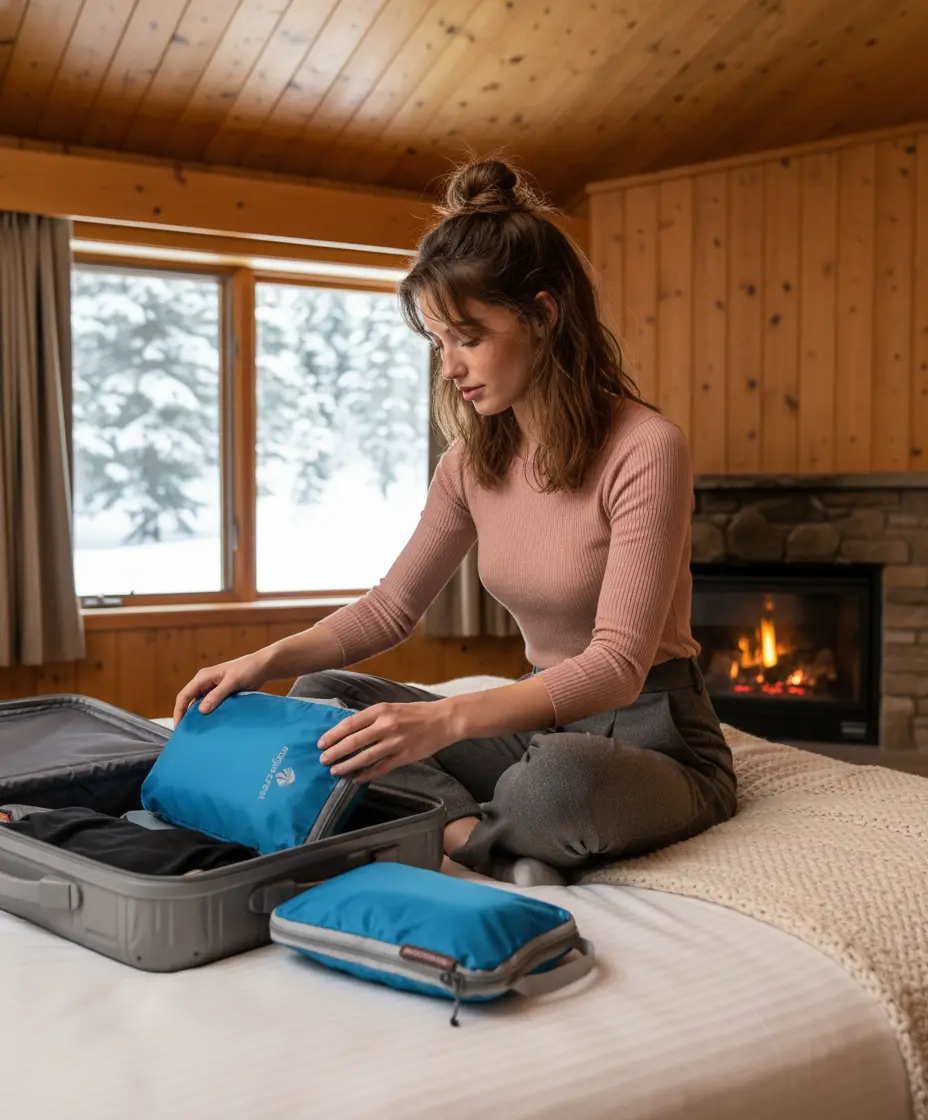
Eagle Creek Pack-It Specter Compression Cube Set
Before: I used a cheap Amazon cube set and a basic nylon toiletry pouch before this. The cheap cubes were the kind that make you feel organized for about one trip, then the zipper starts snagging and the whole thing turns into a lumpy brick. On a 4-day trip to Rome, one of the bargain cubes split at the seam when I tried to compress a pair of jeans, two tees, underwear, and a lightweight sweater. That was $18 wasted and one annoying airport floor repack.
Winning differentiator: The Eagle Creek compression cube actually compresses without turning into a wrestling match. On a long-haul flight to Tokyo, I packed 7 days of clothes into the set and still had room in my 40L bag for shoes, a Kindle, and my toiletry kit. The thing I noticed first was the mesh top — I could see the black tank and gray leggings without opening everything, which saved me from the usual 6 a.m. bag dig in a hostel room.
After: My packing time dropped from 40 minutes to 15, and I stopped overpacking “backup” outfits because I could see exactly what I already had in the cube. That matters more than people admit. If you’ve ever brought three extra tops because you couldn’t remember what you packed, this fixes that problem fast.
Field test detail: In the cube I can fit a week of light clothes: 7 underwear, 7 socks, 3 tees, 2 tanks, 1 pair of leggings, and a thin long-sleeve layer. On a humid summer trip, the fabric didn’t feel sticky or weird after bouncing between hostel drawers and my backpack for 9 days. The edge case is winter: I tried to compress a sweater, thermal layer, and thicker pants in Prague, and the cube still closed, but the compression wasn’t doing much. That’s not a failure, just physics.
The zipper is the one thing I treat with respect. If I rush it, it can catch at the corner, especially when the cube is stuffed near the limit. After about 2 years of use, the material still looks clean, but I can see the usual travel wear where the corners get slightly scuffed from sliding in and out of my bag. The quirk I actually like is that the mesh makes it obvious when I’ve overpacked. It calls me out before the zipper does.
What it won’t do: It will not make bulky winter clothes small. If your carry-on is full of sweaters, jeans, and a puffer, you’ll still need to choose smarter layers. For my trips in warm or mixed weather, though, it’s worth it.
Verdict: worth it, and if I were buying again, this is the kind of thing I’d grab through the Amazon card without thinking twice.
What I used before: a flat zip pouch from a drugstore and a generic “travel organizer” from Amazon that looked fine until I actually used it. The drugstore pouch held my toiletries, but everything got mixed together. At security in Madrid, I spent 5 minutes digging for my liquids bag because it was buried under cables and sunscreen. That’s exactly the kind of small delay that makes travel feel more annoying than it should.
Winning differentiator: The real win here is visibility plus compression in one setup. I can lay out socks, underwear, tees, and a thin layer in one cube, then flatten it down enough to keep my 40L bag carry-on friendly. On a 6 a.m. airport morning in Lisbon, I pulled the cube out, opened it once, and had what I needed without unpacking the entire bag on the floor.
After: I stopped using separate “maybe” piles. That sounds silly, but it saved me from overpacking by at least 1 extra outfit per trip. Over 18 countries, that adds up. Less dead weight means I’m not fighting my bag on stairs, trains, or sidewalks with bad paving.
Field test detail: The cube fits my travel basics cleanly, and I like that I can separate clean clothes from worn ones without mixing them in the main compartment. In a long-haul flight setup, I keep one cube for sleep clothes and fresh underwear, and another for day clothes I’ll actually wear first. The edge case is winter bulk: compression helps less than I wanted when I tried it with thicker layers in cold weather. It still works, just not in the magical way people hope for.
What it won’t do: It won’t solve poor packing habits by itself. If you bring too many “just in case” items, you’ll just have a more organized overpacked bag. Still worth it, but only if you’re willing to pack with some discipline.
Verdict: worth it for carry-on only travel, especially if you hate unpacking your whole bag just to find one shirt.
What Didn’t Make the Cut
Cheap Amazon compression cube set, no-name brand. I used one for 3 trips before it started failing in the exact way cheap gear always does: the zipper snagged, then the seam split when I compressed jeans and a sweater in Rome. That cost me $18 and one very annoying repack on a hostel floor. Skip it. If the zipper feels flimsy in your hands before you leave, it’s not going to get better at 3 a.m. in another country.
Drugstore flat toiletry pouch. I carried one through 5 trips because I kept telling myself “it’s fine.” It wasn’t. At Madrid security, I spent 5 minutes digging for liquids, and in a humid summer bathroom in Bangkok the whole pouch turned into a damp mess because everything sat on top of everything else. It was cheap, but the time cost was real. Only if you carry almost nothing and never need to find it fast.
Popular TikTok packing cube set with the shiny fabric. I tried this on a 10-day trip and stopped after the second use because the material felt slick, the cubes slipped around inside my bag, and I couldn’t trust the zippers under compression. One cube held a clean shirt, leggings, underwear, and a light cardigan, but it bulged awkwardly and wasted space instead of saving it. I lost about $24 and a lot of patience. Skip it unless you like gear that looks better than it works.
How It All Fits Together
For carry-on only travel, I think in layers, not categories. The compression cube set handles clothes first, which is the biggest space saver. I pack one cube for tops and underwear, one for bottoms and sleepwear, and I keep anything bulky out of the system unless I’m traveling in mild weather.
That setup matters because it keeps me from turning my bag into a junk drawer. I can pull the cube I need without emptying the whole backpack on a train seat or hostel bed. On a cold winter trip, I learned not to force thick layers into compression cubes. On humid summer trips, though, the cubes are great because lighter clothes pack down neatly and dry fast if I need to air them out.
The real payoff is time. I’m not spending 40 minutes repacking every time I move cities. I’m spending 15, grabbing the right cube, and getting out the door. That’s the part I’d pay for again.
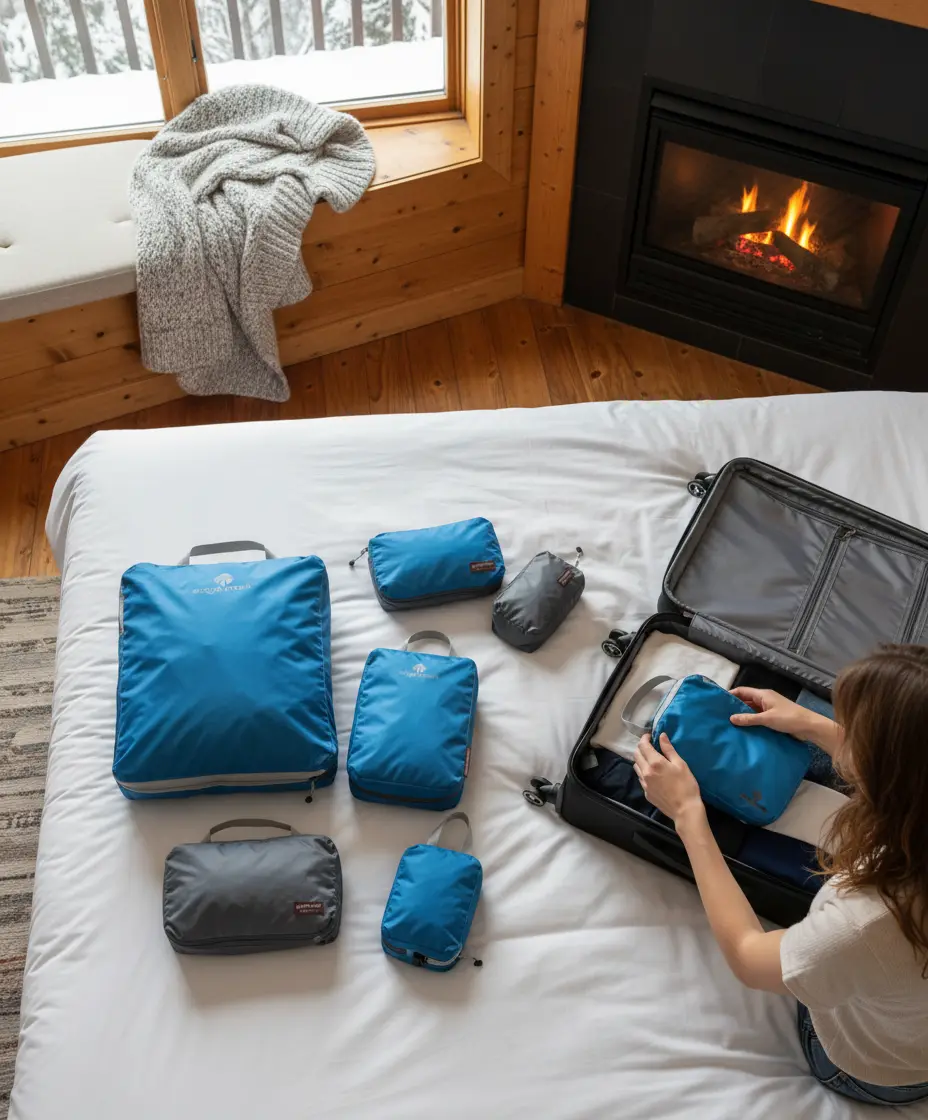

Eagle Creek Pack-It Specter Compression Cube Set
Eagle Creek · $25-45 when I bought it
Cut my carry-on packing time from 40 minutes to 15. The compression version actually works — I fit 7 days of clothes into a 40L bag.
- Worth knowing:
- Compression doesn’t help with bulky winter clothes
- The zipper needs to be handled carefully
Check current price on Amazon (affiliate link)
FAQ
Is a compression cube set actually worth it for short trips?
Yes, it’s worth it even for 3- to 5-day trips if you travel carry-on only. I used mine on short city breaks and still liked having one cube for clean clothes and one for sleep stuff, because it kept my bag from turning into a pile. The time savings are smaller on short trips, but the organization payoff is still real.
Will this help with winter packing?
No, not much if your wardrobe is bulky. I tried compressing heavier layers in cold-weather trips and the cube still closed, but it didn’t create the dramatic space savings I get with tees, leggings, and lighter layers. If winter is your main travel season, I’d treat this as a nice organizer, not a space miracle.
Can I fit a week of clothes in a 40L carry-on with these?
Yes, I did it, and that’s the reason I still use them. My 7-day setup worked with underwear, socks, tees, tanks, leggings, and a thin layer, plus shoes and toiletries in the rest of the bag. If you pack heavy fabrics, you’ll need to cut back, but for normal travel clothes this works.
Do packing cubes make airport security easier?
Yes, indirectly. I’m not opening every pocket and dumping everything out anymore, so I move faster when I need to pull out liquids or my laptop. I’ve had plenty of 5-minute scrambles before, and the cube system cuts that chaos down a lot.
What’s the biggest mistake people make with packing cubes?
They overfill them and expect the zipper to do all the work. I did that once with a winter layer and immediately regretted it because the zipper felt stressed and the cube got awkward in my bag. Use them to organize and compress a normal load, not to bully your suitcase into holding more than it should.
 Emma Hayes
What I’d Rebuy Immediately
If I had to rebuild my carry-on setup today, I’d rebuy the Eagle Creek Pack-It Specter Compression Cube Set first. It’s the thing that actually changed how I pack, not just how my bag looks.
I’d skip the cheap cubes, skip the flimsy pouch systems, and go straight back to the one that saved me 25 minutes per pack and kept my 40L bag under control across 18 countries. For me, that’s the whole point. Worth it.