

Hiroshima was supposed to be a simple add-on. It was the city that changed my mind about what a first trip in Japan should feel like. I spent the hotter, messier middle of the day there with a fan in my hand and a wet shirt after the rain, and I still left thinking about the same question: Hiroshima or Kyoto for first-timers?
My answer is Kyoto for a first Japan trip, and Hiroshima only if you want a calmer, more focused stop with less pressure to “do it all.” I’d choose Kyoto because it gives you more range in one place — temples, food, neighborhoods, train access, and enough day structure that you can be lazy without wasting the day. Choose Hiroshima only if you care more about a clean, easy trip with one heavy-hitting history stop and less crowd fatigue.
Best for Kyoto: first-timers who want variety, easy day trips, and more to do after dark.
Best for Hiroshima: travelers who want a lower-stress city break, strong food, and one clearly defined main sight.
My pick: Kyoto, unless your trip is short and you want something quieter and cheaper to move through.
Quick Answer
Choose Kyoto if this is your first Japan trip and you want the bigger payoff for 3+ days. Choose Hiroshima if you only have 1-2 days and hate wasting time in packed sightseeing zones. Kyoto gives you more variety, while Hiroshima gives you less friction.
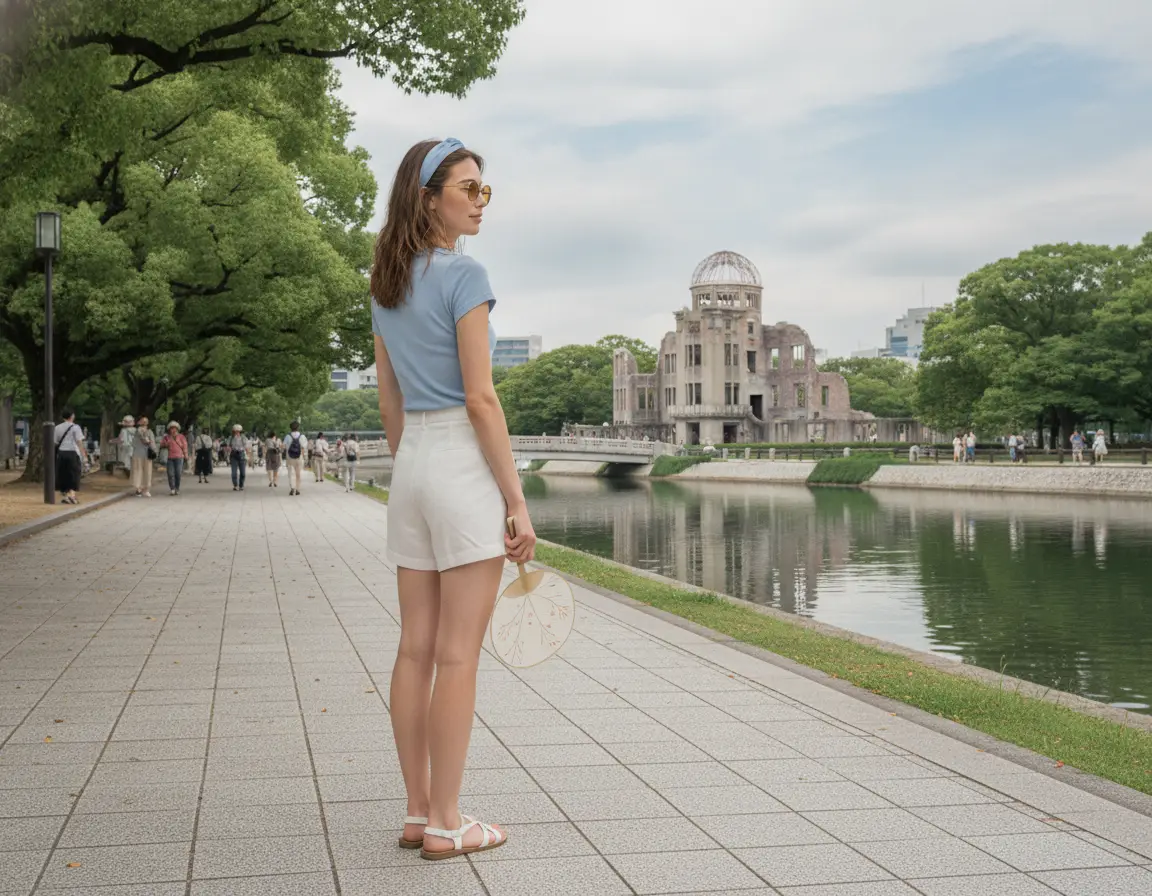
I had both cities in my head while I was standing near the Peace Memorial Park in Hiroshima, sweating through a linen shirt and realizing I’d barely dealt with any transit stress that day. That ease matters. But Kyoto still wins the decision for first-timers because the city gives you more return on every hour you spend there.
Why I’d choose Kyoto first
Kyoto gives you more choices without making you work too hard for them. That sounds boring, but it’s exactly why it wins for first-timers. I paid around ¥230 per subway ride in Kyoto, then spent the rest of the day walking between neighborhoods, ducking into a coffee shop, and deciding late in the afternoon whether I wanted a temple, a market, or just dinner. Hiroshima was easier. Kyoto was better.
The big difference is how many kinds of days Kyoto can hold. One day can be Arashiyama and a train ride back. Another can be Gion, Nishiki Market, and a slow dinner in Pontocho. Another can be almost nothing except walking and eating, which I think first-timers need more than they admit. Hiroshima has a strong center, but Kyoto has more layers. That matters when you’re jet-lagged, hungry, and not in the mood to plan every hour.
I also trust Kyoto more for a first trip because it forgives bad timing. I showed up to a few places too late and still had backup options within a 15-minute walk. In Hiroshima, the shape of the day felt more linear. That’s useful if you want focus. It’s less useful if you’re the kind of traveler who changes plans after lunch.
Best for: travelers who want one city to carry several different moods without extra logistics.
Skip Kyoto if: you get annoyed by crowds fast and don’t want to think about which temple is worth the line.
My pick: Kyoto, because it gives a first trip more range before boredom sets in.
I almost wrote Kyoto off as the obvious answer, which is usually a sign I should slow down. I expected it to feel overhyped. It kind of did in the busiest parts. But the city still worked because I could leave one packed area and be eating something good five minutes later. That flexibility saved it for me.
If hiroshima matters to your trip, my Hiroshima For Couples has the specifics.
Where Hiroshima pulls ahead
Hiroshima is the better choice if you want a city that feels easier to move through. I’m not talking about “chill” in a vague Instagram way. I mean lower walking friction, fewer places where I felt like I was threading through a crowd, and a clearer sense of what to do next. I got off the tram, walked, ate, visited the Peace Memorial area, and didn’t spend the day decoding the city. That was nice.
The Peace Memorial Park and Museum are the obvious reason to go, and I don’t think you should pretend otherwise. The museum entry was about ¥200 when I went, which is absurdly low for something that heavy and important. I spent more on a bowl of noodles after than on the museum itself. If you only have one day in Hiroshima, that combination — the memorial area plus a proper meal — is already enough to make the trip feel meaningful.
Hiroshima also surprised me with how easy it was to eat well without wandering around forever. I had okonomiyaki at a counter-style spot and paid roughly ¥1,200-¥1,800 depending on toppings and drink. The city’s food felt more direct than Kyoto’s. Kyoto has more variety, but Hiroshima has less wasted time between meals. That’s a real advantage if you arrive tired.
Best for: first-timers who want a calmer city, a strong history stop, and less decision fatigue.
Skip Hiroshima if: you want a trip that keeps changing pace and gives you lots of different neighborhoods to chase.
My pick: Hiroshima, only if your version of a good first trip is simpler and more contained.
Cost, time, and convenience: the part that decides it
Here’s the cleanest way I can put it: Kyoto costs more in friction, but it pays you back in options. Hiroshima costs less in friction, but there’s less to do if you stay too long. That’s the whole argument.
On accommodation, I’ve usually seen Kyoto run higher in the areas that make sense for first-timers. A decent central hotel or private room can land around ¥10,000-¥18,000 a night in normal seasons, and I’ve seen that jump hard during peak cherry blossom and autumn periods. Hiroshima felt a bit gentler, with solid stays often around ¥7,000-¥13,000 a night. I’m not talking luxury either way. I’m talking about a bed near a station that doesn’t ruin your night.
Transit is where Hiroshima quietly wins. The tram network is simple, and the city center is easy to navigate without overthinking it. Kyoto’s buses can be annoying, especially when they’re crowded and slow. I waited long enough for one Kyoto bus to decide I’d rather walk, and honestly, that happens more often than I’d like. Hiroshima doesn’t make me do that as much.
Time cost is the bigger issue if you’re comparing them as first stops. In Kyoto, it’s easy to lose 45 minutes to 90 minutes in a day just crossing the city or waiting for crowded transit. In Hiroshima, I could move from the Peace Memorial area to lunch and then to the station area without feeling like I’d burned half the day. If your trip is only 5 or 6 days total, that difference matters.
For food, both are easy, but the bill shapes up differently. In Kyoto, I usually spent around ¥800-¥1,500 on lunch and ¥1,500-¥3,000 on dinner if I wasn’t doing anything fancy. Hiroshima’s okonomiyaki often kept dinner in the ¥1,200-¥2,200 range for me, and that felt like better value when I wanted something filling fast. Kyoto gives you more food variety. Hiroshima gives you less menu browsing and more eating.
Money cost: Hiroshima is usually cheaper for lodging and a little easier on spontaneous meals.
Time cost: Kyoto eats more of your day, mostly through transit and crowd management.
Energy cost: Kyoto asks for more patience. Hiroshima asks for less.
Opportunity cost: choosing Hiroshima means giving up Kyoto’s neighborhood-hopping and late-day flexibility.
I booked my Hiroshima stay after checking rates late one evening and noticing how much calmer the pricing was than Kyoto for the same dates. That was one of those small trip moments where the math is obvious. I still think Kyoto is the better first-timer city overall, but Hiroshima is the better value when you care more about a smooth day than a packed one.
See all Hiroshima hotels on Agoda when you want to compare station-area prices quickly.
What the two cities actually feel like
Kyoto feels like a city that keeps asking you to choose. Which temple, which district, which meal, which train, which line. That can be fun when you’re in the mood for it. It can also be a little annoying. I don’t love spending my first hour of the day deciding whether a famous spot is worth the queue.
Hiroshima felt more settled. I could move around without feeling like I was missing the “real” version of the city if I skipped something. The Peace Memorial Park anchors the day in a way that’s hard to ignore, and the rest of the city doesn’t demand performance. I remember sitting with a cold drink after lunch and thinking, this is probably why people come here when they’re tired of bigger cities. It’s not flashy. Fine, not great for people who want constant stimulation, but very good for actually traveling.
This is where the expectation flip happened for me. I figured Hiroshima would feel like a half-day stop built around one serious sight. It didn’t. I stayed longer than planned because the city worked as a whole, not just as a memorial visit. That changed how I’d tell a first-timer to use it. Don’t treat it like a box to tick. Treat it like a slower city that earns a full day or two.
Kyoto, on the other hand, is more memorable in fragments. A narrow street. A market snack. A temple gate. A train platform. I bought a cheap onigiri from a convenience store once because I didn’t want to wait in a line, and that ended up being the right call. Kyoto rewards quick decisions like that. Hiroshima doesn’t need them as much.
Kyoto is better if: you like a trip that feels varied from morning to night.
Hiroshima is better if: you want fewer moving parts and less sightseeing friction.
Main tradeoff: Kyoto gives more texture; Hiroshima gives more ease.
The mistake I made in Kyoto that Hiroshima didn’t repeat
I made one dumb call in Kyoto that still sticks with me. I assumed I could keep the day loose and figure out lunch near a famous area once I got there. The trigger was a rainy, sticky afternoon after 23-31°C weather turned the streets into a steam bath. I reached the place I wanted, saw a line, then saw another line, then realized the nearest decent option was a 20-minute walk away. I ended up spending almost an hour just solving lunch and paid about ¥1,600 for food I would’ve enjoyed more if I’d eaten 30 minutes earlier somewhere less crowded.
That’s the hidden Kyoto tax. Not the ticket price. The wandering, waiting, and recalibrating. Hiroshima didn’t do that to me. I could eat, move, and keep the day going without feeling like I’d lost the plot. If you’re arriving tired or traveling solo with a bag, that difference is huge.
Worth it: Kyoto if you’re okay building your day around the city.
Only if: Hiroshima if you want your first Japan stop to feel smoother than impressive.
My pick: I’d still take Kyoto first, but I’d arrive with lunch and transit decisions already made.
What I’d do differently next time
I’d give Kyoto more days and Hiroshima fewer, not because Hiroshima disappointed me, but because Kyoto needs time to stop feeling like a checklist. I rushed one part of Kyoto by trying to see too much in one day, and that was my mistake, not the city’s.
I’d also book central lodging earlier in Kyoto and stop pretending a “good deal” 25 minutes from the action is actually a good deal. It never is once you add walking, waiting, and one bad weather day. Hiroshima was more forgiving on location, so I’d be less picky there.
I’d keep Hiroshima as a one- or two-night stop that breaks up a longer Japan route. Kyoto gets the longer stay. That’s the clean split.
Rough daily estimates from my own trip. Prices shift by season.
See current Hiroshima hotel prices on Agoda →
I usually book Hiroshima tours on Klook — the best time slots go fast, especially in peak season.
FAQ
Is Hiroshima worth a first trip to Japan?
Yes, but I’d keep it as part of a bigger route rather than your only big stop. The Peace Memorial area is powerful, and the city is easy to move through without much stress. I’d pick it for a first trip only if you want something calmer than Kyoto or Tokyo.
How many days do I need in Kyoto to make it worthwhile?
Three full days is the sweet spot, and four feels better if you like slow mornings. I tried compressing Kyoto too much once and spent too much time deciding what to cut. If you only have one day, I’d lower expectations fast and focus on one area.
Can I see Hiroshima in one day?
Yes, and I’d say one day is enough for the main sights if your schedule is tight. I’d do the Peace Memorial Museum, the park, and one proper meal, then stop. If you add Miyajima, that becomes a longer day and you’ll feel it by evening.
Which city is easier for getting around without a car?
Hiroshima is easier, hands down. The tram system makes the city feel straightforward, and I didn’t waste much time figuring out where to go next. Kyoto has more transit options, but it also has more moments where I just walked because the bus situation felt annoying.
What if I only have time for one city on my first Japan trip?
I’d choose Kyoto. It gives you a better mix of food, neighborhoods, and day structure, which is what I want from a first visit. Hiroshima is the one I’d choose when I want a quieter break, not the main event.
 Emma Hayes