
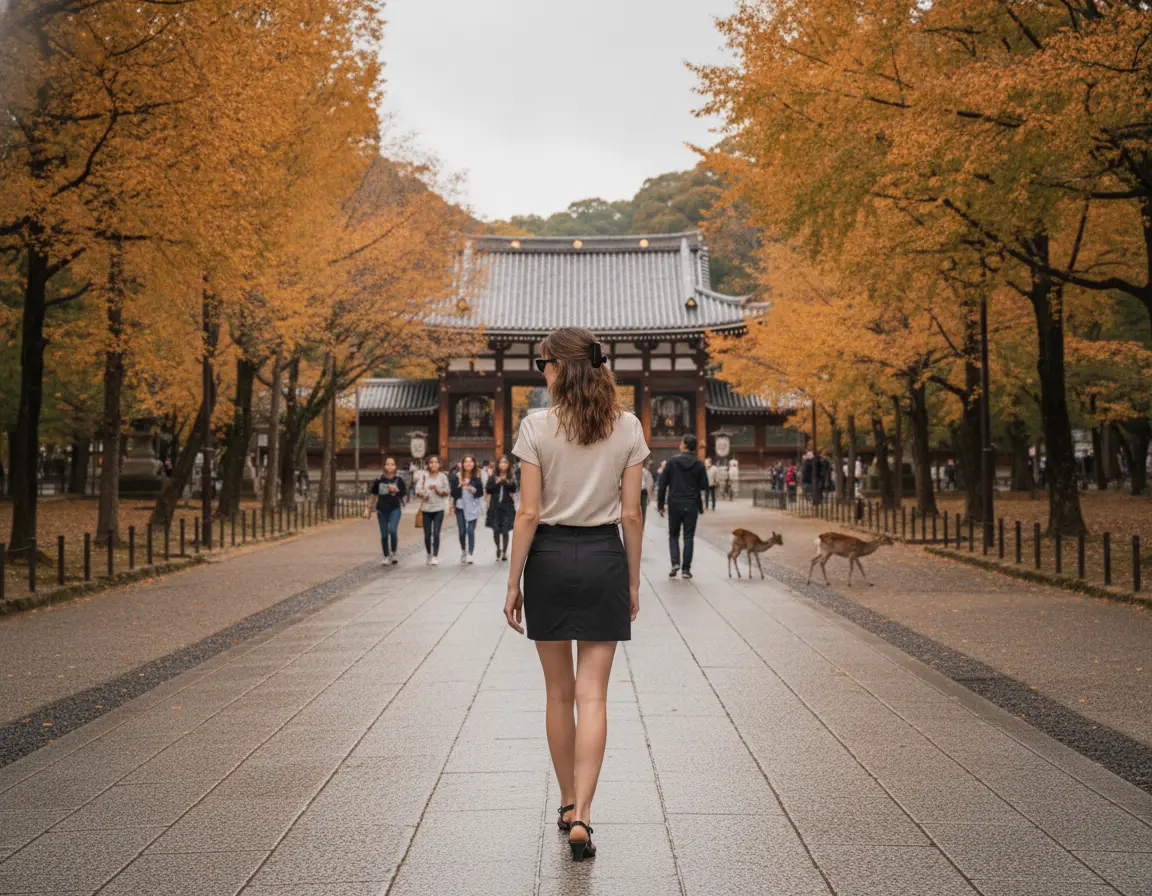
19-26°C: that’s the kind of late-autumn weather I got in Nara after rain, and it made the whole day easier than I expected. I had an umbrella in one hand, sunglasses in the other, and I still ended up walking more than I planned because the city is simple in a way a lot of Japanese day trips aren’t.
I’d do nara in November if I wanted temples, deer, and a clean, easy day without summer heat. I would not spend a full trip budget on it if I only had one or two days in Kansai and still wanted Osaka or Kyoto first. The real decision is simple: November gives you good walking weather and lighter clothing, but the place itself is still a day trip, not some giant all-day reveal.
Quick Answer: Nara in November is worth it for an easy, walkable day with decent weather and fewer seasonal annoyances than summer. Kintetsu Nara Station is the better arrival point, deer crackers were ¥200, Todai-ji entry was ¥600, and hotels near Nara Station ran roughly $55-$110/night.
My verdict: This november guide is worth it if you want an easy, walkable day with decent weather and fewer seasonal annoyances than summer. It’s not the place I’d prioritize for nightlife, shopping, or a packed itinerary.
- Best for: Travelers who want a straightforward day trip, easy transit, and a calm pace.
- Skip if: You only have a couple of days in Kansai and don’t care about deer or temple grounds.
- My pick: Go in November if you want to walk a lot without sweating through your shirt.
- Alternative: If your time is tight, keep Nara as a half-day and spend the rest in Kyoto or Osaka.
What November Changes in Nara

I expected November to feel colder and more dramatic than it did. It didn’t. The day I was there sat around 19-26°C, and after the rain the ground was damp but the air was still warm enough that I didn’t need a heavy jacket. I threw on a light layer near the temple gates, then stuffed it back in my bag by lunch.
That weather matters because Nara is a walking city for visitors. You’re not bouncing between neighborhoods the way you do in Osaka, and you’re not hiding from the weather in train stations every 20 minutes. In November, that works in your favor.
Worth it: November is one of the better months for Nara if you care about comfort while walking.
Skip if: You want a trip with lots of indoor backup plans. Nara is mostly about being outside.
I liked that I didn’t have to plan around heat or sticky humidity. I also didn’t have to spend money on taxis just to avoid being miserable. That’s the whole point here. Cheap and easy wins.
Getting There Without Wasting Half the Day
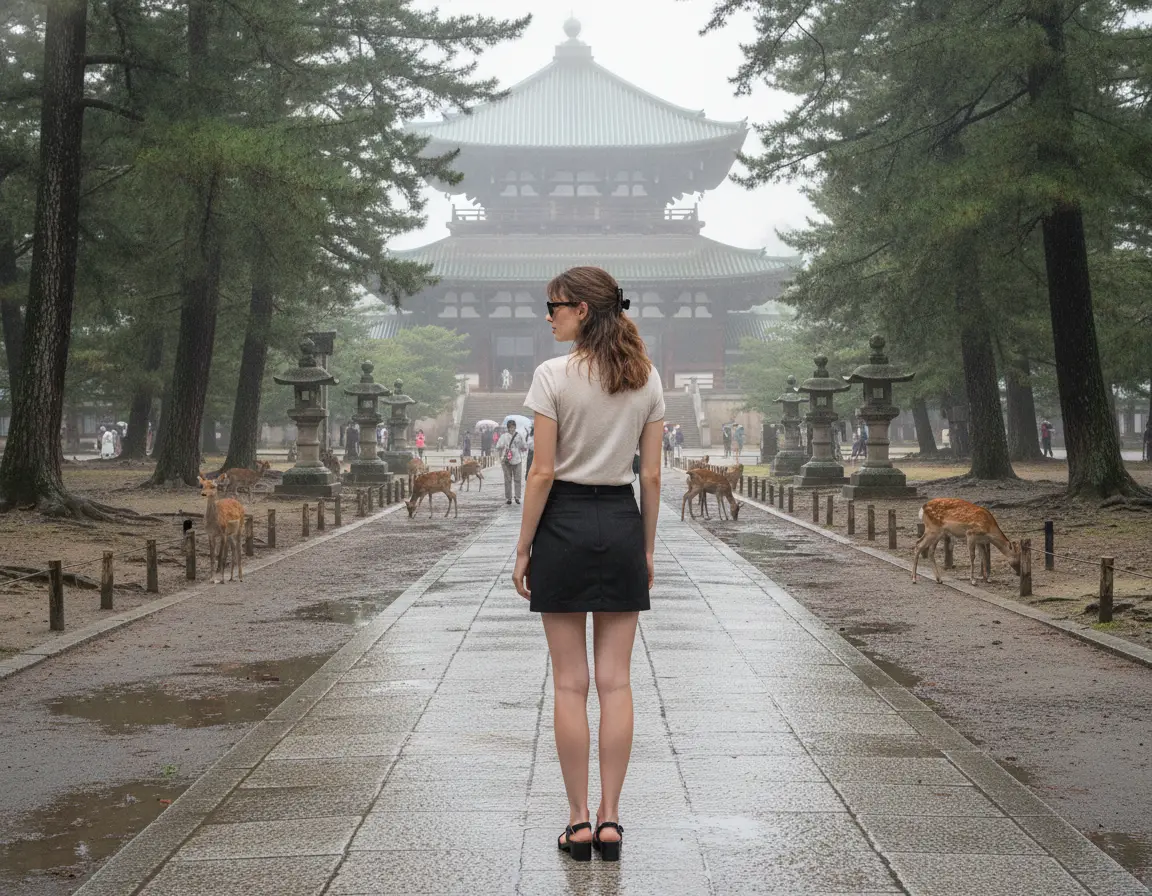
The simplest move is still the Kintetsu train if you’re coming from Kyoto or Osaka. I’d use Kintetsu Nara Station over JR Nara Station unless your hotel is already near JR, because Kintetsu drops you closer to the main sightseeing area. That gap matters more than people admit. It saved me a long, boring walk at the start of the day.
From Kyoto, the Kintetsu line is usually the cleaner choice for a day trip. From Osaka, it’s also easy enough, and the station-to-sights walk is shorter than I expected. I paid around ¥680 one way from Kyoto area transit into Nara on the route I used, which is cheap enough that I didn’t bother overthinking it.
Best for: Day-trippers who want to get off the train and start walking.
Skip if: You’re trying to save a tiny amount of money by taking the slower route and then losing it in time.
My pick: Kintetsu Nara Station beats JR for convenience, and I’d choose it again.
I almost took a cheaper route that would’ve dumped me farther out. It was a bad trade. The extra walk would’ve eaten up the same amount of time I saved, and I was not in the mood for that after rain. If you’re staying less than 5 days in Kansai, don’t be clever here. Pay for the route that gets you closer.
What I’d Book Beforehand and What I’d Leave for Arrival
For In november, I wouldn’t book much in advance unless I was sleeping there on a weekend or during a holiday period. The city itself doesn’t require much advance planning for a basic day trip. The one thing I’d think about ahead of time is accommodation if I wanted to stay overnight near the park or station, because the better-value rooms can disappear faster on busy dates.
I checked simple hotel rates around Nara Station and saw decent midrange places in the roughly $55-$110 range depending on the night. That’s not outrageous, but the cheaper places don’t always sit where you want them. If I were staying one night, I’d pay a bit more for a short walk to the station rather than take a bargain room that turns into a drag with a backpack.
See all Nara hotels on Agoda if you’re doing an overnight and want to compare station-side places fast.
Worth booking ahead: A hotel only if you’re staying overnight or arriving on a packed weekend.
Buy on arrival: Most food, local transit, and the actual day trip plan.
Skip this: Pre-booking a bunch of activities for a normal November visit. That’s money sitting around doing nothing.
I did not need a guided bus tour, and I’m glad I skipped that whole scene. Nara is easy enough to do on your own. The city is small, the route is obvious, and the “local experience” sales pitch around it often feels fake and overpriced. I’d rather spend that money on lunch.
The Deer Part: Fun Once, Annoying If You Handle It Wrong
I knew the deer were the main draw, but I still expected them to feel more magical than practical. They’re not magical. They’re hungry, fast, and absolutely committed to your snacks. I bought deer crackers for ¥200, and one deer immediately started nosing my bag like it was paying rent. Funny the first time. Less so when three more showed up.
If you want the deer experience, do it early-ish and keep your hands empty. I’d also avoid buying too many crackers at once. The animals don’t care about your schedule, and a plastic bag full of food just makes you look like a target. I made the mistake of holding crackers too long while I tried to take a photo. Bad idea. A deer followed me for a full stretch of path, and I had to back up into open space to get rid of it.
Worth it: Yes, but only if you treat it like a quick interaction, not a long activity.
Skip if: You hate being approached by animals or you’re carrying food in a visible bag.
My pick: Buy one small pack of crackers, use them quickly, and move on.
The deer are part of the Nara experience, but they’re also the easiest thing to overdo. I’d call them a 20-minute stop, not a half-day event. That’s the difference between fun and tired.
Temples and Park Walks: What’s Actually Worth Your Time
Todai-ji is the obvious stop, and yes, I went. The temple grounds are worth seeing, but I wouldn’t build the whole day around the paid interior if the line is ugly. I paid ¥600 for entry, and I’m glad I did once, but I wouldn’t wait more than 30 minutes for it. The outside approach and the park setting do a lot of the work already.
I also spent time just walking through Nara Park instead of stacking every famous stop back to back. That turned out better than trying to “cover everything.” The city is better when you give it a little room. If you cram it too hard, the whole thing starts to feel like a checklist.
Worth it: Todai-ji if you’ve never been and the line is manageable.
Skip if: The queue is long or you’re already temple-fatigued from Kyoto.
My pick: I’d pay the ¥600 again, but only on a day when the line is short.
I figured Todai-ji would be the one thing I’d remember most. It wasn’t. The better memory was actually the walk between stops after the rain, when the paths were quiet and I wasn’t fighting heat. That was the part that made November feel useful.
Food and Coffee: Keep It Simple, Eat Well, Don’t Overpay
Nara is not the place where I’d blow money on a fancy lunch just because the menu has English and a cute sign. I grabbed a basic meal near the main sightseeing area and kept it moving. A decent soba or curry lunch around ¥900-¥1,400 is the sweet spot for me here. Anything far above that needs a real reason, not just a pretty photo.
For data, I use a Klook eSIM for Nara — cheaper than roaming, works on landing, no physical SIM to swap.
I also ducked into a coffee shop when the rain flicked back on for a bit. That was the best use of money all day, honestly. I spent about ¥450 on coffee and waited out the damp patch instead of pretending I was tougher than the weather. It’s a small thing, but it made the rest of the walk better.
Best for: Cheap, straightforward meals and a quick coffee stop.
Skip if: You’re expecting a food destination with lots of memorable late-night options.
My pick: I’d rather spend ¥1,000 on lunch and ¥450 on coffee than sit down somewhere overpriced near the park.
The tourist-trap instinct is strong around major sights, and Nara has a few places that bank on it. I’d ignore the menus that look too polished and too expensive for what they are. That math never works out.
Staying Overnight: Only If You Want the Quiet Version
I think Nara is better as a day trip for most people, but an overnight stay can make sense if you want the early morning or late evening version of the city. That’s when the park feels calmer and the day-trippers are gone. If you’ve got a longer Kansai trip and want one low-key night, this is fine. If you only have a few days total, I’d keep moving.
See current Nara hotel prices on Agoda →
The practical reason to stay is simple: you get the place before the crowds and after the last wave of visitors. The downside is also simple: Nara doesn’t have enough going on at night to justify the stay for everyone. I’d only do it if the hotel rate is good and I want a quieter day after Kyoto or Osaka.
Best for: Slow travelers, early walkers, and anyone who wants the park before 9am.
Skip if: You need evening food, bars, or a city that stays lively after dark.
My pick: Overnight is only worth it if the hotel is close to Kintetsu Nara Station and priced well.
If I stayed again, I’d probably choose one night only, not two. One quiet evening is enough. More than that and I’d start wishing I’d spent the extra time in Kyoto instead.
The Mistake I’d Avoid Next Time
I thought I could keep the day loose and make decisions as I went. That part was fine. The mistake was underestimating how much the wet ground and small distances still add up when you keep stopping for deer, photos, and temple entrances. I ended up walking more slowly than I planned and burning time in tiny chunks.
The trigger was simple: I lingered near Nara Park after a rain shower, assuming the next stop was just around the corner. It was, but I still spent more time than I should have adjusting layers, wiping my bag, and waiting for crowds to thin. The consequence wasn’t dramatic, but it cost me about an hour I could’ve used better. I missed a second coffee stop I’d wanted and felt slightly rushed at the end of the afternoon.
What I’d do differently: I’d start earlier, keep one light snack in my bag, and cap the deer stop before it turns into a wandering problem.
Worth changing: Yes. Small delays stack up here.
I also wouldn’t assume every famous stop needs the inside ticket. Sometimes the outside is enough, and in Nara that’s more true than I expected.
Rough daily estimates from my own trip. Prices shift by season.
What I’d Do Differently Next Time
I’d go earlier in the morning and keep the day tighter. Nara doesn’t need a huge itinerary, and I made mine a little too loose. I’d also buy fewer deer crackers, because one pack was enough and I wasted time trying to manage extras.
I’d wear quick-drying clothes again, though. That part worked. The damp after rain wasn’t a problem because I had a short-sleeved top, comfortable bottoms, and a light layer I could stash once the sun came out.
I’d probably skip an overnight unless I found a very good station-side deal. The city is better when it stays simple.
I usually book Nara tours on Klook — the best time slots go fast, especially in peak season.
FAQ
Is Nara worth a day trip in November?
Yes, I think it’s worth it if you want a low-stress day outside Kyoto or Osaka. November is a good month because the weather is usually easier for walking, and I didn’t have to deal with summer-level heat or humidity. I’d treat it as a half-day to full-day outing, not a major destination.
How long should I spend there?
Four to six hours is enough for most people. I spent longer because I lingered, but the actual useful part of the trip doesn’t need an entire day unless you’re staying overnight or moving slowly. If your schedule is tight, one temple, the park, and a food stop is enough.
Should I stay overnight or just visit from Kyoto?
I’d visit from Kyoto or Osaka unless you really want the quiet early morning. An overnight makes sense only if you value a slower pace and don’t mind that Nara gets sleepy at night. For a short Kansai trip, I’d save the hotel money and keep moving.
Is the deer experience fun or just a gimmick?
It’s fun, but only for a short stretch. I bought ¥200 deer crackers and got a few good moments out of it, but it turns annoying fast if you keep the food visible or try to stretch the interaction. Go in, feed them once, then leave before it turns into a chore.
Do I need to book anything before I go?
No, not for a normal November day trip. I’d only book a hotel ahead of time if I was staying overnight, and I’d only book timed activities if I had a very specific reason. For most travelers, the smarter move is to keep the day flexible and spend money on transport and lunch instead.
 Emma Hayes