
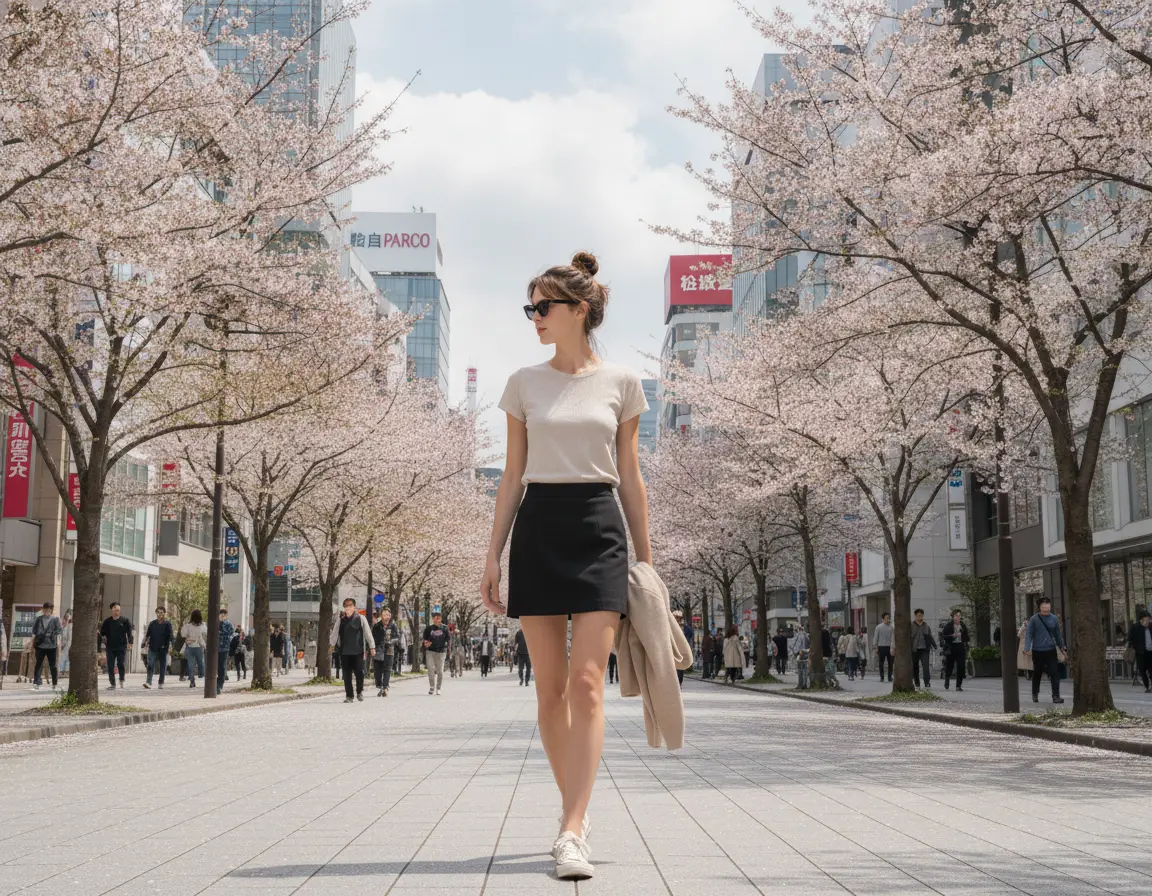
12°C to 25°C: that was the swing I dealt with in one Nagoya March, and it shaped almost every packing choice I made. I started the morning with a cardigan in hand, then ended up in a short-sleeved top by lunch and sunglasses on the walk back. Nagoya in March is a good trip if you want mild weather, fewer crowds than Tokyo or Kyoto, and a city that works best when you plan around transit instead of vibes.
I’d call it worth it for practical travelers, especially if you like easy train access, food that doesn’t feel like a tourist trap, and day trips without the chaos. I’d skip it if you want cherry blossom drama on day one or if you only care about strolling pretty neighborhoods for hours. The real decision is simple: March is a smart month for Nagoya because the city is comfortable and efficient, not because it’s trying hard to impress you.
Quick answer: Stay near Nagoya Station or Sakae for 2–4 nights, pack a light jacket and short sleeves, and book hotels early if your dates overlap with late-March blossom season. I paid around ¥9,500 for a basic business hotel near the station, subway rides were usually ¥210 to ¥270, and a bowl of hitsumabushi cost about ¥4,000 near the station.
What March actually feels like in Nagoya
I expected March to feel cool the whole time. It didn’t. Some mornings were jacket weather, then the sun came out and I was stuffing the cardigan into my bag by early afternoon. That temperature swing is the first thing to plan for, because it changes what you wear, how long you want to stay outside, and whether a long walk feels pleasant or annoying.
March is also when Nagoya starts looking more like a real city trip and less like a winter stopover. Parks get busier, station areas feel easier to use, and I stopped worrying about freezing on platform transfers. Still, I wouldn’t pack like it’s spring everywhere. The mornings can be cool enough that I was glad I brought a layer, and the afternoons can be warm enough that a heavy coat would’ve been stupid.
Worth it if: you want milder weather without summer humidity.
Skip if: you hate temperature swings and want one consistent climate all day.
My pick: bring a light jacket, not a bulky coat. I wore mine in the morning and carried it by lunch.
Where I’d stay, and what I’d skip
I’d stay near Nagoya Station if this is your first visit. I paid more attention to train convenience than charm, and that paid off every single day. I could get in, drop my bag, and move on without burning time in transit. Sakae is the alternative if you want more restaurants and a slightly more lived-in city feel, but I still think the station area wins for short trips.
See current Nagoya hotel prices on Agoda →
I almost booked a cheaper place a few stops away because the nightly rate looked nicer. Then I checked the map and realized I’d be adding about 20 to 25 minutes each way every time I came back at night. That math never works out for me. I paid around ¥9,500 for a basic but clean business hotel near the station, and I’d do that again before I’d save ¥2,000 and lose an hour a day.
See all Nagoya hotels on Agoda if you’re looking at March dates, because the better-located rooms were already moving when I checked back a second time.
Best for: short stays, solo travelers, and anyone arriving late by train.
Skip if: you’re planning a slow, neighborhood-heavy trip and don’t mind extra transfers.
My pick: Nagoya Station for convenience, Sakae only if nightlife matters more than train access.
Getting around without wasting money
Nagoya is one of those cities where the transit is good enough that I didn’t feel the need to overcomplicate anything. I used the subway, walked a lot, and bought single fares instead of trying to make a pass work just because it sounded efficient. A subway ride usually landed in the ¥210 to ¥270 range, which is cheap enough that I didn’t build my day around squeezing savings out of every trip.
What I actually used most was the combo of walking and short subway hops. I’d leave the hotel, walk 10 to 15 minutes, take one train, then walk again. That worked better than trying to cover the city like it was Tokyo. I also liked that station areas felt straightforward. No weird maze stress, no twenty-minute detours because I missed one exit. Fine, not glamorous. Useful.
If you’re staying less than 5 days, I’d skip any transit pass unless you’ve already mapped out heavy train use. I didn’t buy one, and I don’t think I lost money. I spent roughly ¥600 to ¥900 a day on local transport, which felt fair for how little friction I had.
Best for: travelers who don’t mind walking 10–20 minutes between stops.
Skip if: you want a city where every attraction is clustered in one tiny district.
My pick: pay per ride unless you’ve got a packed sightseeing schedule.
What to book before you go, and what to leave for arrival

I’d book hotel nights ahead if your trip overlaps with late-March blossom timing or a weekend. I wouldn’t trust last-minute pricing in that window. The rooms that looked decent on my first search were noticeably pricier a few days later, and the cheap ones were either far away or looked tired in the reviews. I’m not picky about decor, but I do care when a listing feels like it’s hiding the location.
For data, I use a Klook eSIM for Nagoya — cheaper than roaming, works on landing, no physical SIM to swap.
For food, I wouldn’t pre-book much at all. Nagoya is not a city where I needed reservations for every decent meal. I ate directly at the source more often than I planned. A bowl of hitsumabushi ran me about ¥4,000 at a place near the station, and I was glad I didn’t pay someone to explain it to me while standing in line. I also grabbed a ¥430 coffee and a ¥260 onigiri from a convenience store one morning when I wanted to get moving fast. That was the right call.
If you want a guided activity, I’d only book ahead for something that has limited slots or a fixed time. Otherwise, I’d keep the schedule loose. I book tours through Klook when I actually need a timed entry, but in Nagoya March trips I’d rather spend that money on food or a better hotel room.
Best for: flexible travelers who like to decide meals on the fly.
Skip if: you’re hoping to cram in a lot of guided activities. Nagoya doesn’t need that.
My pick: book lodging early, leave meals open, and only reserve timed experiences if the date is fixed.
What I ate, what I’d eat again, and what I’d skip
Nagoya food is one of the few reasons I’d tell someone to pay attention to the city instead of treating it like a transfer stop. I tried miso katsu, hitsumabushi, and tebasaki, and I’d rank them in that order for value. Hitsumabushi was the one I paid the most for, and it felt worth it once. I don’t need it twice in one trip. Miso katsu, though, is the kind of thing I’d happily eat again because it’s filling, local, and not trying to be cute about it.
I’d skip any restaurant that’s clearly built for photo traffic. The places with long lines and English-heavy menus near major attractions usually charge more for less. I waited 25 minutes once for a spot that looked busy in a good way, and honestly, the meal was fine but not better than the no-frills place I found two blocks away after that. That’s the part people don’t say enough: a line is not a flavor profile.
Worth it if: you care about regional food and don’t mind casual dining rooms.
Skip if: you only want polished cafés and Instagram desserts. Nagoya’s best meals are more practical than pretty.
My pick: eat local, pay for one signature dish, and ignore the rest of the hype.
The one March mistake I’d avoid next time
I assumed March would be quiet enough that I could book everything loosely and still get my first-choice room. That was the setup, and it was wrong. The trigger was checking hotel prices again after a weekend date started looking more popular, and the cost jumped enough that I noticed it immediately. I ended up paying about ¥1,800 more per night than I wanted to because I waited too long, and the cheaper rooms were gone from the better areas.
The consequence wasn’t disaster, but it was annoying. I lost the room I wanted, and I spent more time comparing mediocre options than I should have. Next time, I’d book the hotel as soon as my dates are fixed, especially if I’m going anywhere near cherry blossom season. If I were only passing through for one night, I’d still book early. That small hassle isn’t worth saving a few hundred yen.
Best for: travelers who book dates early and hate last-minute stress.
Skip if: you’re comfortable gambling on price for a short-notice trip.
My pick: lock lodging first, then forget about it.
What I’d do differently next time
I’d build one full day around transit and food instead of trying to “see everything.” Nagoya works better when I stop treating it like a checklist city. I’d also choose my hotel even more aggressively around station access, because I underestimated how much I’d value a five-minute walk after dinner. And I’d probably budget a little more for food, not because it’s expensive, but because the city rewards eating well more than it rewards souvenir shopping.
Rough daily estimates from my own trip. Prices shift by season.
I usually book Nagoya tours on Klook — the best time slots go fast, especially in peak season.
FAQ
Is Nagoya cold in March?
No, I didn’t find Nagoya cold in March, but I did need layers in the morning. I had about a 12°C start one day and was down to a short-sleeved top by afternoon, which is why I’d pack a cardigan or light jacket. If you hate temperature swings, bring a layer you can shove in your bag without thinking about it.
Do I need to book hotels early for late March?
Yes, I’d book early for late March, especially if your trip overlaps with cherry blossom timing or a weekend. I saw decent rooms jump in price by about ¥1,800 per night when I checked back later. If your dates are fixed, don’t wait around hoping the same room will still be there.
Is Nagoya Station a good base for a short trip?
Yes, Nagoya Station is the base I’d pick for a short trip. I liked being able to drop my bag and move straight into the city without extra transfers, and that saved me time every day. If you’re there for 2 or 3 nights, convenience beats a prettier neighborhood you’ll barely use.
Can I do Nagoya without a transit pass?
Yes, I’d skip a transit pass for most short Nagoya trips. I spent roughly ¥600 to ¥900 a day on local transport and never felt like I was bleeding money. If you’re staying under 5 days and not doing a ton of cross-city backtracking, single rides are the cleaner choice.
What should I eat first if I only have one day?
I’d start with miso katsu, then try hitsumabushi only if you want a pricier signature meal. Miso katsu felt like the better value for me, while hitsumabushi was the one I paid about ¥4,000 for and treated as a one-time splurge. If you only have one meal to spend on, I’d choose the cheaper local dish and keep moving.
 Emma Hayes