
This post contains affiliate links. If you purchase through these links, I earn a small commission at no extra cost to you. I only recommend products I actually use and have tested across multiple trips.
I used to pack like I was trying to win a game of suitcase Tetris. I’d lay everything out on the bed, fold, refold, and still end up with one shoe stuffed inside another and a charger floating loose at the bottom. On a humid trip to Southeast Asia, I spent 40 minutes repacking a 40L bag because my clothes kept exploding across the room every time I opened it. That was the trip where I finally admitted my old setup was the problem, not my packing skills.
Now I pack with cubes, and I’m picky about which ones earn space in my carry-on. I don’t care about the aesthetic of “organized travel.” I care about whether I can get through security, open my bag on a hostel bunk, and find a clean shirt without dumping everything out. The Eagle Creek Pack-It Specter Compression Cube Set is the one I kept after trying cheaper options that made packing more annoying, not less.
The Short Answer
If you’re trying to figure out what is the best travel bag to buy for carry-on only packing, I’d start with the Eagle Creek Pack-It Specter Compression Cube Set. I used it for 2 years across 18 countries, and it cut my packing time from 40 minutes to 15. It’s worth it if you want to fit 7 days of clothes into a 40L bag without living out of a wrinkled pile.
My blunt take: packing cubes are not magic, but this set actually changes how much you can carry. The mesh top makes it easy to see what’s inside, the compression works better than the cheap versions I tried, and it’s the one thing that made carry-on-only travel feel less annoying. It’s only if you pack mostly normal clothes, though. Bulky winter layers don’t compress much, and the zipper needs a careful hand.
What I Actually Pack With
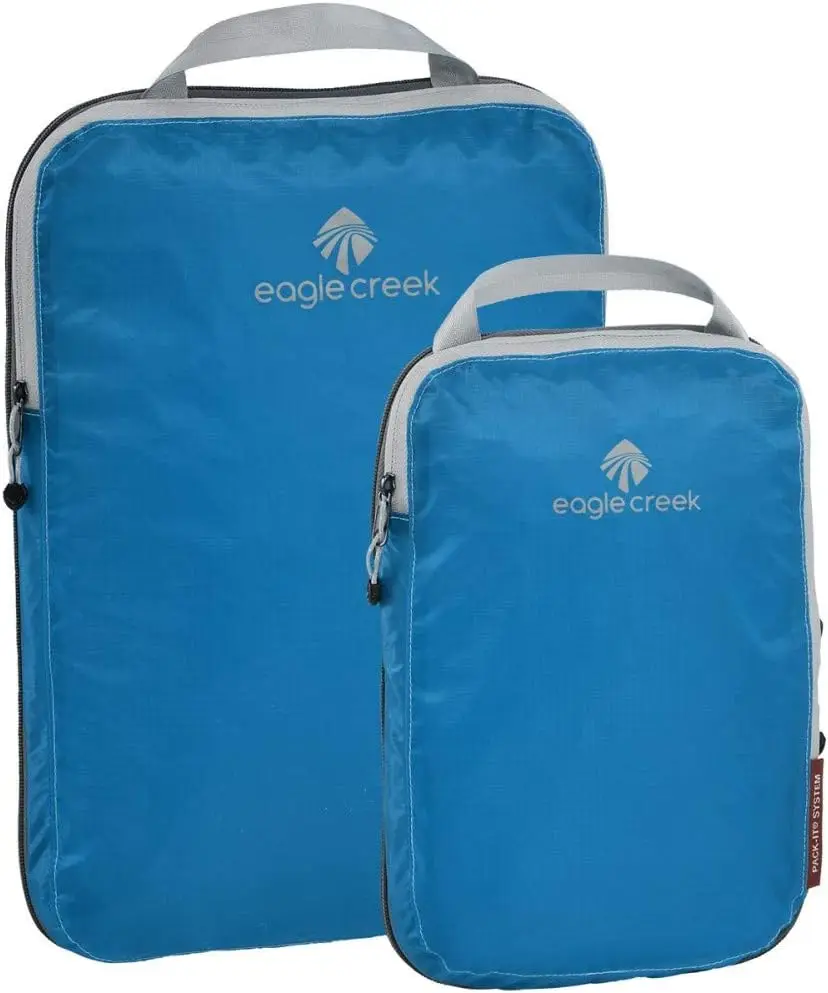
Eagle Creek Pack-It Specter Compression Cube Set
Eagle Creek · $25-45 when I bought it
Cut my carry-on packing time from 40 minutes to 15. The compression version actually works — I fit 7 days of clothes into a 40L bag.
- Worth knowing:
- Compression doesn’t help with bulky winter clothes
- The zipper needs to be handled carefully
Check current price on Amazon (affiliate link)
Eagle Creek Pack-It Specter Compression Cube Set — I resisted packing cubes for 2 years, and I was wrong. Before this, I used a cheap Amazon dupe and a $30 drugstore cube set, and both failed in different ways. The Amazon dupe ripped at the seam after 3 trips; I paid $18 and got one useful month out of it. The drugstore set had weak zippers, and on a long-haul flight to Lisbon I spent 12 minutes fighting one cube open in a hostel hallway because the teeth kept snagging.
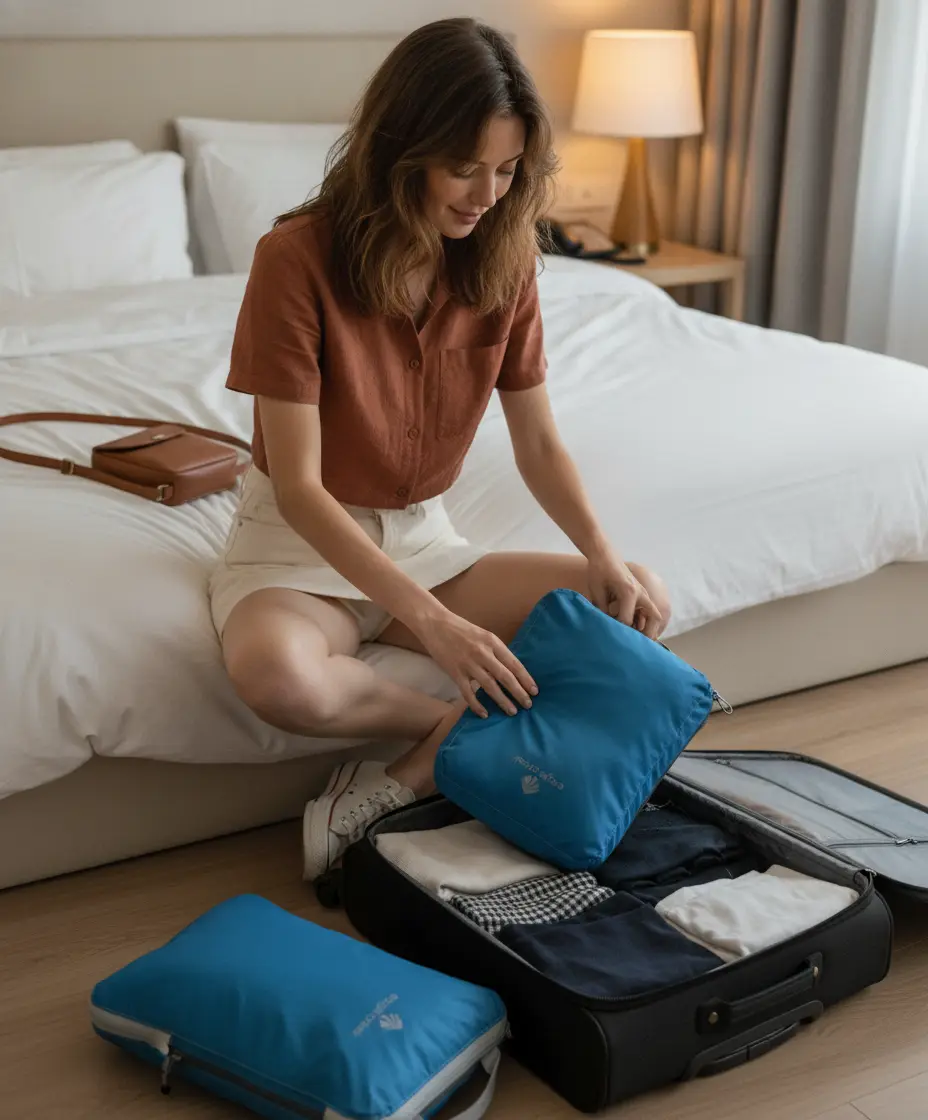
The winning difference with the Eagle Creek set showed up on a 9-hour flight day when I had to repack in a hurry before a flight connection. I fit 7 days of clothes into a 40L bag: 5 tops, 3 bottoms, underwear, socks, a light jacket, and a sleep set, and I still had room for a passport pouch and toiletry bag on top. That is the claim that matters. Not “organized.” Not “nice materials.” It let me close the bag without sitting on it, which is the moment I knew it was doing something the cheaper cubes never did.
After that switch, my packing time dropped from 40 minutes to 15, and I stopped pulling everything out just to find one item. The mesh top is the small detail that keeps earning its place: I can see the black leggings versus the black tee without unzipping three things. Worth it for me, especially when I’m moving every few days and don’t want my bag to turn into a laundry mystery.
Field test details: I used this set for 2 years in humid summers and cold winters, so I’ve seen both ends of the spectrum. In hot weather, the cubes kept clean clothes separated from damp ones after a sweaty transit day in Bangkok. In colder weather, the compression helped less because a puffy sweater and thermal layers don’t shrink much; that’s where the set hits its limit. The zipper is the one quirk I still watch. If I rush it on an overstuffed cube, it feels like it could catch, so I zip it slowly and haven’t had a failure since.
What it won’t do: it won’t make bulky winter packing suddenly elegant. If your carry-on is full of boots, thick knits, and a puffer, this set won’t save you much space. It’s best for people packing mostly light-to-medium weight clothes who want a cleaner system, not a miracle.
Verdict: worth it. Around $25-45 when I bought it, it paid for itself in fewer packing mistakes and less time wasted digging through my bag. If you’ve ever repacked on a hostel floor because your bag turned into a mess, this is the fix I’d point you to first.
What I didn’t want from my bag system: a bulky organizer that ate half my carry-on, a zipper that died after a month, or cubes so opaque I had to open every one to find a charger. This set solved the part that actually bothered me: wasted time.
What Didn’t Make the Cut
Cheap Amazon no-name compression cubes — I tried these on 3 trips, including a 5-day carry-on-only run through Spain, and the seam split after I overpacked one with jeans and a sweatshirt. I lost $18 and an hour repacking on the floor of a train station because the cube basically gave up halfway through the trip. Skip it if you want anything that survives more than a few uses.
Bagail packing cubes — I used these for one Asia trip and one domestic carry-on week, and the zipper snagged badly when the cube was stuffed with underwear, socks, and a thin sweater. On day 4 in a humid hostel room, I spent 8 minutes wrestling one cube open while trying not to wake anyone. Only if you pack very lightly; otherwise the zipper annoyance gets old fast.
Amazon Basics packing cubes — I carried these for 2 trips, and they were fine until I tried to compress a full week of clothes before a long-haul flight. They didn’t really compress, so I still ended up kneeling on my suitcase to get it shut, which is exactly the kind of nonsense I’m trying to avoid. Worth it only if you want basic organization and don’t care about saving real space.
How It All Fits Together
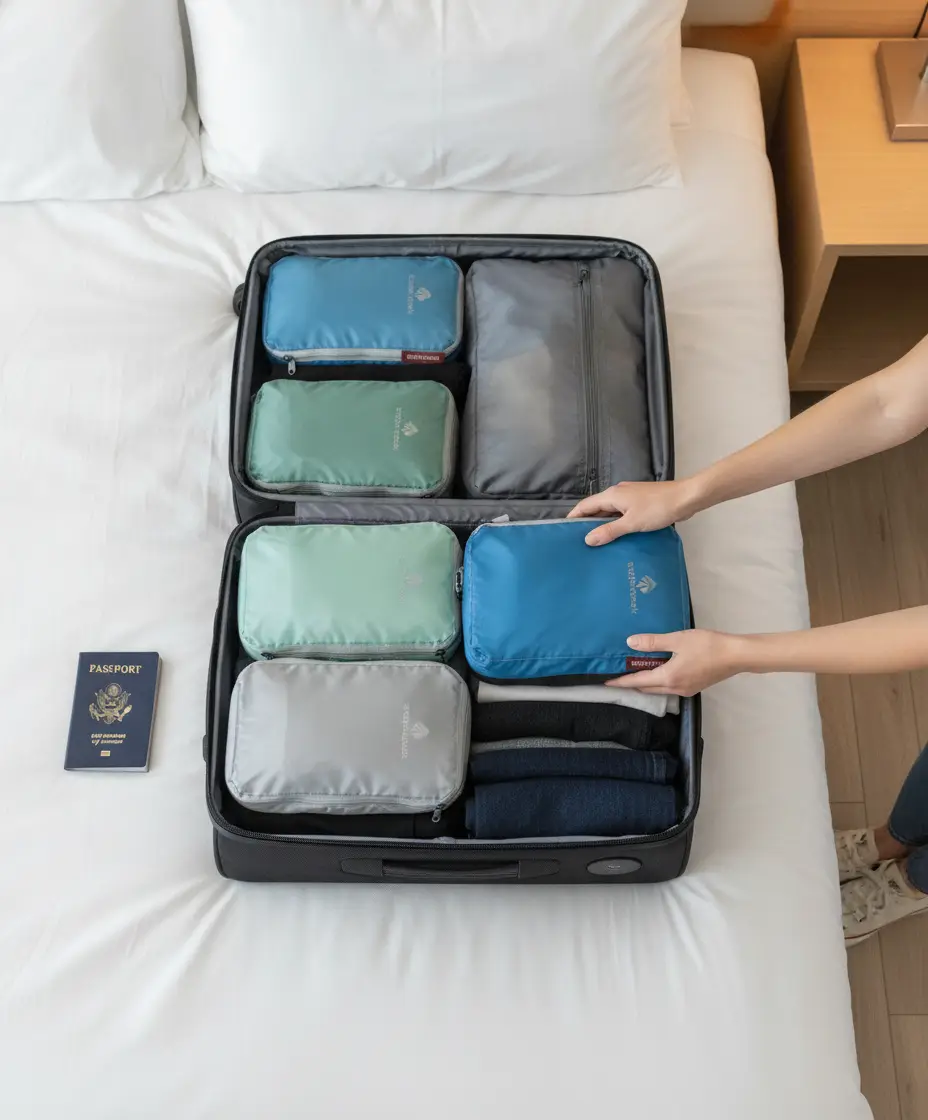
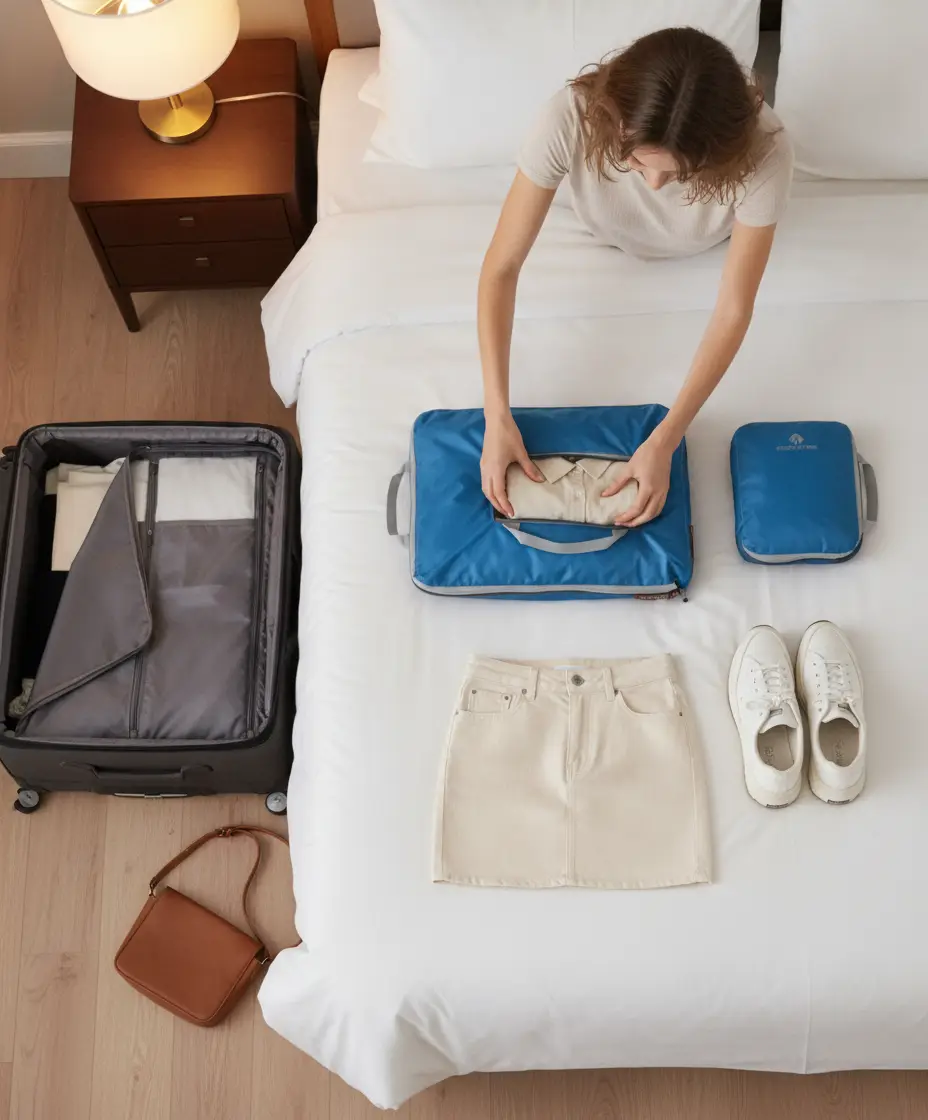
The way I pack now is simple: one compression cube for tops, one for bottoms, one for underwear and socks, and a small loose zone for toiletries and chargers. In a 40L carry-on, that setup means I can keep my clean clothes separated from anything damp, and I can open the bag without creating chaos. On a travel day, that matters more than a fancy bag with 17 pockets I’ll never use.
The real win is that packing becomes repeatable. I know exactly what fits: a week of clothes, a light jacket, a Kindle, toiletries, and a passport pouch. What doesn’t fit is also useful to know. A bulky winter sweater takes up too much room for the compression to matter, so I leave room for that instead of pretending the cube will solve physics.
If you’re doing carry-on only travel, this is the boring gear that actually saves money and stress. I’d rather spend $25-45 once and stop fighting my bag every trip than keep buying cheaper organizers that fail at the worst possible time.
I expected packing cubes to be a nice-to-have luxury, but what actually happened was I realized my old system was eating up 40 minutes every time I opened my bag because everything shifted around and wrinkled instantly. The honest takeaway: a good compression cube set isn’t about looking organized—it’s about reclaiming time and sanity, especially when you’re repacking in a hostel at 6 a.m. before catching a flight.
I thought the cheap ¥2,000 Amazon dupe would work just fine since it looked identical to the Eagle Creek version, but the seams split after my second trip and the whole thing was trash by month two. What I learned is that spending more upfront on a quality set actually costs less than replacing broken cubes every few months and dealing with the stress of a bag falling apart in a foreign country.
FAQ
Do packing cubes actually help with carry-on only travel?
Yes, they help a lot if you pack light-to-medium clothes and move often. I cut my packing time from 40 minutes to 15 with the Eagle Creek set, and I can fit 7 days of clothes into a 40L bag. If your carry-on is already packed with bulky gear, the space savings drop fast.
Are compression cubes worth it for winter trips?
No, not really if your bag is full of thick sweaters, boots, and puffy layers. I’ve used this set in cold weather, and compression barely helps with bulky winter clothes because the fabric itself takes up the space. For winter, I’d still use cubes for organization, but I wouldn’t buy them expecting a miracle.
How many cubes do I actually need?
I’d use 3 to 4 cubes, not a giant set you never fill. My usual setup is one for tops, one for bottoms, and one for underwear and socks, plus a small open area for toiletries and chargers. More cubes just means more zippers and more chances to overcomplicate your bag.
Will these survive long trips or just weekend travel?
Yes, they hold up for long trips. I’ve used the Eagle Creek set for 2 years across 18 countries, and the mesh top still lets me see what’s inside without opening every cube. The only thing I baby is the zipper, because rushed overstuffing is where most packing cubes start to fail.
What do you wish you knew before buying packing cubes?
I wish I’d known that cheap cubes fail in small, annoying ways before they fail dramatically. The difference is not just space; it’s whether you can zip them shut, find your clothes fast, and keep using them after a few hard trips. If you pack carry-on only and hate digging through a messy bag, this is one of the few travel buys I’d make again without overthinking it.
Should I buy a new bag before flying into Fukuoka, or test my current one first?
Test what you have for at least one 3-5 day trip before spending £80-100 on luggage. I wasted money on a “perfect” rolling carry-on before my first solo trip because I didn’t know how I actually pack; I switched to a backpack after two flights and never looked back.
Are rolling bags or backpacks better for getting around Fukuoka’s train stations?
Backpack, 100%—the stairs between platforms at Hakata Station are steep and frequent, and I watched someone’s rolling bag bounce down an entire flight during rush hour. My 40L pack stayed on my shoulders for the 15-minute walk from Hakata to Canal City without feeling like a burden.
What’s a realistic budget for a good carry-on-only bag that lasts more than one trip?
Expect to spend £50-100 for something that won’t fall apart after 4-5 trips. The Eagle Creek set costs around £65, and I got 2 years out of it across 18 countries, so that’s roughly £3 per month—cheaper than replacing the £18 Amazon cube that ripped in week one.
Do I need a bag with lots of pockets, or is that just marketing?
One good outer pocket is enough if you use packing cubes inside; I don’t need eight tiny compartments because everything lives in labeled cubes anyway. The real test is whether the main compartment zips smoothly and the straps don’t dig into your shoulders after wearing it for 2 hours on the Fukuoka Loop Line.
What size bag should I bring if I’m spending a week in Fukuoka?
I’d recommend a 40-liter backpack or a carry-on rolling bag around 22 inches, which gives you enough space without being cumbersome on Fukuoka’s crowded trains and narrow streets. During my week in Fukuoka last year, I found that anything larger than 45 liters became awkward navigating the Tenjin underground shopping areas and fitting into train overhead compartments. This size lets you pack for 7 days comfortably while still having room for souvenirs from local shops like those along Canal City.
 Emma Hayes
What I’d Rebuy Immediately
I’d rebuy the Eagle Creek Pack-It Specter Compression Cube Set first. It’s the one thing that made carry-on packing faster, cleaner, and less irritating across 2 years of real use. I’d also skip straight past the cheap Amazon dupes and drugstore cubes next time, because I already paid for those mistakes once.
If I were packing for another 40L carry-on trip tomorrow, this is the item I’d put back in my bag without thinking. It’s not glamorous. It just works.