

This post contains affiliate links. If you purchase through these links, I earn a small commission at no extra cost to you. I only recommend products I actually use and have tested across multiple trips.
I used to carry whatever cheap wallet was already in my bag, and that worked right up until I was sprinting through a train station in Milan with my cards, metro ticket, and a receipt pile jammed into one sloppy fold-over. I paid for that mistake in the dumbest way: I spent 10 minutes emptying my crossbody at a café table just to find one transit card, then another €4 replacing a coin pouch I didn’t even need. After a few trips like that, I stopped caring about cute wallet styling and started caring about whether the thing stayed slim, stayed organized, and didn’t turn into a brick after a week of receipts.
The Pomelo Best RFID Blocking Wallet is the one I kept reaching for after that. I used it for 22 months across 11 countries, including a 3-week trip through Italy where I was paying for transit cards, coffee, and museum tickets out of one compact wallet. For me, the RFID part was fine, but the real win was simpler: it stayed thin in my crossbody when I was moving through airports and train stations, which is where most wallets annoy me the most. Around $12-22 when I bought it, that’s a decent trade if your main problem is bulk, not luxury leather.
The Short Answer
If you want the short version: I’d pick the Pomelo Best RFID Blocking Wallet if you carry 4-8 cards, a few bills, and maybe a folded receipt or two. It worked best on my Italy trip, on long-haul flight days, and in cold weather when coat pockets get awkward. I’d skip it if you hoard coins, keep every receipt, or want a wallet that ages into something prettier over time. For women who want a slim travel wallet that doesn’t hog space in a crossbody, this is the one I’d buy again.
What I Actually Kept Using on the Road

Pomelo Best RFID Blocking Wallet is the one I ended up with after testing a few cheaper options that annoyed me in different ways. Before this, I used a $9 no-name Amazon trifold with a snap closure, and it turned into a lumpy brick by day three in Lisbon because I kept stuffing in metro tickets, a hotel key card, and too many receipts. The snap also caught on the lining of my crossbody once, which sounds minor until you’re standing at airport security and trying to repack one-handed.
The winning differentiator here was not some dramatic tech feature. It was that the Pomelo Best stayed slim even after a full day of use, which I noticed on a long travel day from Florence to Rome when I had my passport pouch, lipstick, two cards, folded cash, and a museum ticket stub in the same bag. I pulled it out at the station, paid for coffee, then shoved it back in without the wallet bulging into a weird square. That sounds small, but on travel days small is the whole game.
After 22 months, the result is pretty straightforward: I stopped wasting time reorganizing my bag every few hours, and I stopped overstuffing my crossbody just because the wallet could technically hold more. For $12-22, that’s worth it if your travel style is transit-heavy and you want one place for the basics. It won’t solve clutter if you carry a ton of coins or insist on keeping every paper receipt for months.
Field test-wise, I’ve fit my driver’s license, three credit cards, a transit card, a room key card, and a few euro bills without it feeling stuffed. On a rainy day in Amsterdam, I pulled it out with damp hands and the wallet didn’t get soggy or misshapen, which is more than I can say for the faux-leather wallet I used before it. The leather feels decent, but after heavy daily use it’s not the kind of wallet that develops a pretty patina; mine just looks used in a normal, honest way. The one quirk I noticed: if I toss in too many receipts, it gets chunky fast, so I started clearing it once a week instead of letting it become a paper landfill.
What it won’t do: it’s not the right pick if you carry lots of coins, because coins make it bulk up fast and defeat the whole point. It also won’t age like a fancy heirloom wallet, so if you want something that gets better-looking with years of wear, this isn’t that. I’d still call it worth it for travelers who care more about function than wallet romance.
One thing I learned the hard way: RFID blocking is not the reason I kept this wallet. I don’t travel around testing scanners like a lab experiment. The real reason it stayed in my bag for 22 months is that it solved the everyday problem of a wallet becoming annoying by noon.
Before this, I also tried a popular slim card holder from a big minimalist brand that looked great on Instagram and disappeared into my bag nicely. The failure was obvious by the end of a humid summer day in Barcelona: I had to dump out loose bills and a folded transit receipt because the slot depth was too shallow for real travel use, and I lost 15 minutes digging for the right card at a café counter. That sort of wallet works if you carry exactly three cards and nothing else. I do not live like that.
With the Pomelo Best, the after part was simple. I could keep my most-used cards together, add cash when I needed it, and still slide the wallet into a front pocket of my crossbody without feeling like I was carrying a tiny brick. If you’ve ever had a wallet turn into a junk drawer by day two of a trip, this is the fix. It’s worth it specifically for people who want slim storage without the constant re-shuffling.
What Didn’t Make the Cut
$9 no-name Amazon trifold wallet: I used one for 2 trips, including a weekend in Lisbon and a short train-heavy stretch in Spain. It failed in the exact way cheap wallets always do: the snap got annoying, the folds got bulky as soon as I added receipts, and it made my crossbody sit awkwardly against my hip on hot days. The cost wasn’t just the $9; I also wasted time every afternoon flattening it out so my bag would close properly. Skip it.
Popular minimalist metal card holder: I tried one for 6 days on a winter trip when I was wearing gloves and moving between airports and tram stations. The problem was access, not style. I fumbled cards out of it at a ticket machine in cold weather, and the sharp edges made it awkward in my coat pocket. I spent about €18 on it and ended up annoyed enough to stop carrying it. Only if you carry almost no cash and never need to juggle coins, receipts, or transit cards.
Cheap faux-leather RFID wallet from a drugstore chain: I used this for one long-haul flight and a few days after landing, and it was already starting to look tired. The material picked up scuffs fast, and the inside slots stretched just enough that cards slid around more than I liked. On a 12-hour flight, I kept pulling it out for passport checks and each time it felt a little more flimsy. For the money, it was a bad trade. Skip it unless you genuinely don’t care how fast it wears.
How It All Fits Together
My carry-on setup works best when the wallet stays boring. The Pomelo Best sits in the front pocket of my crossbody with my passport pouch, one lip balm, earbuds, and a pen. That means I’m not digging through a bag full of loose stuff at airport security or at a train platform when I’m already juggling a boarding pass. I used this setup on long-haul flights, in humid summers when everything feels sticky, and in cold winters when I’m wearing a coat and don’t want to unzip three layers just to pay for espresso.
The wallet also plays nicely with carry-on only packing because it keeps my daily essentials separated from the rest of my stuff. I don’t need a giant purse organizer or a separate coin pouch unless I know I’m going somewhere cash-heavy. If I’m in a place where I’ll be paying for small things all day, I keep a few bills and one coin slot’s worth of change in the wallet and stop there. That’s the sweet spot. More than that and it gets bulky fast.
The bigger lesson after 43 countries is that travel gear should reduce decisions, not add them. This wallet does that. It doesn’t look fancy, but it keeps me from doing the stupid little bag-sweep ritual five times a day. Worth it if you want your wallet to disappear into your routine instead of becoming a project.
I expected that RFID blocking would be the main reason to upgrade my wallet, but what actually mattered was that the Pomelo Best stayed thin enough to fit in my crossbody without creating a bulge after 22 months across 11 countries. The RFID part was fine, but honestly forgettable—the real win was not having to dig through a brick of receipts and cards every time I needed 30 seconds to find my transit pass. If you’re a solo traveler moving between airports and train stations, slim organization beats any fancy security feature.
I thought any $15 wallet would do the job until I tested a no-name trifold for three days in Lisbon and it turned into a lumpy mess with metro tickets, key cards, and receipts jammed inside. The snap closure even caught on my crossbody lining at airport security, which made me realize cheap wallets cost more in frustration than they save upfront. Pick something that actually stays flat under real use, not just in the product photo.
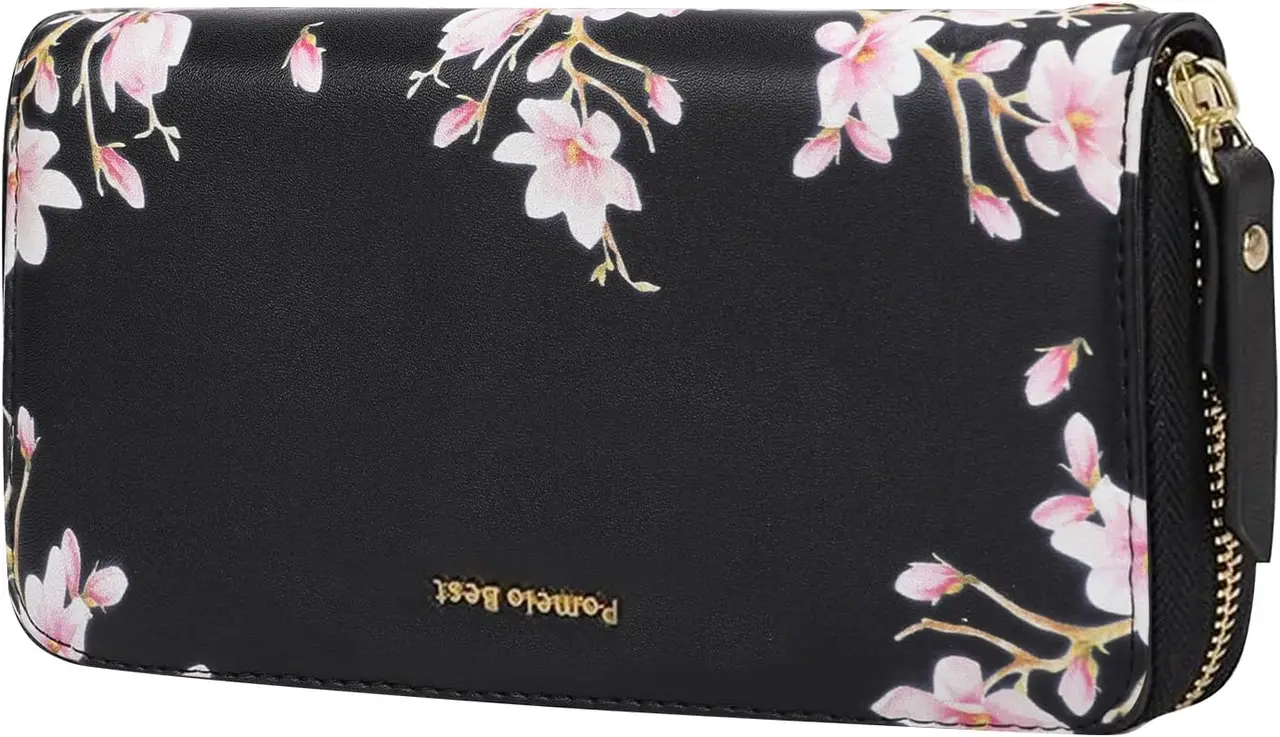
Pomelo Best RFID Blocking Wallet
Pomelo Best · $12-22 when I bought it
A simple wallet that keeps cards organized without taking up much space in a crossbody. The RFID part is fine, but for me the bigger win is that it stays slim when I’m moving through airports and train stations.
- Worth knowing:
- The leather feels decent, but it is not the kind of wallet that ages beautifully after heavy daily use.
- If you carry lots of receipts or coins, it gets bulky fast.
Check current price on Amazon (affiliate link)
FAQ
Is the Pomelo Best wallet actually good for women traveling with a crossbody bag?
Yes, it’s one of the better slim options I’ve used for that exact setup. I carried it in a crossbody for 22 months, and the main reason it worked was that it stayed flat enough to sit beside my phone and passport pouch without turning the bag into a lump. If your bag is small and you hate bulk, this is a smart pick.
Does RFID blocking matter when you’re traveling?
Yes, but I wouldn’t buy this wallet just for RFID. I bought it because it stayed organized and slim on transit-heavy trips, and the RFID feature was more of a bonus than the headline. If you want peace of mind in airports and train stations, this gives it without adding much bulk.
Will this wallet hold coins and receipts from a full day out?
No, not well. I tried that in Italy and it got bulky fast once I started stuffing in museum stubs, coffee receipts, and spare change. If you carry a lot of paper or coins, I’d choose something roomier instead of forcing this one to do a job it doesn’t like.
Is it good for winter trips when I’m wearing gloves and a coat?
Yes, as long as you want a slim wallet rather than a big organizer. I used it in cold weather and it was easy to pull from a coat pocket or crossbody without wrestling with a bulky fold-over. The only downside is that if your hands are gloved and you carry a lot of cards, a simpler card holder may be faster.
Would you rebuy this for a long-haul flight or a short city break?
Yes for both, and I’d rebuy it for the long-haul flight first. On flights and train days, the slim shape matters more than anything because I want passport, cards, and cash to stay together without taking over my bag. For a short city break, it’s still worth it if you know you’ll be moving a lot and paying for small things all day.
Will a thin RFID wallet actually protect my cards in Chiang Mai’s tuk-tuks and night transportation?
The RFID blocking did its job during my rides to Old City, though honestly the bigger win was that nothing fell out of my wallet when I was squished three-across in a shared tuk, which happens constantly here. I’d rather have slim and secure than worry about skimming on a 15-minute ride that costs 40 baht anyway.
What’s the real difference between an RFID wallet and a regular one for solo travel in Chiang Mai?
I didn’t notice skimming attempts in Thailand, but the RFID feature didn’t add bulk, so there was no reason not to have it—it was the same $15-20 price as a regular slim wallet. What actually mattered more was that my wallet stayed flat in my bag while I was navigating Warorot Market or waiting in lines at 7-Eleven, which happen multiple times daily here.
Should I carry a separate coin pouch if I’m using a slim RFID wallet in Thailand?
I ditched my coin pouch entirely in Chiang Mai since I was mostly paying 20-100 baht for street food and small items anyway, and my Pomelo handled loose change fine for a few hours before I’d spend it. Carrying two pouches defeated the entire purpose of going slim, and I never felt like I needed the extra organization for Thai baht coins.
Can I fit my Chiang Mai hotel keycard and transit card in an RFID wallet at the same time?
Yes—I kept my guest house keycard, a 3-day songthaew pass (150 baht), and 4-5 bills in mine simultaneously during a week in Old City without any bulging. The real test was my museum ticket stubs from Wat Chedi Luang—after collecting three paper stubs, that’s when I noticed the wallet starting to thicken, so I’d toss receipts in my bag instead.
Are designer RFID wallets worth the premium price for traveling in Chiang Mai?
I’d say it depends on your budget and style priorities—I invested in a mid-range leather RFID wallet for around 2,500 baht at the Chiang Mai Night Bazaar rather than a high-end designer version, and it’s held up perfectly for my six-month stay. The expensive brands don’t necessarily offer better protection; what matters more is that the wallet has genuine RFID-blocking material and fits comfortably in your crossbody bag. I’ve found that a quality non-designer option lets you replace it guilt-free if it gets stolen or damaged during travels to remote temples outside the city.
 Emma Hayes
What I’d Rebuy Immediately
The Pomelo Best RFID Blocking Wallet is the one I’d replace without thinking if I lost it tomorrow. I’d rebuy it for the slim profile, the easy airport-and-train-station handling, and the fact that it stayed useful for 22 months instead of turning into another dead wallet at the bottom of a drawer. If you want a travel wallet that keeps cards organized without acting like a tiny suitcase, this is the one I’d pick again.