
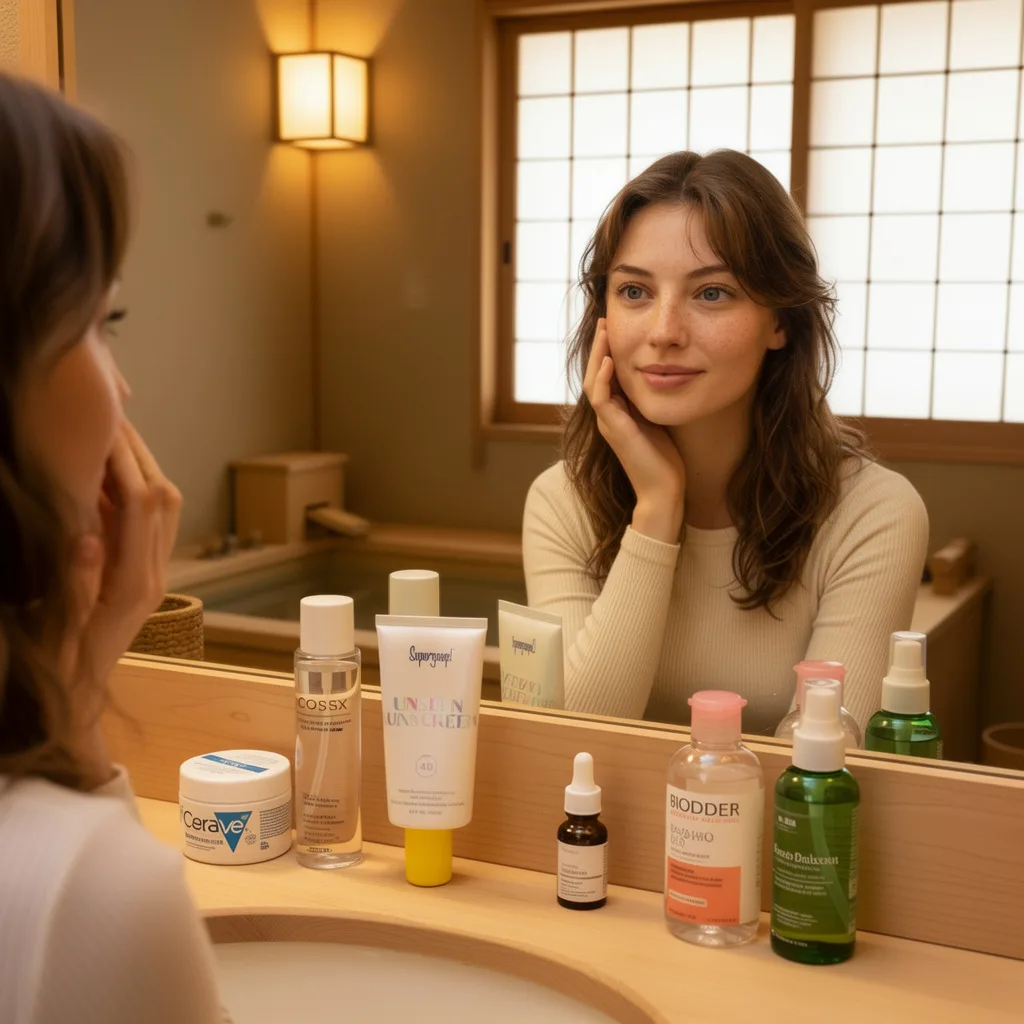
When it comes to best travel skincare routine for long flights, here’s what I learned. This post contains affiliate links. If you purchase through these links, I earn a small commission at no extra cost to you. I only recommend products I actually use and have tested across multiple trips.
Before I found this lineup, I was that person hauling a Ziploc full of half-used bottles through 40 countries, convinced that more products meant better skin. It didn’t. It meant a leaked Tatcha Dewy Skin Cream that soaked through my passport pouch somewhere over the Pacific — $68 wasted, customs form ruined, and skin that looked just as wrecked when I landed in Tokyo as it did after every other long-haul. I also spent a full year trying to make a Neutrogena Hydro Boost Water Gel work as my travel moisturizer before I admitted to myself it was pilling under every sunscreen I owned by hour two of any flight. That’s not a texture problem. That’s a wasted seat in my liquids bag for 12 months.
What actually fixed it was getting brutal about one question: does this product solve a real problem that happens on planes and in unpredictable climates, or does it just sound good in a flat lay? The six products below survived that filter. They’ve been tested on 12-hour flights to Tokyo, sticky afternoons in Bangkok, dry winter days in Kyoto, and every weird hotel bathroom in between. None of them have cute packaging. All of them work.
For Kyoto specifically — where the weather can flip from dry, cold winter air to humid spring dampness inside a single trip — I need a moisturizer that doesn’t fight sunscreen, a toner that resets flight skin without torching it, a serum that actually pulls moisture in, and a cleanser backup for the hotel sinks that were clearly designed for washing hands, not faces. I do not care about cute packaging if it leaks in my toiletry bag.
The Short Answer
If I’m packing for long flights to Kyoto, these are the products I actually rely on: Supergoop! Unseen Sunscreen SPF 40 for daily sun protection without the white cast, CeraVe Moisturizing Cream for the post-flight moisture rescue, Bioderma Sensibio H2O Micellar Water for the “I need my face off now” airport moment, and The Ordinary Hyaluronic Acid 2% + B5 for keeping flight skin from looking wrecked the next morning.
If I want a little extra comfort mid-flight, I also bring Mario Badescu Facial Spray with Aloe and Rosewater and, on nights when my skin feels congested after a long haul, COSRX AHA/BHA Clarifying Treatment Toner. I don’t need all six every trip, but these are the ones that keep earning a spot.
What I Actually Put on My Skin
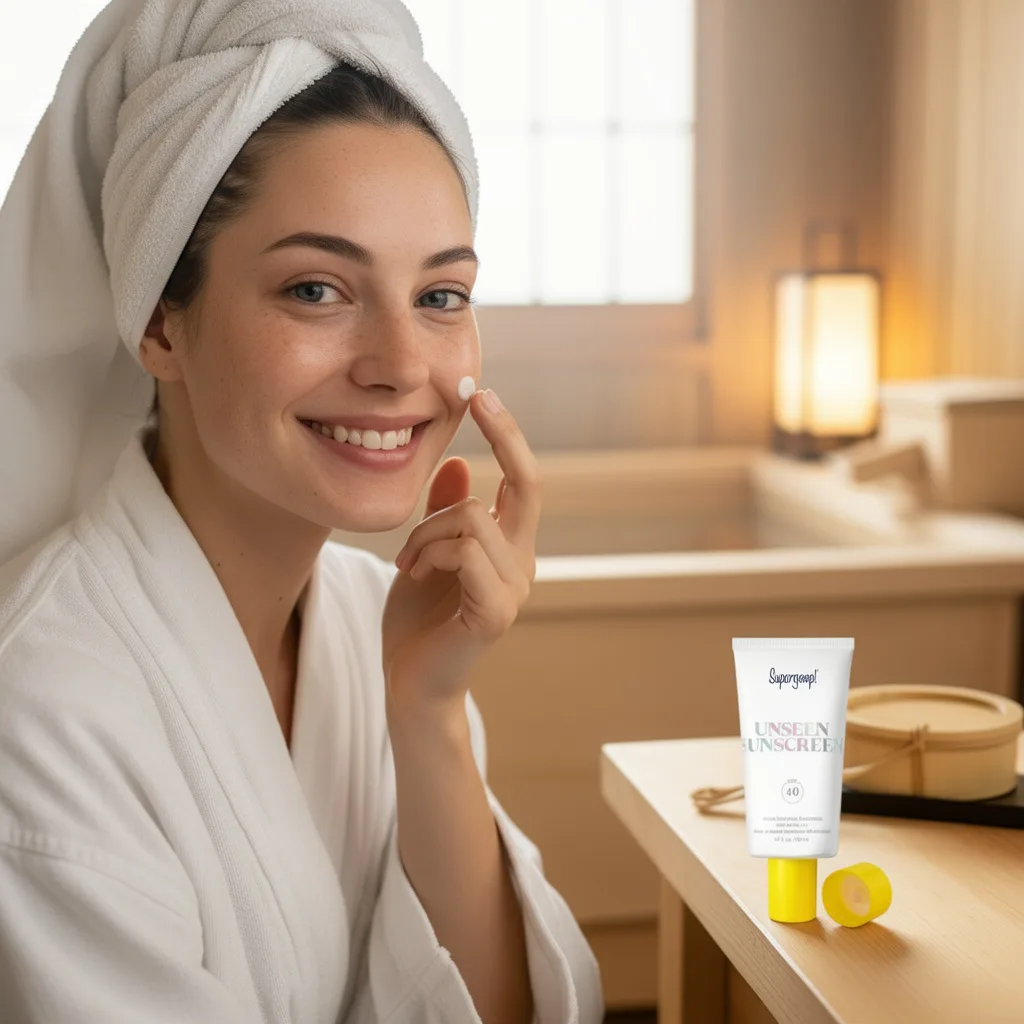
Supergoop! Unseen Sunscreen SPF 40 is the sunscreen I’ve now used across 8 countries over more than a year, and the reason I kept it after the first trip was one specific moment: reapplying at hour three in Bangkok heat, 34°C, standing outside a temple with no shade. It went on over powder, left zero white cast, and didn’t feel like I’d just applied a second face. That’s the test most sunscreens fail in practice. My previous go-to — an Elta MD UV Clear SPF 46 — did fine in dry climates but turned tacky by midday in humidity, which defeated the point of reapplying at all.
The Supergoop disappeared the same way in dry Kyoto winters as it did in humid Bangkok, which is why it’s still in my bag. I apply it as the last step before going out, and I reapply every 3 hours when I’m in sun. The bottle goes fast if you actually do that, so I’d buy two for any trip longer than 10 days. At $20–38 when I bought it, it’s on the pricier end for a daily sunscreen, but it’s the only one I’ve reapplied consistently without hating the texture by afternoon.
What it won’t do: keep up with heavy sweating — after a long uphill walk in Kyoto in April, I could feel it needed a full reapplication, not a top-up.
CeraVe Moisturizing Cream is my long-haul flight non-negotiable, and I’ve gone through probably six tubs over 3 years in 20 countries. The thing I only noticed after the first few trips: it doesn’t pill under the Supergoop. That sounds small until you’ve spent a year troubleshooting moisturizer-sunscreen texture wars. The Neutrogena Hydro Boost I used before would start pilling within two hours of application — every time, every sunscreen, every climate. I scrapped it after month 12 and switched to CeraVe specifically because it sits flat under anything I put on top.
On a 14-hour flight from London to Tokyo, I applied it over hyaluronic acid about two hours in, slept for six hours, and woke up with skin that didn’t feel like parchment. That’s not a small thing at altitude. The travel tub — the small one, not the giant jar — fits in my liquids bag alongside everything else: the Bioderma 100ml, The Ordinary dropper, the Mario Badescu spray, and still has room for a lip balm. I’ve fit that exact lineup into a single standard quart-size Ziploc.
What it won’t do: work well in genuinely humid climates unless your skin is desperate — in Bangkok I use half as much or it sits heavy all day.
COSRX AHA/BHA Clarifying Treatment Toner is what I reach for when flight skin goes congested and grey, which is a reliable outcome for me on any route over 10 hours. I’ve used it for 2 years across 12 countries, and the routine is the same every night I travel: cotton pad, two swipes across forehead and cheeks, done in 45 seconds. The 150ml bottle has stayed carry-on legal for me every trip — I check it against my liquids bag each time because it’s close enough to the limit to make me nervous, and it’s cleared security in 12 countries without issue.
One thing that took me a few trips to figure out: the smell is noticeably chemical — not overwhelming, but if you’re doing skincare in a tiny hotel room with your travel partner already asleep, do it in the bathroom. I also switched from disposable cotton pads to a single reusable one after the third country; the waste was adding up fast and a reusable pad works identically.
What it won’t do: anything useful if your skin is already irritated — I skipped it for three nights after a full day in dry Kyoto winter wind because adding acids to compromised skin is just spending money to make yourself look worse.
The Ordinary Hyaluronic Acid 2% + B5 is the one product I’d rather buy two of than run out of mid-trip. At $9–10, it’s the easiest decision in this lineup. I apply it on damp skin right after toner, before the CeraVe, and on flights over 12 hours I’ll do a mid-flight pass at around hour six. The bottle fits in a jeans pocket, which matters when I’m doing skincare in an airplane seat that was clearly designed by someone who has never had knees.
The specific thing I tested: on a 13-hour flight from Dubai to Tokyo, I applied it mid-flight over slightly damp skin (I used a single spritz of the Mario Badescu spray first to give it something to bind to), then put the CeraVe over it. By landing, my skin looked tired but not shriveled. Without it — which I know from the trips before I started using it — I’d land looking like I’d slept in a paper bag. That’s the actual difference at this price point.
What it won’t do: work if you apply it to dry skin. It needs moisture to pull in — if you skip the damp-skin step it can feel tight and slightly tacky rather than plump.
Bioderma Sensibio H2O Micellar Water is my airport non-negotiable, and I’ve used it for 4 years across 25 countries. One well-soaked cotton pad takes off a full day of Supergoop, city pollution, and whatever else accumulated. I use it on the plane in the last hour before landing — in the lavatory, face over the tiny sink, one pad — and I arrive without that layer of stale sunscreen and recycled air that used to make me not want to look at myself in the hotel mirror.
The 100ml size is exactly TSA carry-on legal, which is the main reason it keeps coming with me over any other micellar water. I’ve tried the Garnier SkinActive Micellar Water ($8 for 400ml, which sounds better on paper) but I can’t bring 400ml on a carry-on, and decanting it into a travel bottle meant I always packed too little and ran out by day four. The Bioderma 100ml is the exact right amount for a 10-day trip if I’m also using it to remove sunscreen nightly.
What it won’t do: deep clean. It removes surface stuff well but after a full day in a polluted city I still want a proper cleanser when I can get one — the Bioderma is the bridge, not the destination.
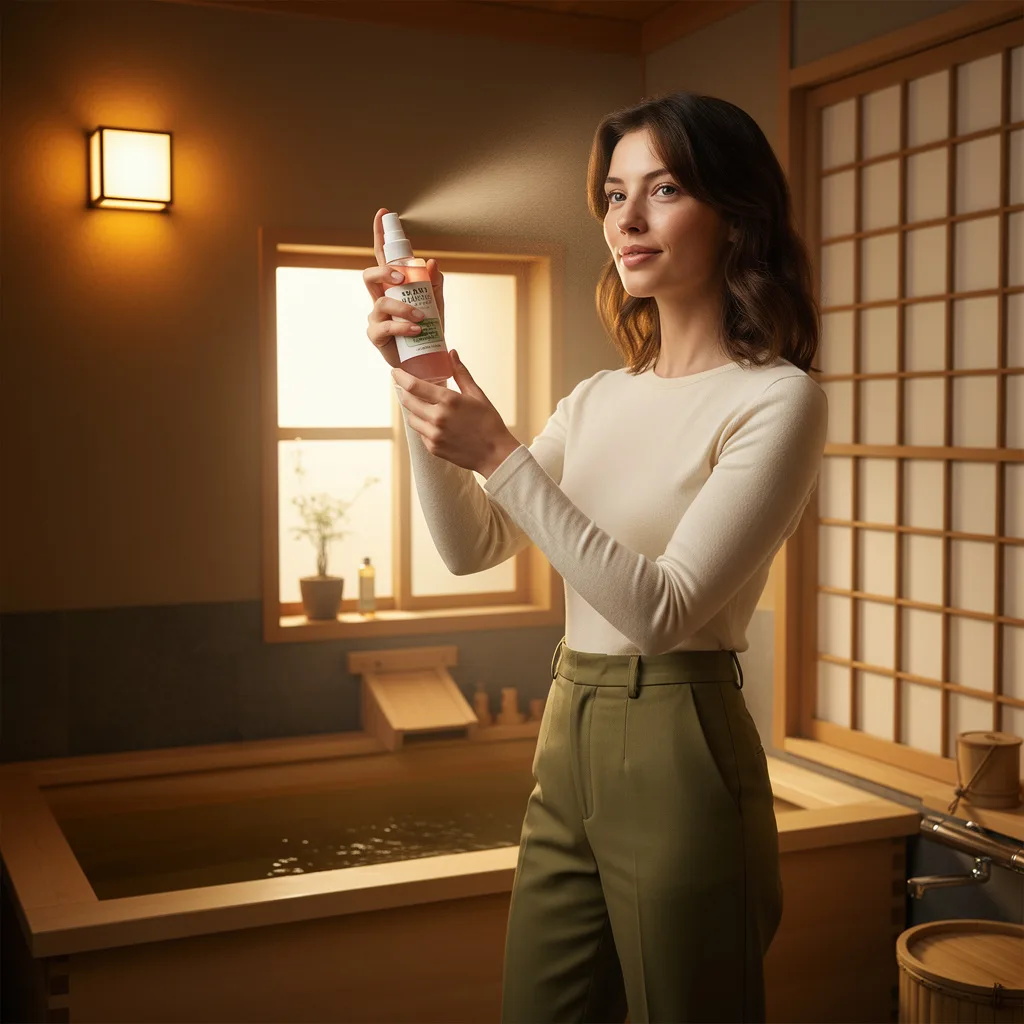
Mario Badescu Facial Spray with Aloe and Rosewater is the comfort item I keep in both my carry-on and my day bag, and I’ve used it for 2 years in 18 countries. The specific job it does that nothing else in this kit does: it gives the hyaluronic acid something to grip mid-flight without me having to use a whole skincare step. One spritz, pat slightly, apply the HA, done. I discovered this by accident on a flight where I had no water to splash on my face and improvised — and my skin was noticeably less tight by landing than on previous flights where I’d skipped that damp-skin step.
It also doubles as a setting spray, which I use after sunscreen on days when I’m wearing any face makeup. The smell is genuinely nice — light, not synthetic — and that matters when you’re applying it in a row seat surrounded by strangers. The 4oz bottle is technically at the TSA limit. I’ve had it waved through every time, but I’d buy the 2oz version if you’d rather not have that conversation with a security officer at 5am.
What it won’t do: replace actual hydration. It’s a mist, not a serum — if your skin is genuinely parched, this gives you about 20 minutes of comfort before you need the real layers underneath it.
What Didn’t Make the Cut
Three specific things I cut and why they deserved it:
Tatcha Dewy Skin Cream ($68). Beloved by many people who do not check a bag. I used it for four months and it performed fine until I packed it in a toiletry bag for an overnight flight. The lid isn’t sealed — it’s just a press-fit top — and it came open somewhere over the Pacific, soaked through my passport pouch, and ruined a customs declaration form. I arrived in Tokyo with $68 of moisturizer on my documents and perfectly dry cheeks. The texture is also too rich to use under sunscreen without pilling. Gone.
Neutrogena Hydro Boost Water Gel ($18–22). My moisturizer for the first year I traveled seriously. It pilled under every sunscreen I tried — didn’t matter which one, didn’t matter if I waited five minutes or fifteen. By hour two of any flight the texture was balling up under my sunscreen and the whole thing looked rough. I thought it was a sunscreen problem for most of that year. It wasn’t. Twelve months, multiple tubes, probably $80 total before I figured out what the actual issue was. Switching to CeraVe solved it in one flight.
Garnier SkinActive Micellar Cleansing Water ($8 for 400ml). Great value if you check a bag. I don’t. Decanting it into a 100ml travel bottle meant I ran out by day four on every 10-day trip, and the travel bottle always smelled vaguely like old product within a week. The per-ml price difference between this and Bioderma is not worth the logistics headache when the Bioderma comes in an exactly TSA-legal size and I don’t have to think about it.
How It All Fits Together
My carry-on skincare setup for Kyoto fits into one standard quart-size Ziploc: the Bioderma 100ml, The Ordinary 30ml dropper, the CeraVe travel tub, the Supergoop tube, the Mario Badescu spray, and the COSRX toner 150ml. That’s it. Everything closes. Nothing leaks because I check every lid before packing and keep the dropper bottle upright.
Before the flight, I cleanse with Bioderma Sensibio H2O Micellar Water, then layer The Ordinary Hyaluronic Acid 2% + B5 on damp skin, then finish with CeraVe Moisturizing Cream if my skin feels dry. If I’m going to be out in daylight after landing, Supergoop! Unseen Sunscreen SPF 40 goes on last because it doesn’t pill over the CeraVe and doesn’t leave me looking chalky in Kyoto’s flat winter light.
On the plane I keep it simpler. I mist with Mario Badescu Facial Spray with Aloe and Rosewater when the air gets nasty, then apply hyaluronic acid over that damp layer around hour six. If the flight is long enough, I’ll do a second pass with the Bioderma near landing. The COSRX AHA/BHA Clarifying Treatment Toner only comes in at night, on the ground — not at altitude, not when my skin is already stressed from recycled air.
The real trick is not packing every product for every possible problem. One cleanser backup, one hydration layer, one moisturizer, one sunscreen, two optional extras I know I’ll actually use. That setup is boring. But boring is what keeps my skin from looking like a dried-out mess when I land in Kyoto after 12 hours in the air and still want to leave the hotel that afternoon.
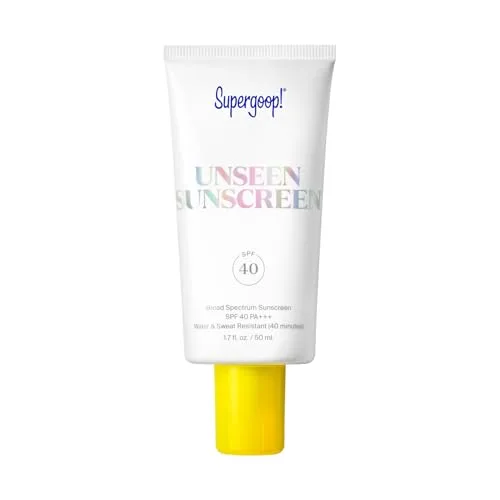
Supergoop! Unseen Sunscreen SPF 40
Supergoop · $20-38 when I bought it
Invisible under any makeup, zero white cast. I reapply every 3 hours in Southeast Asia and it never feels heavy — which is the one thing my previous sunscreen failed at by midday.
- Worth knowing:
- Goes fast if you reapply properly — buy two for trips over 10 days
- Slightly pricey for daily use
Check current price on Amazon (affiliate link)
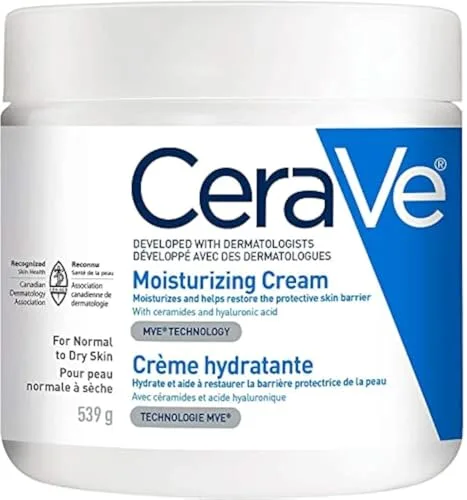
CeraVe Moisturizing Cream
CeraVe · $12-20 when I bought it
My long-haul flight non-negotiable. Fragrance-free, doesn’t pill under sunscreen (unlike the Neutrogena Hydro Boost I used for a full wasted year), and the travel tub fits in any liquid bag.
- Worth knowing:
- Heavy texture in humid climates — use half as much in Bangkok
- Plastic tub isn’t the most packable
Check current price on Amazon (affiliate link)
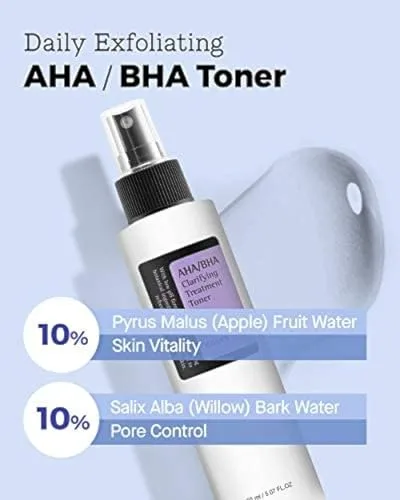
COSRX AHA/BHA Clarifying Treatment Toner
COSRX · $12-15 when I bought it
Cleared the congested skin I always get on long-haul flights. The 150ml fits carry-on — I use a cotton pad, two swipes, done in 45 seconds.
- Worth knowing:
- AHA/BHA means skip it if skin is already irritated — adds insult to injury
- Cotton pad waste — I switched to a reusable one after country three
Check current price on Amazon (affiliate link)
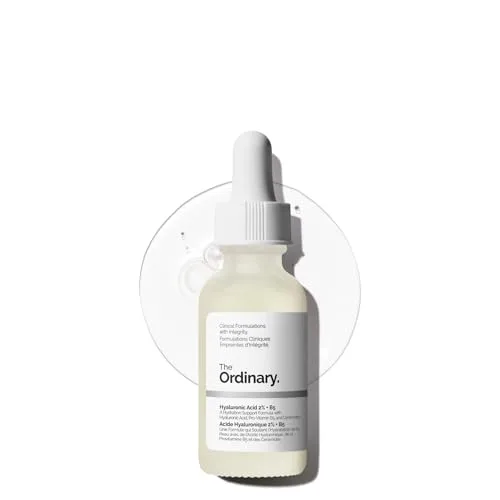
The Ordinary Hyaluronic Acid 2% + B5
The Ordinary · $9-10 when I bought it
The one product I’d rather buy two of than run out of. Applied mid-flight over a spritz of the Mario Badescu spray, my skin landed noticeably less wrecked after 13 hours. At this price there’s no reason not to test it yourself.
- Worth knowing:
- Needs to go on damp skin or it pills and feels tight
- Dropper packaging is slightly fiddly in an airplane seat
Check current price on Amazon (affiliate link)
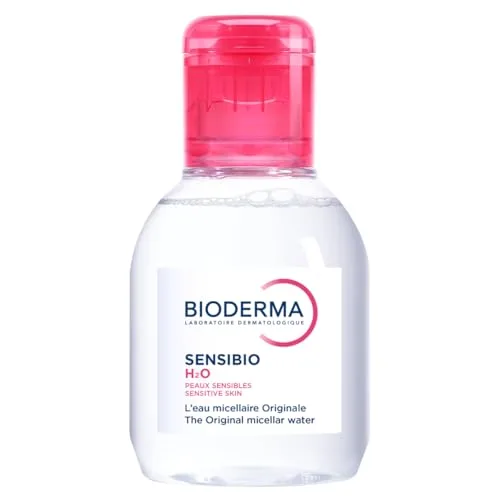
Bioderma Sensibio H2O Micellar Water
Bioderma · $10-13 when I bought it
My airport non-negotiable for 4 years, 25 countries. One soaked cotton pad takes off a full day of sunscreen, pollution, and city. The 100ml is exactly TSA-legal — no decanting, no drama.
- Worth knowing:
- Goes through cotton pads fast
- Not a deep-clean — follow with a proper cleanser when you can get to a real sink
Check current price on Amazon (affiliate link)
Do I really need a full skincare routine on a long flight?
No. A full routine on a plane is mostly theater, and I say that with affection. The cabin air is already doing the most damage it can, so I stick to three things: take off the grime, put water back in, and seal it in before my face starts feeling like paper left too close to a radiator. Cleanser, hyaluronic acid, moisturizer. That’s enough to get through a long-haul without turning the tray table into a bathroom shelf.
What changes when I land in Kyoto?
Usually the weather, which is annoyingly the whole point. Kyoto in winter can feel sharp and dry in a way that makes my skin complain by lunchtime, while the warmer months are humid enough to make heavy moisturizer feel like a mistake. So I go lighter when the air is sticky and reach for CeraVe when it’s cold and dry. Sunscreen still stays in the bag either way. I’m not letting a nice temple day turn into an expensive peeling situation.
Is micellar water enough for cleaning my face after a flight?
Yes, sometimes. If I’ve just stepped off a 12-hour flight, my standards are not glamorous. Micellar water is enough to get off sunscreen, airport grime, and the general feeling of having been indoors with strangers for too long. It’s especially useful when the hotel sink is tiny, awkward, or placed with the kind of confidence only bad design can manage. If I have the energy for a proper cleanser later, I use one. If not, micellar water does the job well enough to stop me from feeling haunted.
What’s the one product I’d skip if I’m trying to pack lighter?
I’d skip the mist first. Mario Badescu Facial Spray with Aloe and Rosewater is pleasant, but it’s very much in the “nice to have while pretending I’m not on a plane” category. Sunscreen and moisturizer are the non-negotiables. The mist is the thing I reach for when I want to feel slightly more human, which is not the same as needing it.
How do I keep my skin from getting irritated on a 12-hour flight?
I keep it boring. That usually means no new products, no acids, and no optimism about how my skin will behave after eight hours of recycled air. I cleanse before boarding, put hyaluronic acid on damp skin, seal it with moisturizer, and leave it there. If I’m being honest, the best travel skincare routine for long flights is the one that survives exhaustion without requiring me to assemble a spa treatment in economy. Sunscreen goes on after landing, not because it’s dramatic, but because Kyoto is still Kyoto and I’d rather not arrive already sun-stressed.
 Emma Hayes
Honest hotel reviews and real budget travel advice from someone who’s actually there.
What I’d Rebuy Immediately
If I lost my whole toiletry bag tomorrow, I’d rebuy Supergoop! Unseen Sunscreen SPF 40, CeraVe Moisturizing Cream, Bioderma Sensibio H2O Micellar Water, and The Ordinary Hyaluronic Acid 2% + B5 first. Those are the products that survive every trip because they solve actual problems, not imaginary ones.
COSRX AHA/BHA Clarifying Treatment Toner stays in the “yes, but only when my skin can handle it” category, and Mario Badescu Facial Spray with Aloe and Rosewater is the first thing I’d cut if I needed to save space. My honest Kyoto flight routine is not glamorous. It just works, and that’s why I keep coming back to it.