

This post contains affiliate links. If you purchase through these links, I earn a small commission at no extra cost to you. I only recommend products I actually use and have tested across multiple trips.
I used to pack chargers the way I packed toiletries: one cheap spare, one “just in case” brick, and a vague hope that my hostel outlet situation would be civilized. That worked until a 3-week Spain and Portugal trip when I had a MacBook Air, iPhone, and AirPods all fighting for one outlet in hostel rooms and one airport lounge. I was tired of playing outlet roulette at 11 p.m., and I was even more tired of carrying a pile of separate bricks that took up half my tech pouch.
The shift happened after I kept wasting money on chargers that were either too weak, too bulky, or too annoying to live with on carry-on-only trips. Once I started traveling with a laptop more often, my packing rule changed: I don’t care if a charger looks sleek on a product page. I care if it can handle a real work setup, survive humid hostels, and not make me unpack my whole bag at security just to charge overnight.
That’s why my charger kit got smaller but more specific. For short trips, I want one compact brick that doesn’t feel like a burden. For longer work trips, I’ll carry something bigger if it saves me from bringing three separate chargers. That’s the whole game for me now: cost per value, not “premium” for the sake of it.
The Short Answer
If you want the best GaN charger for international travel for a real carry-on setup, I’d split it like this: Anker Nano 65W Charger for short trips, light packs, and one-device-at-a-time charging; Satechi 145W GaN Travel Charger for longer trips when I’m carrying a laptop plus phone, earbuds, and maybe a camera battery pack. I used the Anker for 22 months across 12 countries, and I used the Satechi for 14 months across 9 countries, so this isn’t theory.
My quick verdict: if you travel with just a laptop and phone, the Anker is worth it. If you’re juggling multiple USB-C devices and actually need power, the Satechi is worth the extra money. If you hate bulky tech gear, skip the bigger one and don’t force it.
What I Actually Pack and Why


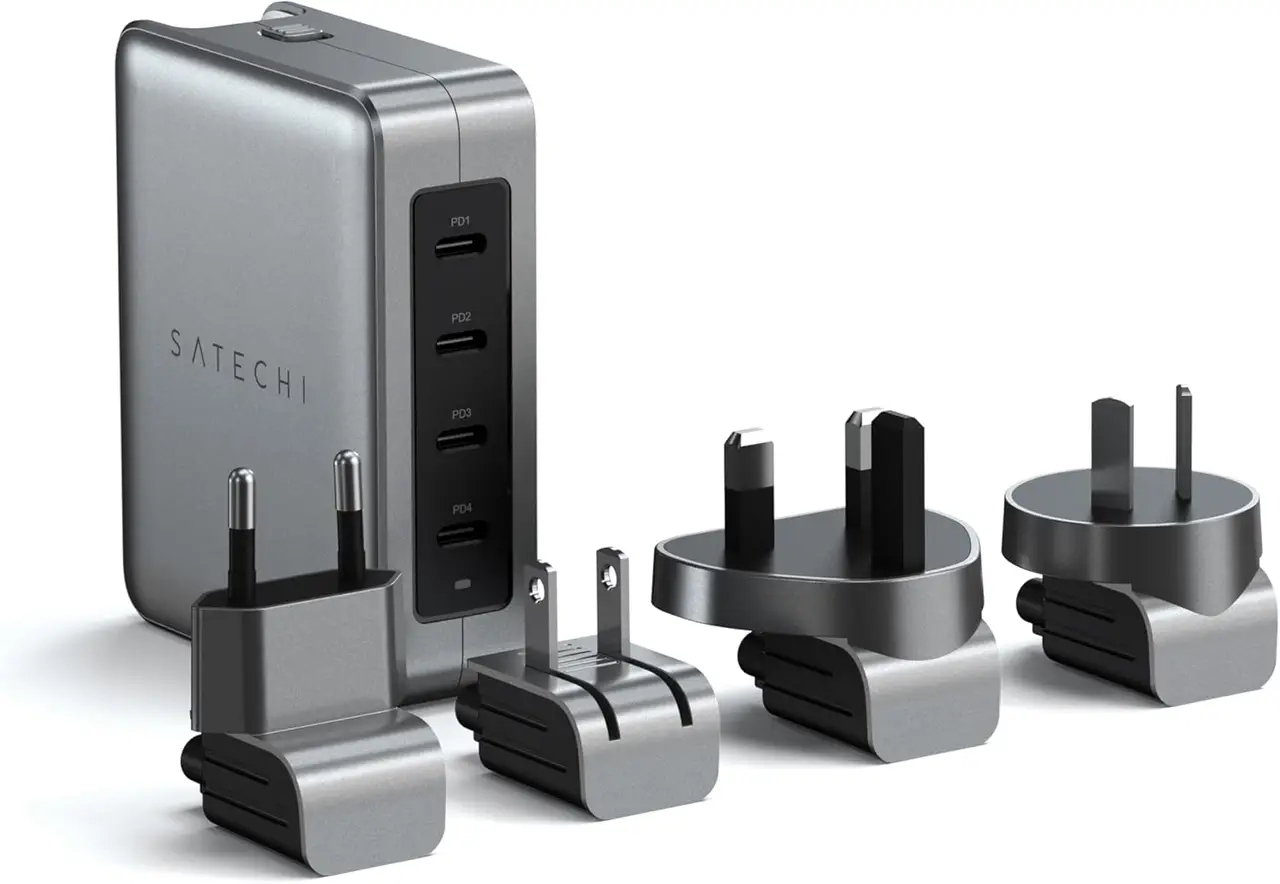
Satechi 145W GaN Travel Charger
Satechi · $70-100 when I bought it
I’d pack this for longer trips when I’m carrying a laptop, phone, earbuds, and maybe a camera battery pack. It’s expensive, but the multiple ports and enough power for a MacBook Pro make it worth it if you actually travel with real work gear.
- Worth knowing:
- It’s still a bulky charger compared with a single-port 65W brick, so it takes up noticeable space in a small tech pouch.
- The price is high enough that I’d only buy it if I regularly travel with multiple USB-C devices.
Check current price on Amazon (affiliate link)
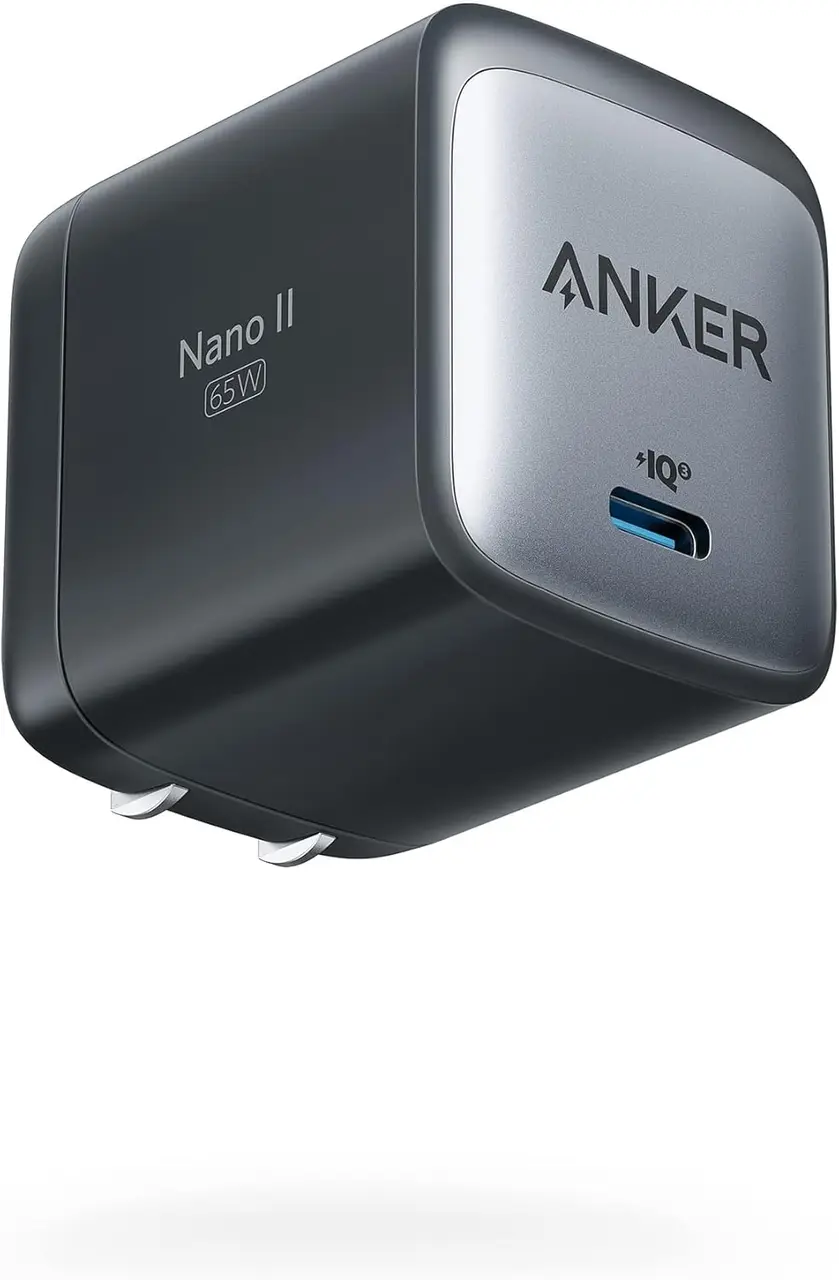
Anker Nano 65W Charger
Anker · $35-55 when I bought it
This is the charger I’d bring on short trips when I want one compact brick for my phone, laptop, and headphones. It’s not fancy, but it’s reliable and small enough that I don’t resent packing it.
- Worth knowing:
- With only one port, it’s not ideal if you need to charge several devices at the same time.
- It can run warm during longer laptop charging sessions, so I don’t leave it buried under clothes or in a tight pouch.
Check current price on Amazon (affiliate link)
Satechi 145W GaN Travel Charger: I bought this around $70-100 and used it for 14 months, including a 3-week Spain and Portugal trip, mostly in hostels and one airport lounge. Before that, I was using a cheap multi-port Amazon charger that ran hot and made me nervous whenever I left it plugged in overnight. The Satechi fixed the exact problem I had on that trip: I could charge my MacBook Air, iPhone, and AirPods from one outlet without shuffling devices around before bed. That’s the winning differentiator for me — it handled all three overnight from one socket, in a hostel room, without me needing a second brick. After that trip, I stopped packing a backup charger for multi-device travel, which saved me about one full pouch of space and a lot of annoyance.
Capacity-wise, it’s the kind of charger that makes sense if your inventory is real, not minimal. I’ve packed it with a MacBook Air charging cable, an iPhone cable, AirPods, and sometimes a camera battery pack cable, and it still fit in my tech pouch with a passport wallet and a small adapter. The edge case is size: it’s still bulky compared with a single-port 65W brick, so if your pouch is already stuffed with a power bank, universal adapter, and two cables, you’ll notice it. In a hotel room in Portugal, I liked that I could leave it on the nightstand and not think about it again until morning. The quirk is that it feels like a real tool, not a tiny accessory, which I like on longer trips and dislike in a tiny day bag.
What it won’t do: it’s not the one I’d bring if I’m traveling super light, or if I only need to charge a phone and earbuds. For around $70-100, I think it’s worth it only if I regularly travel with multiple USB-C devices. If you’re not carrying a laptop most of the time, it’s overkill.
Anker Nano 65W Charger: I bought this around $35-55 and used it for 22 months across 12 countries, including a 5-day work trip to Mexico City. Before this, I was using a generic dual-port brick that was bigger than it needed to be and still didn’t feel trustworthy. The Anker won because it’s the one charger I could toss into a small pouch and forget about. On that Mexico City trip, I charged my MacBook Air and iPhone from a single outlet in a small hotel room before early flights and meetings, and it never turned into a packing headache. That’s the winning differentiator: it’s compact enough that I actually want to bring it, which sounds small until you’re doing carry-on-only travel and every cubic inch matters.
What I fit with it is simple, and that’s the point. In my tech pouch it has gone with a MacBook Air cable, an iPhone cable, and AirPods, plus a slim plug adapter when I’m abroad. It’s not fancy, but it charges the basics without adding weight I resent. The edge case is obvious: with only one port, it’s not ideal if I need to charge several devices at the same time. It also runs warm during longer laptop charging sessions, so I don’t bury it under clothes or stuff it into a tight pouch after use. After 22 months, mine still looks fine, but I treat it like something that needs breathing room, not something I cram and forget.
What it won’t do: it won’t solve a multi-device charging problem. If you travel with a phone, laptop, earbuds, and a second battery-powered gadget that all need power overnight, you’ll end up juggling cables. For around $35-55, though, it’s worth it if your usual setup is one laptop plus one phone.
What Didn’t Make the Cut
The cheap no-name Amazon 65W dual-port charger I tried first was the classic false economy. I used it on a short Europe trip, and by the second night it ran hot enough that I stopped trusting it under a pillow or in a crowded outlet strip. I probably spent $25 on it, then lost the real cost in annoyance because I kept checking whether it was too warm instead of sleeping.
The bulky old Apple 61W brick was reliable, but it annoyed me on a carry-on-only trip because it took up space without giving me the flexibility I wanted. I used it for one winter trip and one spring trip, and every time I packed it next to cables and a power bank, it felt like I was wasting valuable tech pouch space. It didn’t fail dramatically; it just made my bag heavier for no good reason.
The cheap dual-port charger from a drugstore in Lisbon was the worst kind of backup: it worked once, then became the thing I didn’t trust on travel days. I used it for a hostel overnight and paid about €20 for something that made me nervous enough to unplug it before bed. That’s not a good deal when you’re traveling with a laptop and need your gear to behave.
How It All Fits Together
My carry-on setup works best when I stop pretending every trip needs the same charger. On a short work trip, I bring the Anker Nano 65W, one USB-C cable, my phone, laptop, earbuds, and a slim adapter. That’s enough, and I’ve done it in Mexico City without feeling underpacked or overpacked. On a longer trip, especially one where I’m editing, working, and charging more than one device overnight, I take the Satechi 145W and accept the extra bulk because it saves me from carrying separate chargers.
The big difference for me is how the charger behaves in real spaces. In humid summers, I care less about the brand name and more about whether the brick gets uncomfortably warm in a tight hostel shelf. In cold winters, I care whether it still works after being shoved into a coat pocket and pulled out at airport security. The Anker wins when I want small and simple. The Satechi wins when I want fewer compromises. If your travel style is carry-on only, that tradeoff matters a lot.
My rule now is blunt: one-device trips get the compact charger, multi-device trips get the bigger one. I stopped trying to make one charger do every job, and that alone made packing easier.
I bought a cheap multi-port charger from Amazon before my Spain trip and it ran so hot I was afraid to leave it plugged in overnight in my hostel—I spent the first week charging devices in shifts, wasting about 3 hours total just waiting for things to top up before bed. The trigger was trusting the five-star reviews without checking what actual travelers said about heat and safety in cramped dorm rooms. Now I only pack chargers from brands that publish thermal specs and have real long-term reviews from people who’ve actually used them in hostels.
I expected a GaN charger would just be a smaller version of my old brick, but what actually happened is that the Satechi let me charge my MacBook Air, iPhone, and AirPods simultaneously from one outlet—which sounds minor until you realize it means I can work from a hostel common room without playing adapter games at 11 p.m. The honest takeaway: the right charger isn’t about looking premium; it’s about solving the specific friction of your actual trip.
FAQ
Is the Anker Nano 65W enough for a laptop and phone on the road?
Yes, it’s enough for a laptop and phone if you don’t need to charge both at the exact same time. I used it in Mexico City for 5 days with my MacBook Air and iPhone, and it handled my morning routine well. If you only carry one main device plus a phone, I’d pick it again.
Is the Satechi 145W worth the extra money?
Yes, if you travel with multiple USB-C devices and hate outlet juggling. I used it for 14 months, and the first time it charged my MacBook Air, iPhone, and AirPods overnight from one outlet in a hostel, I stopped thinking about backup chargers. If that sounds like your setup, it’s worth the higher price.
Which one would you bring on a 5-day trip?
I’d bring the Anker Nano 65W. For a short trip, I don’t want a bulky charger taking up space when one compact brick does the job. The Satechi only makes sense for me when I’m carrying more than the basics.
Does the bigger charger make sense for carry-on-only travel?
Yes, but only if you actually need the extra ports and power. I’ve carried the Satechi on a 3-week trip, and it earned its space because it replaced multiple chargers. If your kit is already minimal, the Anker is the cleaner choice.
What’s the one charger you’d repack first for international trips?
I’d pack the Anker Nano 65W first for short trips and the Satechi 145W first for work-heavy trips. The Anker is the easier daily carry, while the Satechi solves the “everything needs charging tonight” problem. I’d choose based on how many devices I’m actually bringing, not on brand hype.
 Emma Hayes
What I’d Rebuy Immediately
If I lost everything tomorrow, I’d rebuy the Anker Nano 65W first for short trips because it’s compact, reliable, and I’ve used it long enough to trust it. I’d also rebuy the Satechi 145W GaN Travel Charger for longer work trips because it replaces multiple chargers and makes hostel charging less annoying. The cheap chargers I tried before them taught me the same lesson twice: if a charger makes travel more complicated, it’s not saving me money.