
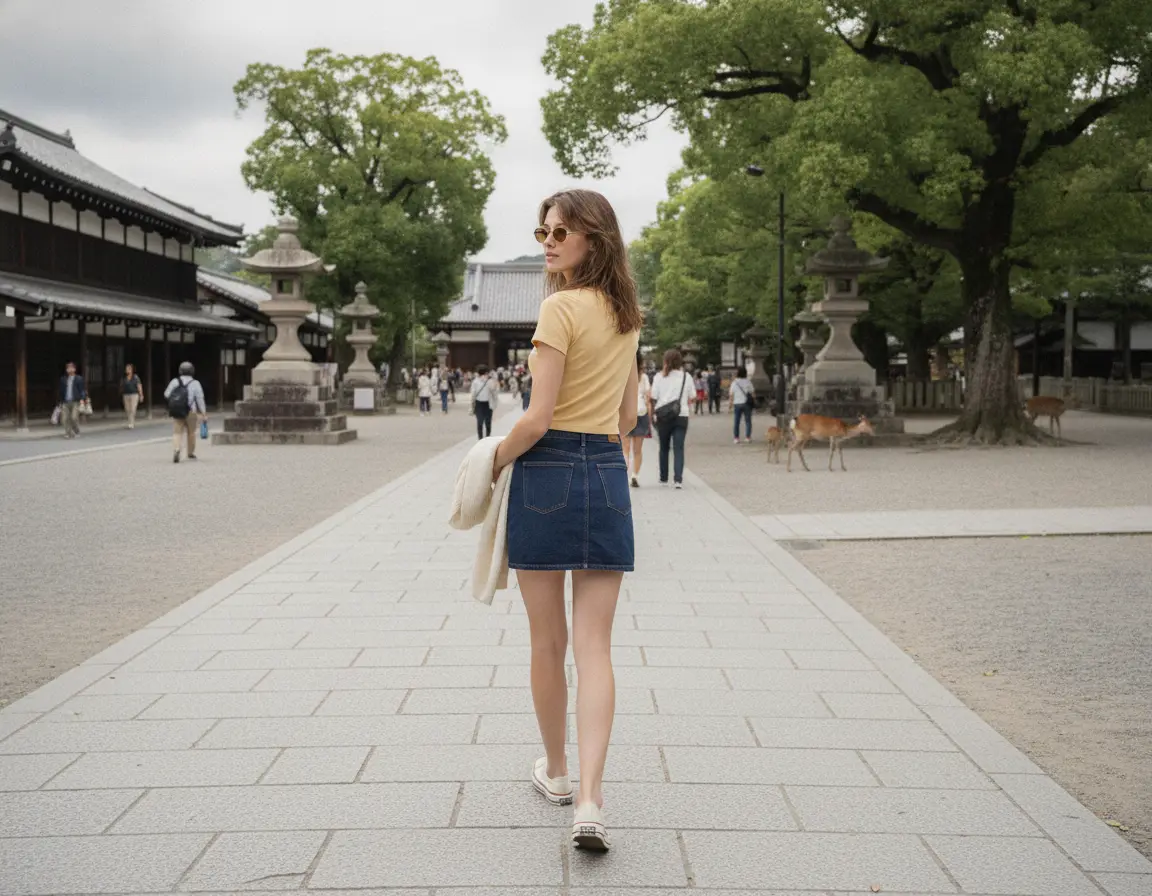
I thought Nara would be worth it. It wasn’t — at least not as a first base. I spent a warm 24°C morning there with sunglasses on and a cardigan stuffed in my bag, and the place was pleasant, but it ran out of things to do faster than I expected.
If you’re deciding between nara or Kyoto for first timers, I’d choose Kyoto because it gives you more room to make mistakes without wasting a day. Nara is the better side trip, and if you only have one or two days in the area, I’d keep Kyoto and visit Nara later. Choose Nara only if you want a slower day with deer, temples, and a very short list of priorities.
Best for Kyoto: first-timers who want more food, more neighborhoods, and more flexibility.
Best for Nara: travelers who want an easy day trip and don’t need constant stimulation.
My pick: Kyoto, with Nara as a one-day add-on.
Quick answer: I’d base a first trip in Kyoto and do Nara as a day trip. The train from Kyoto Station to Nara Station is about 45 to 55 minutes on JR, Todai-ji costs ¥600, and Nara works best as a calm half-day.
Why I’d base a first trip in Kyoto

Kyoto gives you more ways to recover from a bad plan. I like that. If one temple is packed, I can walk 15 minutes and eat, sit down, or switch neighborhoods without feeling like I blew the whole day. In Nara, the day narrows fast. That’s fine for a side trip. It’s less fun when it’s your main stop.
I had Kyoto and Nara in front of me when I planned this part of the trip, and I went with Kyoto because the city kept paying me back in small ways. A bowl of ramen near Kyoto Station ran me around ¥1,000, and a simple lunch in Gion was closer to ¥1,300. By contrast, once I finished the main sights in Nara, I found myself looking for a reason to stay out longer than I needed to. That never happens to me in Kyoto.
Best for: first-timers who want a place that still works after the famous spots are done.
Skip if: you get bored when a city asks you to move between neighborhoods instead of collecting sights.
My pick: Kyoto, because it gives better value over a full day.
Kyoto also handles bad timing better. I’ve had days there where I arrived late, missed one area, and still salvaged the day with food and a sunset walk. Nara feels more like a clean little package. Nice package, but small. I don’t love being on a tight clock when I’m paying for a trip.
I expected Nara to feel like a quieter version of Kyoto. That was the wrong comparison. It’s not Kyoto-lite. It’s a different kind of stop, and once I understood that, the choice got clearer. For a first trip, I’d still rather sleep in Kyoto and visit Nara with no pressure.
What Nara does better than Kyoto

Nara wins on simplicity. I got off the train, walked toward Nara Park, and immediately stopped having to think very hard. That’s useful if you’re tired, jet-lagged, or just done with complicated transit. The deer are right there, Todai-ji is close enough, and the whole day can be done on foot without turning into a logistics puzzle.
The walk from Nara Station to Nara Park takes about 20 to 25 minutes, and most first-timers can do the main cluster of sights without a bus. I walked the area with a coffee in hand and didn’t need to check a map every five minutes. Kyoto rarely gives you that kind of low-friction day. Nara does. Worth it if your goal is an easy, contained outing.
I paid ¥600 for entry at Todai-ji’s Daibutsuden, and that was fair. The Great Buddha Hall is the one thing in Nara I’d tell someone not to skip if they’re already there. The deer are fun for about ten minutes, maybe fifteen if you’re the type who likes feeding them crackers. After that, it starts feeling like a photo op with fur.
Best for: travelers who want a calm day and don’t mind a short list of headline sights.
Skip if: you want a city that keeps offering new stuff after lunch.
My pick: Nara as a day trip, not as the main event.
There’s also less decision fatigue in Nara, which sounds nice until you realize that’s partly because there are fewer decisions to make. I like that on a tired afternoon. I don’t like it when I’m choosing where to spend my only night. Kyoto gives me more options for a dinner backup plan, a rainy-hour escape, or a lazy morning. Nara doesn’t need that much structure. That’s the point, and it’s also the limit.
Cost, time, and the part nobody wants to admit
The biggest tradeoff is not romance or atmosphere. It’s time. Kyoto takes longer to “do,” but that extra time buys flexibility. Nara is cheaper and faster to cover, but the savings are smaller than people make them sound. I’d rather spend an extra ¥1,000 or ¥2,000 on food and location than lose half a day to transit resets.
Here’s the rough math I used. A JR train from Kyoto to Nara is usually around ¥720 one way, while the trip takes about 45 to 55 minutes depending on service. If you add walking from the station, plus the time between Todai-ji, Nara Park, and Kasuga Taisha, you’re looking at a solid half-day even if you move efficiently. That’s fine if you planned for it. It’s annoying if you didn’t.
I made one stupid little mistake here. I thought I could “just swing by” Nara after a slow Kyoto morning and still keep dinner in Kyoto. I left later than I should have, got to Nara after lunch, and by the time I’d seen the deer, Todai-ji, and wandered back toward the station, I had burned more of the day than I meant to. The consequence was simple: I skipped a Kyoto neighborhood dinner I’d actually been looking forward to, and that cost me about ¥2,200 in meals and transit I had already budgeted for. Next time, I’d either leave Kyoto early or stop pretending Nara is a quick little detour.
Budget-wise: Nara is cheaper for the day, but Kyoto is better value if you’re paying for a base and want more use out of each evening.
Best for: travelers watching spend without wanting a stripped-down trip.
Skip if: you hate paying for a full travel day that ends too early.
If I’m being blunt, the “Nara is cheaper” argument only matters if you’re counting every ride and every meal. The gap is real, but not huge enough to outweigh convenience for a first-timer. I spent roughly ¥1,500 on food in Nara that day, plus transit, and the total was still modest. But Kyoto gave me more chances to use that same money well.
See current Kyoto and Nara hotel rates on Agoda before locking in your base — rates around Kyoto Station and Gion can jump fast on weekends and cherry blossom dates.
I wrote a more detailed breakdown in Nara For Couples — worth reading if you’re still deciding.
The vibe difference I noticed right away

Kyoto feels layered. Nara feels direct. That’s the cleanest way I can put it. Kyoto makes me choose between temples, shopping streets, riverside walks, and dinner neighborhoods. Nara gives me one strong line of sight, then asks me to slow down. I liked that for a few hours. I wouldn’t want it for an entire first trip.
I expected Nara Park to feel sleepy in a boring way. It didn’t. It felt busy in a very specific way, with school groups, snack stalls, and people trying to get deer to bow for crackers. Still, after about 25 minutes, I was ready to leave the deer behind and head toward the quieter parts near Todai-ji. That’s the tell for me. Fun, yes. Full-day destination, not really.
Kyoto’s advantage is not that every corner is magical. It isn’t. Some of it is just a lot of walking and a lot of tourists. But the city has enough friction to keep the day interesting. I can have a bad temple stop and still salvage the afternoon with a cheap noodle shop or a walk through a different district. Nara is more all-or-nothing. If the weather is nice and you like the main sights, it works. If not, the day gets thin fast.
Best for: travelers who want a city that changes shape during the day.
Skip if: you prefer one neat, low-effort outing over a city with more moving parts.
My pick: Kyoto for the first trip, because it keeps giving after the obvious stuff.
And yes, I know some people love Nara because it’s “peaceful.” Fine. I get it. But peaceful isn’t the same thing as better for a first-time base. Kyoto has enough peace if you pick the right neighborhood and enough energy if you don’t. That balance matters more than I thought it would.
How I’d actually split the trip
If you have only 2 days, I’d stay in Kyoto and skip Nara entirely. That sounds harsh, but first trips are usually underplanned and overambitious. Kyoto already has enough for 48 hours if you’re not racing around. If you have 3 days, then I’d do Nara as one day trip and keep the other two days in Kyoto. That’s the sweet spot.
I’d leave Kyoto around 8:30 a.m. for Nara, not noon. That gives you enough time to reach the park, see Todai-ji before the worst crowd wave, eat lunch, and still get back to Kyoto with enough energy for dinner. I’ve done the lazy version and it turned into a half-useful day. The early train version worked. Not glamorous, just smarter.
Worth it if: you can give Nara a proper morning and still return to Kyoto before evening.
Skip if: you’re trying to fit it into a packed arrival day or a departure day.
My pick: Kyoto base, Nara day trip, early start.
If your trip is one of those fast Japan itineraries where every night is booked somewhere else, Kyoto still wins because it gives you more margin for error. Nara is the thing I’d cut first if the schedule got tight. That’s not me being dramatic. That’s just how the day math works.
The one afternoon that changed my mind a little

I went to Nara thinking I’d stay longer than I did. I figured the deer, the temple grounds, and the slower pace would fill the day naturally. Instead, I found myself done by mid-afternoon and a little restless. I bought a drink, sat for a bit, and checked the train times back to Kyoto earlier than I expected. That was the moment I stopped treating Nara like a rival to Kyoto.
The surprise was useful. I’d expected Nara to be more than a side trip. It wasn’t, at least for me. But that doesn’t make it bad. It just means the value is concentrated. You get a good half-day, maybe a full easy day if you move slowly, and then it’s over. For some travelers, that’s exactly right. For first-timers trying to choose a base, it’s not enough on its own.
Best for: people who like a destination with one clear purpose.
Skip if: you need a place that can carry your whole trip.
My pick: Kyoto first, Nara second.
Rough daily estimates from my own trip. Prices shift by season.
What I’d do differently next time
I’d stop trying to squeeze Nara into a loose Kyoto day. That was my main mistake. I’d also leave earlier, because the first train keeps the day cleaner and the crowd level lower near the big sights. And I’d probably eat lunch earlier in Nara instead of waiting until I was already on my way back.
I’d also book my Kyoto base closer to the station or the district I actually planned to use. That extra 15-minute walk after a long day matters more than it sounds like it should. I learned that the annoying way.
Worth changing: the timing, the base, and the lunch plan.
My pick next time: Kyoto again, with Nara only if I have a clear morning to give it.
See current Nara hotel prices on Agoda →
I usually book Nara tours on Klook — the best time slots go fast, especially in peak season.
FAQ
Is Nara worth a day trip from Kyoto?
Yes, Nara is worth a day trip from Kyoto if you leave early and keep your expectations narrow. I’d do it for Todai-ji, Nara Park, and an easy walking day, not for a long list of sights. If you leave after lunch, the value drops fast.
Can I stay in Nara for my first Japan trip?
I wouldn’t use Nara as my first base unless I wanted a very quiet trip. It’s easy, but it doesn’t give you the same range of food, neighborhoods, and evening options as Kyoto. I’d only choose it if my trip was short and I wanted to slow down hard.
How much time do I need in Nara?
Four to six hours is enough for the main sights, and that’s the range I’d plan around. I spent less than a full day there and felt done by mid-afternoon. If you like slow wandering and café stops, you can stretch it, but I wouldn’t build a whole itinerary around that.
Is Kyoto too busy for a first-time visitor?
No, Kyoto is busy but still manageable for a first-timer. I found it easier to recover from crowd-heavy spots there because I could switch neighborhoods or stop for food without wasting the day. That flexibility is what makes it the safer pick.
What’s the cheapest way to do both?
The cheapest way is to stay in Kyoto and do Nara as a day trip on JR, then keep food simple near the stations. I’d budget around ¥720 each way for the train and another ¥1,500 to ¥2,500 for a basic lunch and snacks. That keeps the extra cost low without turning the day into a slog.
 Emma Hayes