
Nagoya’s biggest temples and castle are fine, but they’re not why I’d go. I’d go for the easy transit, the food, and the fact that it works as a low-stress base between Tokyo, Kyoto, and Osaka. If you want a city that’s efficient rather than flashy, Nagoya is worth your time; if you want nonstop old-town charm, I’d pick somewhere else. These Nagoya travel tips for first-timers in 2026 are really about making the city work for you, not forcing it into a sightseeing marathon.
Quick Answer: Yes, Nagoya works for first-timers in 2026 if you want easy transit, good food, and fewer crowds. Stay near Nagoya Station or Sakae, eat hitsumabushi once, and use the city as a practical base.
- My short answer: yes, Nagoya works for first-timers in 2026, but only if you want a city that feels practical and easy to move through.
- Best for: travelers who like good train access, decent food, and fewer crowds than the usual Japan circuit.
- Skip if: you’re chasing postcard streets and want every stop to feel cinematic. Nagoya is more useful than pretty.
- My main advice: stay near Nagoya Station or Sakae, eat hitsumabushi once, and don’t waste half a day on expensive tourist filler.
Why I’d put Nagoya on a first Japan trip

I expected Nagoya to be a filler stop. It wasn’t. It’s a city that makes sense fast, which is rare in Japan if you’re juggling luggage, heat, and a schedule that’s already too full.
For first-timers, that’s the real win. I’d choose Nagoya if I wanted a clean base with fast trains, straightforward neighborhoods, and enough food to justify staying a night or two. I would not choose it as my only Japan stop if this is your first trip and you only have a few days. Kyoto or Tokyo still wins for sheer variety.
Worth it if: you want an easy city to land in, move through, and eat well in without fighting crowds.
Skip it if: you need every stop to feel iconic. Nagoya is useful, not dramatic.
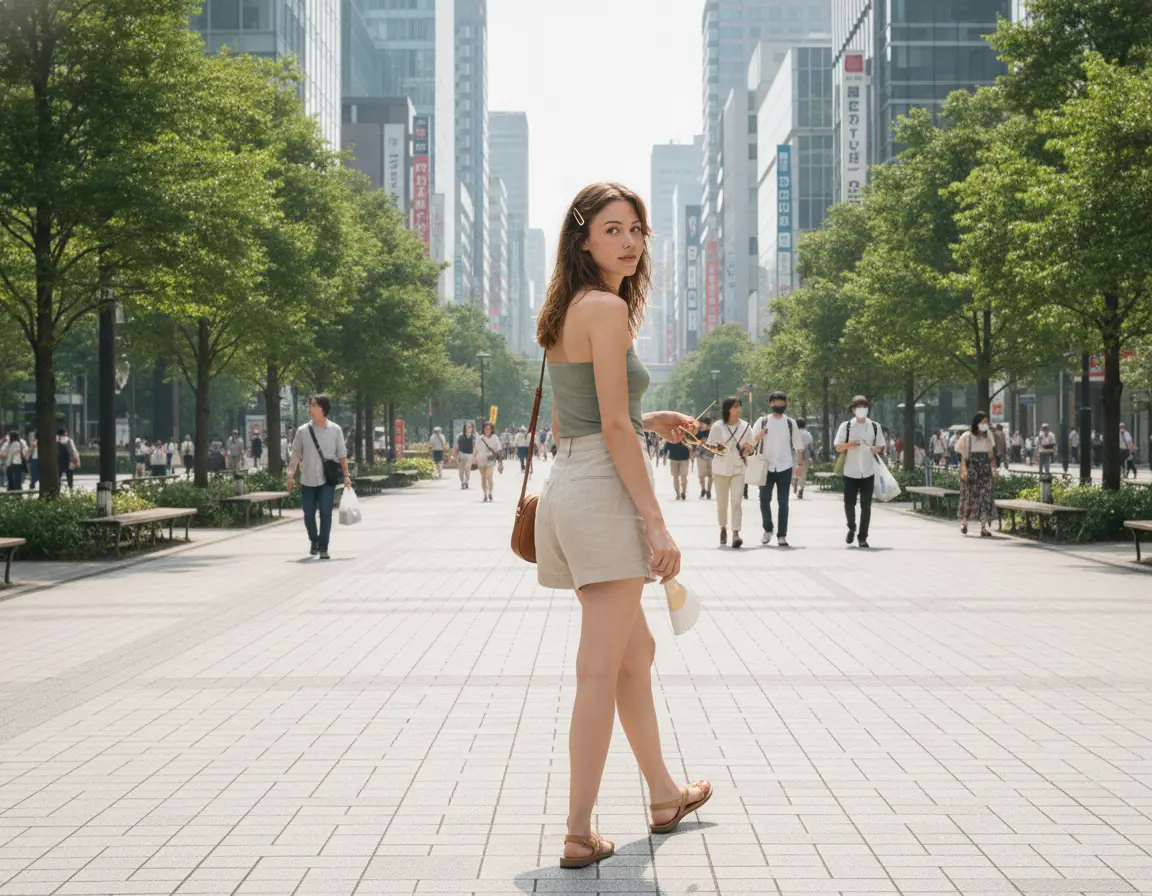
I walked out of Nagoya Station with a backpack, a bottle of water, and that hot 33°C humidity that makes you regret black clothes immediately. I had a linen shirt on, shorts, sunglasses, and a little fan in my bag. That setup mattered more here than in a cooler city, because I was outside longer than I expected just figuring out where everything was.
Where I’d stay: station area or Sakae
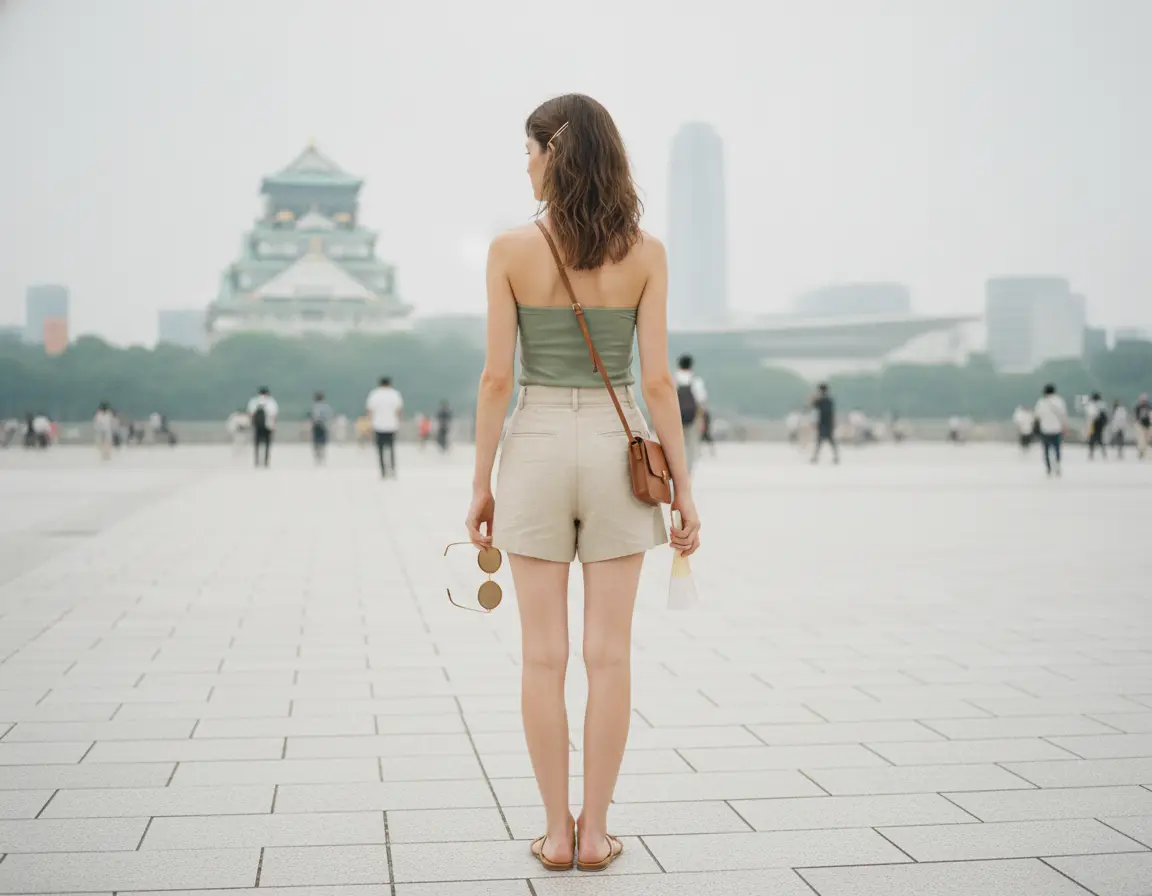
My pick is Nagoya Station if this is your first visit. Sakae is fine too, but station-side makes day one easier, especially if you’re arriving by shinkansen or planning to use Nagoya as a transit base. I’d pay a little more for that convenience rather than save a few dollars and spend the trip dragging a bag through extra transfers.
See current Nagoya hotel prices on Agoda →
I had two hotel options in front of me: one near Nagoya Station and one farther out that was about ¥2,000 cheaper per night. I went with the station hotel because the walk was under 10 minutes and I didn’t want to mess with heat, luggage, and one more subway ride after a long travel day. The cheaper place would’ve worked if I were staying a week, but for a short trip it was the wrong kind of saving.
Best for: first-timers who want low-friction transit and easy arrivals.
Only if: you plan to stay out late and care more about bars and shopping than station access. Then Sakae makes more sense.
See all Nagoya hotels on Agoda if you want to compare station-side stays against Sakae before you book.
What to eat first, and what I’d skip
Nagoya food is the part that earned my second day. I’d start with hitsumabushi, miso katsu, and tebasaki. I’d skip generic hotel breakfast and any place trying too hard to look “local” with a laminated English menu and a line of tourists outside. That math never works out.
I paid ¥3,800 for hitsumabushi at a place near the station, and it was one of those meals that actually justifies the price. The eel came in the standard three-step style: plain, with condiments, then with broth. I liked the second bowl best. I didn’t expect that, honestly. I thought the whole ritual would feel gimmicky, but it made sense once I was actually eating it.
Miso katsu is the other obvious Nagoya dish, but I wouldn’t make a special detour for a mediocre chain version. I had one bowl that cost around ¥1,300 and it was fine, not great. The sauce is heavy and salty in a way I liked on a tired afternoon, but it’s not something I’d chase across town unless the place had real reviews.
Worth it: hitsumabushi once, maybe twice if you’re here for food.
Skip it: overpriced “Nagoya set meals” in tourist-heavy spots that charge more for location than flavor.
I grabbed a 250-yen onigiri and an iced coffee from a convenience store one morning because I wanted to get to Osu before the heat got annoying. That was a better use of money than sitting down for a weak breakfast I didn’t need.
Getting around without wasting money
Nagoya is one of the easier Japanese cities to navigate, which is exactly why I’d keep the transport plan simple. I’d use the subway, walk when the distance is under 20 minutes, and take taxis only when the weather or luggage makes the extra cost worth it. If you’re trying to save money without suffering, this is a good city for that.
The subway is straightforward, and the big mistake is overthinking it. I bought a rechargeable IC card and used it for short hops between Nagoya Station, Sakae, and Osu. Each ride was cheap enough that I stopped tracking every single one after a while, which is usually the sign that transit is doing its job.
I did make one small mistake here. I assumed I could walk more than I should have in the afternoon heat. I left Sakae around 2 p.m., figured Osu was “not far,” and ended up sweaty and annoyed after a much longer walk than I wanted. The consequence wasn’t disaster, just wasted energy. Next time I’d either take the subway for that stretch or go earlier in the morning.
Best for: travelers who like clear transit and don’t need a car.
Skip if: you hate walking in humidity. August and early September can be rough.
Budget-wise, Nagoya is one of those places where the small savings add up. I spent less on taxis here than I usually do in bigger Japanese cities because the station layout and subway lines were easy enough that I didn’t keep defaulting to the expensive option.
Osu, Sakae, and the parts of the city that felt useful
Osu is the area I’d actually tell first-timers to spend time in, but not because it’s some magical secret. It’s practical, busy, and good for a half-day of wandering without needing a rigid plan. Sakae is better for shopping and staying central. Nagoya Station is better for arriving, sleeping, and moving on.
I liked Osu because it gave me something to do without turning into a whole production. I wandered through covered shopping streets, ate snacks, and ducked into little shops when the sun got too harsh. It was hot enough that I kept my umbrella out even though it wasn’t raining. That’s the kind of detail that matters more than any glossy description.
Sakae felt more polished and more commercial. Fine, but not where I’d spend all day unless I was pairing it with a specific stop like Oasis 21 or a dinner reservation. It’s useful, not memorable. That’s not an insult. It just means I’d rather sleep there than build my whole day around it.
My pick: Osu for wandering, Sakae for convenience, Nagoya Station for sleeping.
Only if: you want nightlife or shopping should Sakae move ahead of Osu for a first-timer.
I expected Osu to feel more old-school than it did. It didn’t really. It’s more of a busy, slightly messy shopping district than a preserved neighborhood, and I still liked it because I wasn’t there for nostalgia. I was there to walk, eat, and not get trapped in a place that charges too much for the privilege of being photographed.
The famous stuff: what I’d actually do, and what I’d cut
Nagoya Castle is the obvious name, and I’d still go if you like castles, but I wouldn’t build a whole day around it. The exterior and park area are the better part. If the interior line is long, I’d skip it and keep moving. I’m not waiting 30 minutes to see a room I’ll forget by dinner.
SCMAGLEV and Railway Park is more niche, but I think it’s better value than a lot of the city’s touristy stuff if you like trains even a little. The displays are detailed, the scale is bigger than I expected, and it’s one of the few attractions here that feels distinct instead of vaguely “Japan itinerary” filler. If you don’t care about trains, obviously skip it. I wouldn’t pretend otherwise.
Toyota-related attractions can also work, but only if you already care about the brand, engineering, or industrial history. I’d not go out of my way for them just because they’re famous in a guidebook. That’s the kind of stop that sounds smarter than it feels in real life.
Worth it: Nagoya Castle exterior, SCMAGLEV and Railway Park for train people.
Skip it: anything with a long line and a vague payoff.
I had Nagoya Castle and lunch plans in front of me, and I chose the lunch. The castle grounds were pleasant enough, but I’d already seen the part that mattered from outside, and I’d rather spend ¥1,500 on a meal than ¥600 on an interior I didn’t care about.
A simple first-timer plan that actually works
If I had one day in Nagoya, I’d keep it simple: station arrival, lunch near the center, Osu in the afternoon, Sakae or Nagoya Station for dinner. If I had two days, I’d add one museum-style stop or a specialty food meal and leave the rest open. Nagoya works best when you don’t overschedule it.
For first-timers, the real question is not “what’s the most famous thing?” It’s “what gives me the best return for my time?” In Nagoya, that usually means food, transit convenience, and one or two neighborhoods rather than a checklist of big attractions. I think people get this city wrong when they try to force it into a Kyoto-style sightseeing day. It’s a different animal.
Best for: two-night stays, transit breaks, and travelers who want a city that doesn’t waste time.
Skip if: you only have one day and you’re already choosing between Tokyo, Kyoto, and Osaka. Nagoya can lose that fight.
Rough daily estimates from my own trip. Prices shift by season.
What I’d do differently next time
I’d book one better meal in advance instead of winging dinner both nights. Nagoya food is good enough that I should’ve planned around it instead of defaulting to whatever was closest when I got hungry.
I’d also keep my afternoons lighter. The heat made me less patient than I expected, and I don’t love wasting energy on extra walking just because a map makes something look close.
And I’d probably stay one night longer if Nagoya was between bigger cities. Two nights felt good. Three would’ve been better only if I had a stronger food plan.
I usually book Nagoya tours on Klook — the best time slots go fast, especially in peak season.
FAQ
Is Nagoya worth visiting if I only have 2 days?
Yes, I’d do 2 days in Nagoya. That gives you enough time for one food-focused day, one neighborhood wander, and a relaxed arrival or departure without rushing. I wouldn’t stretch it longer unless you’re using the city as a base.
Should I stay near Nagoya Station or Sakae?
I’d stay near Nagoya Station for a first trip. It’s easier for shinkansen arrivals, luggage, and early departures, while Sakae makes more sense if your priority is shopping and nightlife. I paid more for station access once, and I’d do that again.
Do I need a JR Pass for getting around Nagoya?
No, I wouldn’t buy a JR Pass just for Nagoya. The city subway and local rides are cheap, and most first-timers won’t rack up enough long-distance train travel in the city itself to justify it. I’d save the money unless you’re doing a bigger Japan rail loop.
What should I eat first in Nagoya if I’m only there one night?
I’d choose hitsumabushi first. It’s the most Nagoya-specific meal that actually felt worth the price to me, and I paid about ¥3,800 for a proper bowl near the station. If budget matters more, go for tebasaki and skip the pricier set meal.
Is Nagoya Castle worth the time for a first-timer?
Yes, but only for the exterior and grounds. I’d skip a long interior line because the outside view gives you most of the payoff without eating half your day. If you’re short on time, lunch and Osu beat a rushed castle visit.
 Emma Hayes