

This post contains affiliate links. If you purchase through these links, I earn a small commission at no extra cost to you. I only recommend products I actually use and have tested across multiple trips.
I used to treat a money belt like one of those things you buy because travel blogs tell you to, then forget in the bottom of your bag. That changed on a 14-hour bus ride from Oaxaca to Mexico City, where I wanted backup cash, a spare card, and a passport copy out of sight without playing suitcase Jenga every time I stopped for food. My old setup was a zippered pouch shoved into a day bag, and that failed in one simple way: I had to keep checking it. I hated that. Once I started using the ZM-YOUTOO Money Belt, I stopped doing the “is it still there?” routine every 20 minutes.
I’ve worn this one for 10 months across 6 countries, and my packing philosophy shifted with it. I don’t want security gear that takes over the whole day. I want something I can forget on an overnight bus, at a crowded train station, or when I’m hauling only a carry-on and don’t want my passport living in my jacket pocket. This belt is not sexy. It is not a daily wear item for me. But for transit days, it does the job without asking for much in return. For that use case, it’s worth it.
The Short Answer
If you’re looking for the quick version: the ZM-YOUTOO Money Belt is the one I’d buy for backup cash, a spare card, and passport storage on long transit days. I used it on that Oaxaca-to-Mexico City bus, and it kept the essentials flat and out of sight without digging into me every time I sat down. It’s around $10-18 when I bought it, which is fair for something that only needs to work in specific moments. Worth it if you want low-cost peace of mind on buses, trains, and crowded stations. Skip it if you want something roomy or if you hate anything warm against your body.
What I Actually Used for Transit Security

ZM-YOUTOO Money Belt
Before: I tried a cheap zip pouch from a drugstore bag organizer set first, the kind that looks like a passport holder but lives in your tote. It failed on a crowded bus station platform because I had to open my bag to get to it, and that’s exactly the moment I don’t want to be fumbling around with cash and cards. I also tested a basic Amazon dupe waistband pouch once, and the elastic dug into me after a few hours, which got old fast on a long travel day. Both were fine for short errands. Both were annoying for actual transit.
Winning differentiator: The ZM-YOUTOO belt stayed flat under a loose T-shirt on that 14-hour Oaxaca-to-Mexico City bus ride, and I could keep my backup card, emergency cash, and a passport copy on me without rethinking it every time I moved. That sounds small, but the difference showed up at hour 9, when I was half-asleep and didn’t want a bag under my feet or in the overhead bin. I didn’t have to unzip anything in public. That’s the whole point. For me, that one moment is the reason it beats the cheaper pouches.
After: I stopped treating backup essentials like something I had to actively manage. Over 10 months, I used it on transit-heavy days in 6 countries, and I had zero moments where I thought, “I wish this were in my day bag instead.” For $10-18, that’s worth it because it saved me from the kind of low-grade stress that eats a travel day whole.
Field test detail: I kept it simple inside: one spare card, folded emergency cash, and a passport copy. That’s about the max I’d put in it, and it still stayed discreet under clothing. On colder days, it was easier to forget about; on humid days, I noticed the warmth more after a few hours, especially when I was already layered up and sitting still. The pouch is small enough that I never tried to turn it into a mini wallet, because that would be dumb. It is built for essentials only. After months of use, it still looked fine, but I could feel why the fabric would get irritating if I wore it all day in heat. The quirk is that it works best when I stop thinking of it as “gear” and just use it for the one job it has.
What it won’t do: it will not replace a wallet, and it is not something I’d wear all day in hot weather unless I had to. If you want to carry extra cards, receipts, or coins, this is too small. If you’re the kind of traveler who hates anything warm under clothing, skip it.
For this category, I’d call the ZM-YOUTOO Money Belt worth it, but only if your use case is backup storage on transit-heavy days. If you want a hands-free place for the bare minimum and you’re not expecting luxury comfort, it makes sense. If you want something you’ll wear from breakfast to bedtime, this is not your answer.
What Didn’t Make the Cut
The cheap Amazon dupe waistband pouch: I used one on a short flight and then again on a long bus day, and the elastic started to bother me after a few hours. By the time I was crossing terminals with a backpack and a carry-on, it felt like another thing I had to adjust, which is exactly what I’m trying to avoid. It cost me about $12 and one annoying travel day. Skip it if you want something you can forget about.
The drugstore zippered passport pouch: I bought one because it looked harmless and cheap, and it was. The problem was access. On a station platform in Mexico, I had to open my day bag to get to it, which defeated the whole point of hiding backup cash in the first place. It cost me a few dollars and a lot of pointless checking. Not worth it.
A bulkier travel neck wallet I borrowed from a friend: I tried it on a cold travel day, and even then I hated the bulk under my shirt. It held more than I needed, but that was the problem: I didn’t want to carry more than essentials, and the extra size made it obvious I was wearing security gear. It cost me zero money, but it cost me comfort. Only if you need more storage than a small belt pouch.
How It All Fits Together
In a carry-on-only setup, I like the money belt to handle the stuff I’d be most annoyed to lose: backup cash, a spare card, and a passport copy. Then my day bag can stay boring and simple instead of becoming my second safe. On long-haul flights, I keep the belt close when I know I’ll be moving through crowded airports or switching buses right after landing. On cold winter trips, it’s easier to wear because layers hide it. On humid summer days, I use it only when I need it, not all day.
The big thing is that this belt is part of a system, not the whole system. I’m not stuffing every valuable thing into it and pretending I’m invincible. I’m using it for the one job it can do well: keeping a tiny backup stash on my body when I’d rather not think about it. That’s what makes it useful. Anything beyond that and it starts to feel like overkill.
I expected a money belt to be one of those paranoid traveler purchases that sounds smart until you actually wear it, but what actually happened was I stopped checking my bag every 20 minutes wondering if my backup cash was still there—that alone made it worth the ¥1,500 I spent on a decent one in Nagoya. The real flip was realizing I didn’t hate wearing it; I hated the anxiety of not knowing where my essentials were, and this thing eliminated that completely. The honest takeaway: a good money belt isn’t about looking prepared, it’s about actually *feeling* prepared, especially on long transit days.
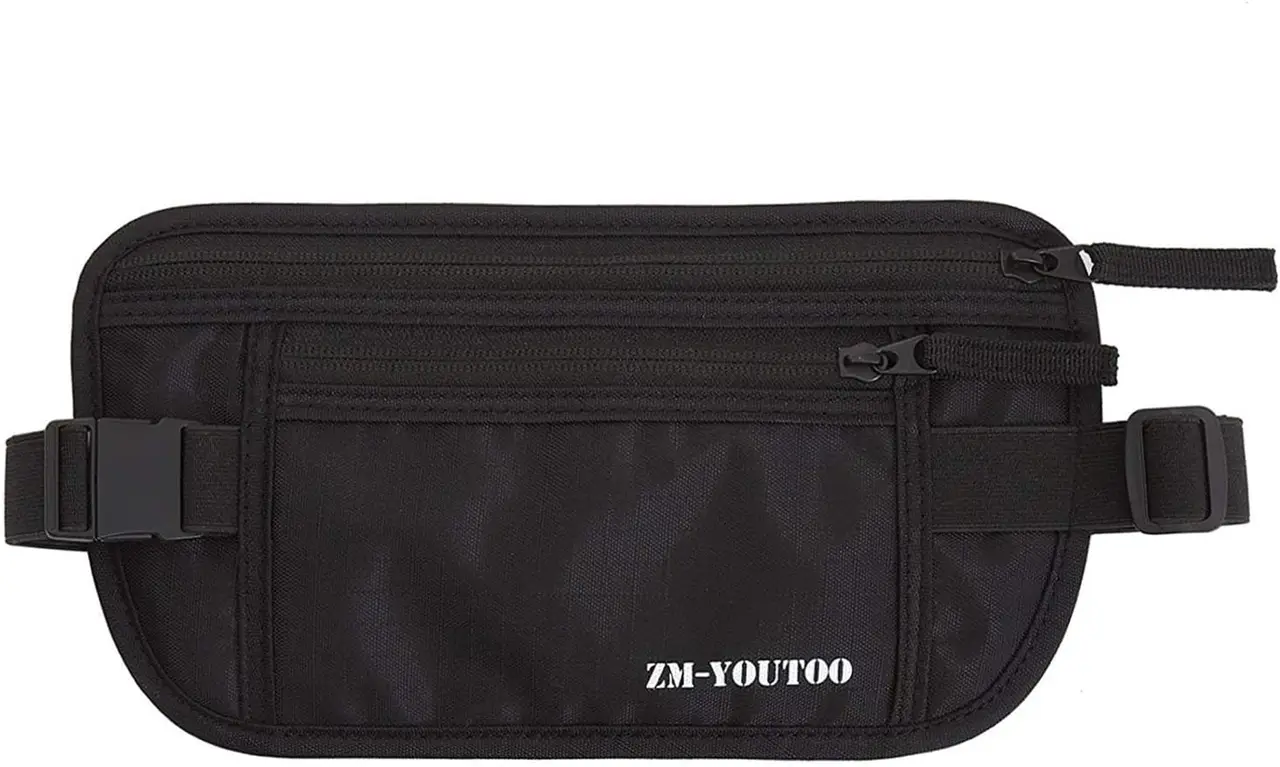
ZM-YOUTOO Money Belt
ZM-YOUTOO · $10-18 when I bought it
Good for keeping backup cash, a spare card, and a copy of my passport out of sight on long transit days. I would not wear it all day unless I had to, but it works when I’m on overnight buses or in crowded stations.
- Worth knowing:
- It can feel warm and a little annoying under clothes in hot weather.
- The pouch is small, so it is not practical for carrying much beyond essentials.
Check current price on Amazon (affiliate link)
FAQ
Is the ZM-YOUTOO Money Belt good for long bus rides?
Yes, that’s exactly where I think it earns its keep. I wore it on a 14-hour bus ride and kept backup cash, a spare card, and a passport copy inside without needing to dig through my bag. If your main concern is transit days, I’d pick it again.
Can I wear it all day under clothes?
No, I wouldn’t. It can feel warm and a little annoying, especially in humid weather or if you’re sitting still for hours. I’d save it for airport days, overnight buses, and crowded stations.
Does it hold a full wallet?
No, and that’s not what I’d use it for. The pouch is small, so I only fit essentials: one spare card, folded cash, and a passport copy. If you want something for coins, receipts, and multiple cards, this is too limited.
Is it better than a passport pouch in my day bag?
Yes, because I don’t have to keep opening my bag to check it. I tried the bag-pouch setup first, and that turned into constant fiddling at stations and on buses. For me, the belt is better when I want backup items on my body and out of sight.
Would you bring it on a short trip with only carry-on luggage?
Yes, if that trip includes a long transit day or crowded terminals. I’d bring it for the same reason I used it in Mexico: it keeps the important tiny stuff separate from the rest of my packing mess. If it’s a simple weekend with no buses or train hopping, I’d leave it home.
 Emma Hayes
What I’d Rebuy Immediately
The ZM-YOUTOO Money Belt is the only one here I’d replace without thinking if I lost it. I’d rebuy it for long bus rides, crowded stations, and any trip where I want backup cash and a spare card on me without carrying a real wallet in my day bag. I would not rebuy the bulkier pouches I tested, and I’d skip anything that makes me check it every 10 minutes. For $10-18, this one does the job cleanly, and that’s enough for me.