
This post contains affiliate links. If you purchase through these links, I earn a small commission at no extra cost to you. I only recommend products I actually use and have tested across multiple trips.
I used to pack like I was trying to win a speed contest with myself. Two years ago, I’d dump everything into my carry-on, zip it shut, and tell myself I’d “sort it later.” That always meant a bad-smelling pile at the bottom of the bag by day three, plus me digging through clean socks at 11 p.m. in a hostel room. On a humid week in Bangkok, I finally got tired of pulling out a damp T-shirt that had been sitting against my clean clothes for two days. That was the moment I stopped pretending a random plastic shopping bag was a system.
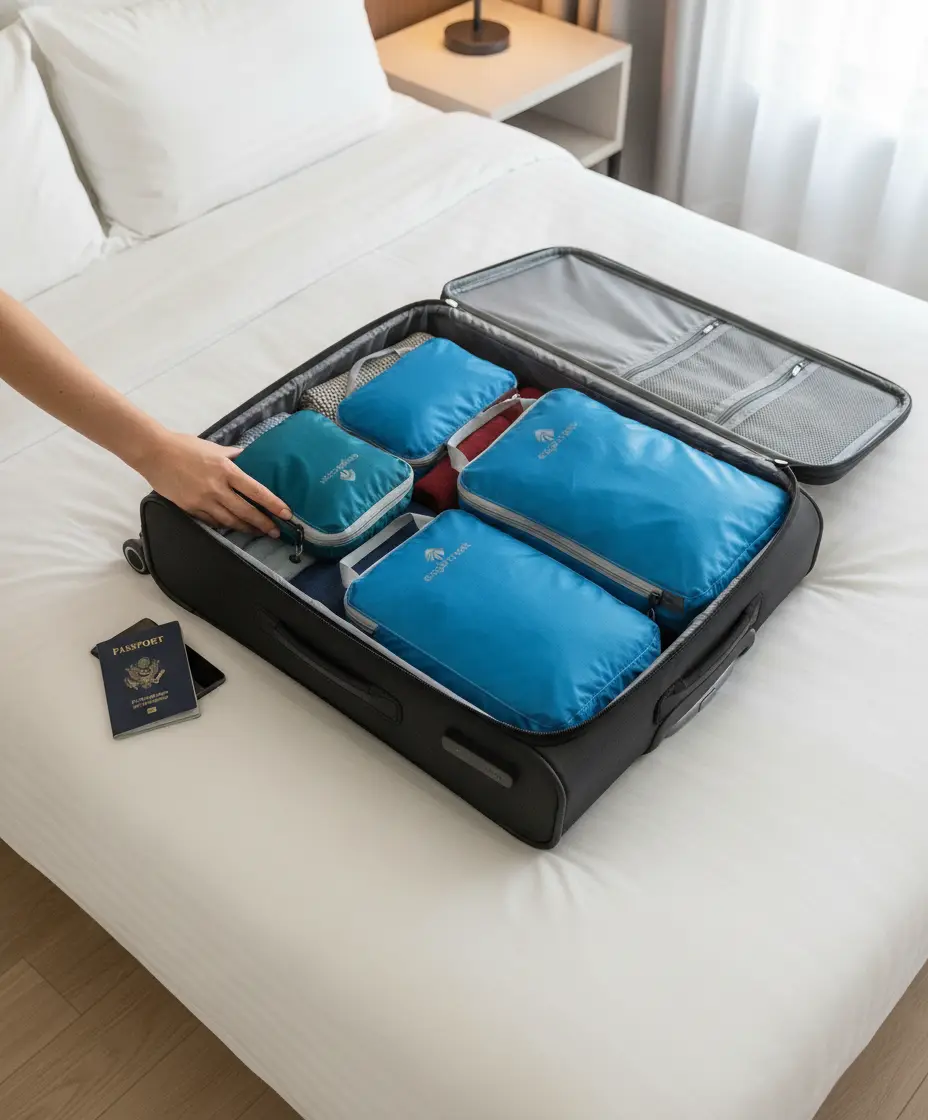
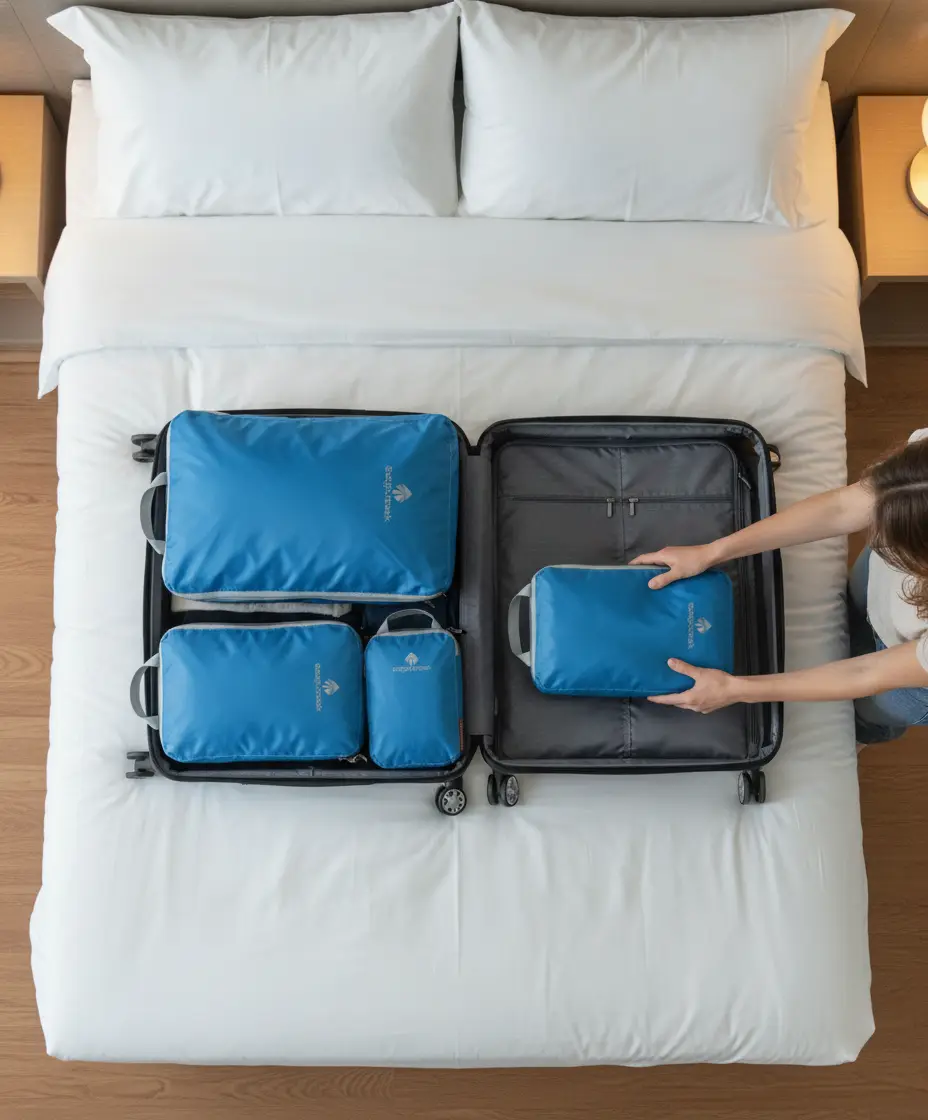
Now I pack with one rule: dirty clothes need their own container, and it has to compress well enough to matter in a carry-on. That sounds boring until you’re trying to make 7 days fit into a 40L bag and still want room for a laptop, toiletries, and a jacket. I’ve tested this across 18 countries, from sticky summer trips to cold winter packing where everything bulked up fast. The one that stayed in my bag is the Eagle Creek Pack-It Specter Compression Cube Set. I resisted packing cubes for two years. I was wrong.
The Short Answer
If you want the quick version: the Eagle Creek Pack-It Specter Compression Cube Set is the one I’d use for carry-on-only travel when I need dirty clothes separated without wasting space. I used it for 2 years, and it cut my packing time from 40 minutes to 15. For around $25-45 when I bought it, that’s worth it because the compression actually works and I can fit 7 days of clothes into a 40L bag.
If your trips are mostly warm-weather city breaks, this is the cleanest answer I found. If you pack bulky winter layers, the compression part helps less than you’d hope. And if you baby zippers, you’ll be fine; if you yank everything shut in a rush, this will annoy you.
What I Actually Use to Separate Dirty Clothes

Eagle Creek Pack-It Specter Compression Cube Set — I’ve used this for 2 years, on 18 countries’ worth of carry-on trips, and it’s the only thing that made my dirty-clothes situation feel organized instead of gross. Before this, I used a cheap nylon laundry sack from Muji for one trip and a random Amazon mesh pouch after that. The Muji bag was fine for one shirt and a pair of underwear, but on a 9-day trip to Portugal it turned into a wrinkled black hole in my backpack. I had to unzip half my bag just to find clean socks, and that cost me time every morning. The Amazon mesh pouch was worse in humid weather; after one rainy day in Kuala Lumpur, everything inside felt slightly damp and smelled like a gym locker by the next morning.
The winning difference with the Eagle Creek set is simple: the compression zipper actually shrinks the volume enough that dirty clothes stop stealing space from clean ones. I noticed it most on a 5-day trip with two T-shirts, one pair of jeans, underwear, socks, and a light long-sleeve top. I packed the dirty stuff into the cube after day two, zipped the compression layer, and the whole thing flattened enough to sit at the bottom of my 40L bag without forcing the zipper. That sounds small, but it changed how I packed. I stopped leaving “just in case” space for laundry clutter, and that freed up room for a Kindle, a 13-inch MacBook Air, and a 32oz Hydro Flask in the same bag.
After I switched, packing went from a 40-minute scramble to about 15 minutes. More importantly, I wasn’t repacking my bag in hotel rooms just to separate clean and dirty clothes. If you’ve ever had clean underwear mixed up with a sweaty T-shirt after a long-haul flight, this fixes that problem fast. For me, that’s worth it.
Field test detail: the mesh top means I can see what’s inside without opening everything, which matters when I’m half-asleep in a hostel at 6 a.m. and trying to find one pair of socks. I’ve packed it with 4 T-shirts, 2 pairs of underwear, 2 pairs of socks, and a thin sleep shirt, and it still compressed cleanly. It handled a weekend bag easily, and on a longer trip I used one cube for dirty laundry and one for clean tops. The edge case is winter: compression doesn’t do much for bulky sweaters or fleece. A puffy layer still eats space no matter how nicely you fold it. The other quirk is the zipper. It needs to be handled carefully, especially when the cube is stuffed to the limit. I’ve never broken mine, but I also don’t reef on it like I’m closing a suitcase full of rocks.
What it won’t do: it is not a magic fix for cold-weather packing. If your “dirty laundry” includes thick jeans, wool sweaters, or a puffer, the savings are modest. This is worth it for carry-on travelers who pack mostly lightweight clothes and want one clean system. If that’s you, the Eagle Creek set earns its spot in my bag.
What Didn’t Make the Cut
Cheap Amazon mesh laundry pouch — I used one for 3 trips, including a rainy week in Kuala Lumpur and a short hop in Spain, and it failed in the most annoying way: it let everything smell like everything else. It cost me about $12, and by day 4 on the Malaysia trip my clean socks picked up the same damp smell as my workout shirt. It also didn’t compress, so it just became a floppy lump taking up space in my carry-on. Skip it unless you only need a bag for one night.
Muji nylon drawstring laundry bag — I tried this on a 9-day Portugal trip and one winter trip to Tokyo. It cost around $8, and the failure was space, not durability. It held dirty clothes fine, but it didn’t help me pack efficiently, which is the whole point when your bag is 40L and every inch matters. I had to stuff it into whatever corner was left, then dig it back out later. That extra rummaging got old fast. Only if you truly don’t care about compression.
Generic no-name compression cube from Amazon — I used one on 2 trips, and the zipper snagged hard on the second trip after I overpacked it with jeans and a sweatshirt. I spent maybe 10 minutes trying to get it closed in a hostel room in Lisbon, and that kind of friction is exactly what makes people stop using packing cubes. It was cheap, around $15, but the stress wasn’t worth the savings. Skip it if you hate fiddly gear.
How It All Fits Together
For carry-on-only travel, I use the Eagle Creek cube as the dirty-clothes container, not as a random organizer. That’s the difference. Clean tops go in one side of my bag, underwear and socks in a smaller section, and the used stuff goes straight into the compression cube as soon as I change. That keeps my bag from turning into a mixed laundry bin by day three.
In humid summer trips, this matters even more because damp fabric gets gross faster. In cold weather, the cube still helps for base layers and lighter items, but I don’t expect it to tame a sweater. On long-haul flights, I’ll keep one change of clothes separate in the cube so I can land, change, and not fish through my whole bag in the airport bathroom. That one habit has saved me more annoyance than I expected.
The main thing I’d tell anyone packing light is this: don’t buy a laundry bag that only holds dirty clothes. Buy one that helps you keep the rest of your bag calm. The Eagle Creek set does that. It’s not fancy. It just works in the exact place where cheap bags fail.
I expected a simple mesh laundry bag to keep my dirty clothes separated without taking up much space, but after 9 days in Portugal, it turned into a wrinkled black hole that forced me to unzip half my backpack every morning just to find clean socks. The real fix came when I switched to compression cubes and realized that separating dirty clothes only works if the bag itself doesn’t eat up 40 minutes of my packing time. Now I use the Eagle Creek Pack-It Specter set, and it cut my morning routine down to 15 minutes because everything actually stays compressed and organized.
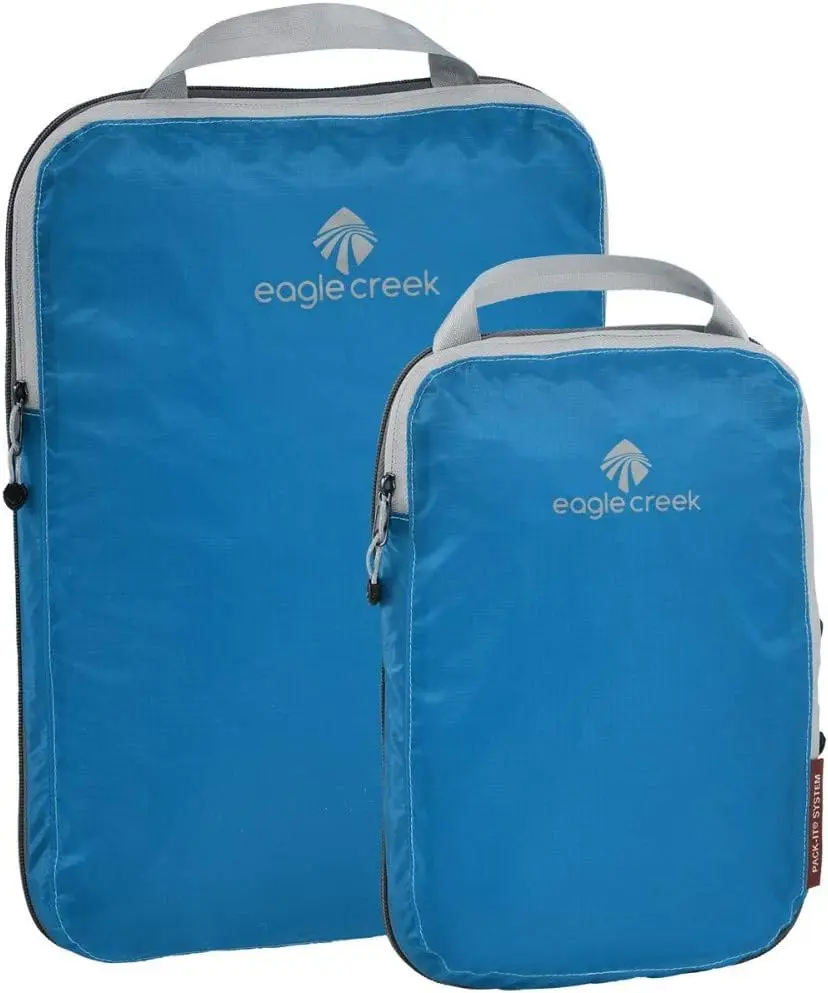
Eagle Creek Pack-It Specter Compression Cube Set
Eagle Creek · $25-45 when I bought it
Cut my carry-on packing time from 40 minutes to 15. The compression version actually works — I fit 7 days of clothes into a 40L bag.
- Worth knowing:
- Compression doesn’t help with bulky winter clothes
- The zipper needs to be handled carefully
Check current price on Amazon (affiliate link)
FAQ
Is a packing cube actually better than a separate laundry bag?
Yes, for carry-on travel I think it’s better. A separate laundry bag holds the mess, but a compression cube also shrinks it, which matters when I’m trying to keep a 40L bag under control. I’d pick the Eagle Creek cube over a plain bag every time for trips longer than 3 days.
Does this work in humid weather?
Yes, and that’s where I noticed the biggest difference. In humid places, a mesh or cloth laundry pouch can trap smell and moisture, while this cube keeps dirty clothes contained and flattened so they don’t spread across the rest of the bag. I still wouldn’t leave wet clothes in it for hours.
Will it help with winter packing?
Only a little. It’s good for base layers, socks, and thinner shirts, but bulky sweaters and puffy jackets don’t compress much no matter what the product says. If your bag is full of cold-weather gear, I’d expect modest space savings, not miracles.
How much clothes can you really fit in it?
I’ve fit about 7 days of clothes into a 40L carry-on using this cube as part of the system. For me that usually means a mix of T-shirts, underwear, socks, a sleep shirt, and one light layer. If you travel with heavy denim or thick knits, your mileage drops fast.
Is the zipper annoying?
A little, yes, but only if you overstuff it. I’ve used mine for 2 years and learned to zip it carefully instead of forcing it shut in one go. If you’re rough with zippers, this is not the cube I’d hand you first.
What’s the actual weight difference between the Eagle Creek set and just using a plastic shopping bag like you used to?
The Eagle Creek set adds maybe 100-120 grams total, which sounds light until you’re fighting for every gram in a carry-on. A plastic shopping bag weighs almost nothing, but here’s what I didn’t account for before: that bag takes up more cubic space because it doesn’t compress, so you’re actually losing more room than the extra weight costs you. On my 40L bag, the compression cube saves me roughly the space of a sweater, which feels worth those extra 100 grams.
Have you found anything cheaper that actually compresses dirty clothes without falling apart?
I tested a $8 compression sack from Amazon for three trips and it held up fine, but the zipper started sticking by trip two and the compression wasn’t as effective—I’d say it reduced volume by maybe 30% instead of the 50% I get with Eagle Creek. For $15-20 you can find decent alternatives from brands like Packing Cubes or Sea to Summit, but I haven’t found anything under $20 that compresses as reliably after repeated use. The Eagle Creek was $38 when I bought it, and spreading that across 2 years and 18 countries makes it roughly $2 per trip.
Does separating dirty clothes actually make packing easier, or is that just what you tell yourself?
It genuinely does, because without separation I’d open my bag at night looking for a clean shirt and accidentally brush against something rank that’s been marinating since day two. Now I know exactly where the dirty stuff lives, and I can grab clean clothes without that 30-second rummaging session that somehow always happens right when I’m tired. On a recent 8-day trip to Barcelona, that saved me maybe 2 minutes per day—not life-changing, but it removed a small daily frustration that adds up when you’re already managing a small bag and limited space.
What happens to the compression cube itself after months of stuffing wet or sweaty clothes into it?
Mine still works fine after 2 years, but I do rinse it out every few weeks and let it air-dry completely before packing again. On one humid Southeast Asia trip, I stuffed it away damp and came back to a musty smell that took a full day of airing to clear. The fabric itself holds up—no tears or zipper failures yet—but I treat the compression zipper carefully because that’s the part most likely to break if you force it when something’s bunched up inside.
How do you prevent odors from building up in a laundry bag when you’re traveling for weeks without access to washing?
I always throw in a small packet of baking soda or a couple of dryer sheets at the bottom of my Eagle Creek pack-it system—it costs about $3 and makes a huge difference over a 3-week trip. The ventilated mesh panels help with airflow too, but honestly, those scent absorbers are what kept my hostel roommates from staging an intervention during my month-long Southeast Asia adventure.
 Emma Hayes
What I’d Rebuy Immediately
The Eagle Creek Pack-It Specter Compression Cube Set is the one I’d buy again without thinking. It’s the only laundry-separation solution I’ve used that actually saves space instead of just containing the mess. I’d rebuy it for humid trips, carry-on-only weeks, and any flight where I know I’ll be living out of one bag for 5 to 10 days. The cheap pouches failed me. This one earned its spot.
If I had to rebuild my packing setup from scratch, this is the first thing I’d put back in my bag.