

This post contains affiliate links. If you purchase through these links, I earn a small commission at no extra cost to you. I only recommend products I actually use and have tested across multiple trips.
I used to treat sleep masks like a throwaway item. I’d grab the cheap flat ones at airport shops, stuff them into my toiletry pouch, and then wonder why I still woke up every 45 minutes on overnight buses and red-eyes. The first time that really annoyed me was a 14-hour overnight bus from Lima to Cusco. I had earplugs in, the seat kept reclined around me, the aisle light kept flicking on, and people were moving around at 3 a.m. The flat mask I had then let in light around the nose, shifted when I turned, and I spent $8 on something I basically stopped trusting after one trip.
That’s when I changed how I pack. I stopped buying masks that looked good in a product photo and started caring about one thing: blackout that stays put. For me, the MZOO Luxury Sleep Eye Mask is the one that actually solved the problem on the road. I’ve used it for 18 months across 11 countries, and it’s the mask I reach for when I know I’m sleeping in a seat, not a bed. It’s not the smallest thing in my pouch, and it can run warm, but it does the job better than the flat versions I kept replacing.
If you’re trying to figure out the best sleep mask for long haul flights, I’d call this the one I’d rebuy first for real travel. Not for aesthetics. For actual sleep.
The Short Answer
If I had to keep only a few things for long-haul sleep, I’d keep the MZOO Luxury Sleep Eye Mask, earplugs, a neck pillow that doesn’t fight my shoulders, and a water bottle I can refill after security. The mask is the piece that made the biggest difference for me on overnight buses and red-eyes because it blocks light without sliding around every time I turn my head.
My quick verdict: worth it if you sleep on planes, buses, or in bright hotel rooms and want real blackout. Only if you can tolerate a little extra warmth around the eyes, because the foam cups are not the coolest thing in humid weather or on a packed cabin. I paid around $18-28 when I bought it, and for that, it’s better value than replacing cheap masks every few months.
What I Actually Pack for Long-Haul Sleep
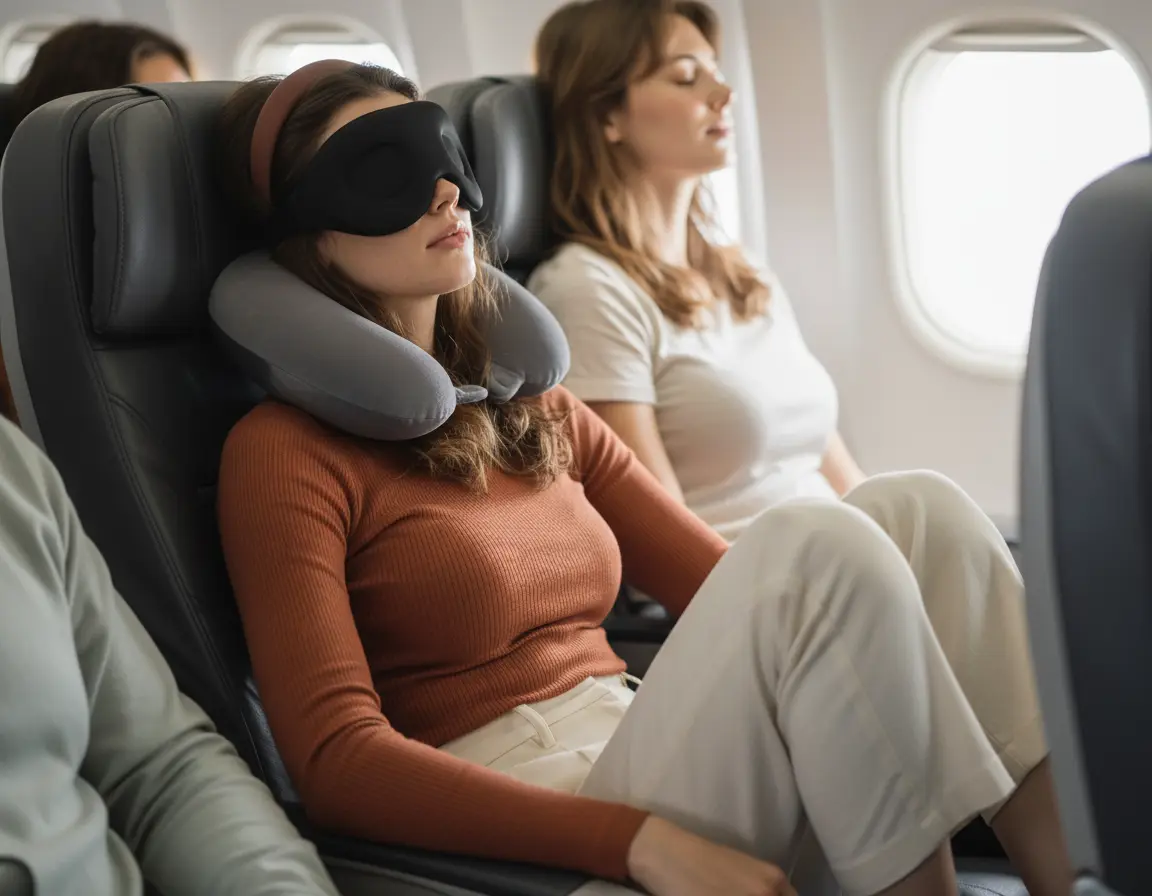
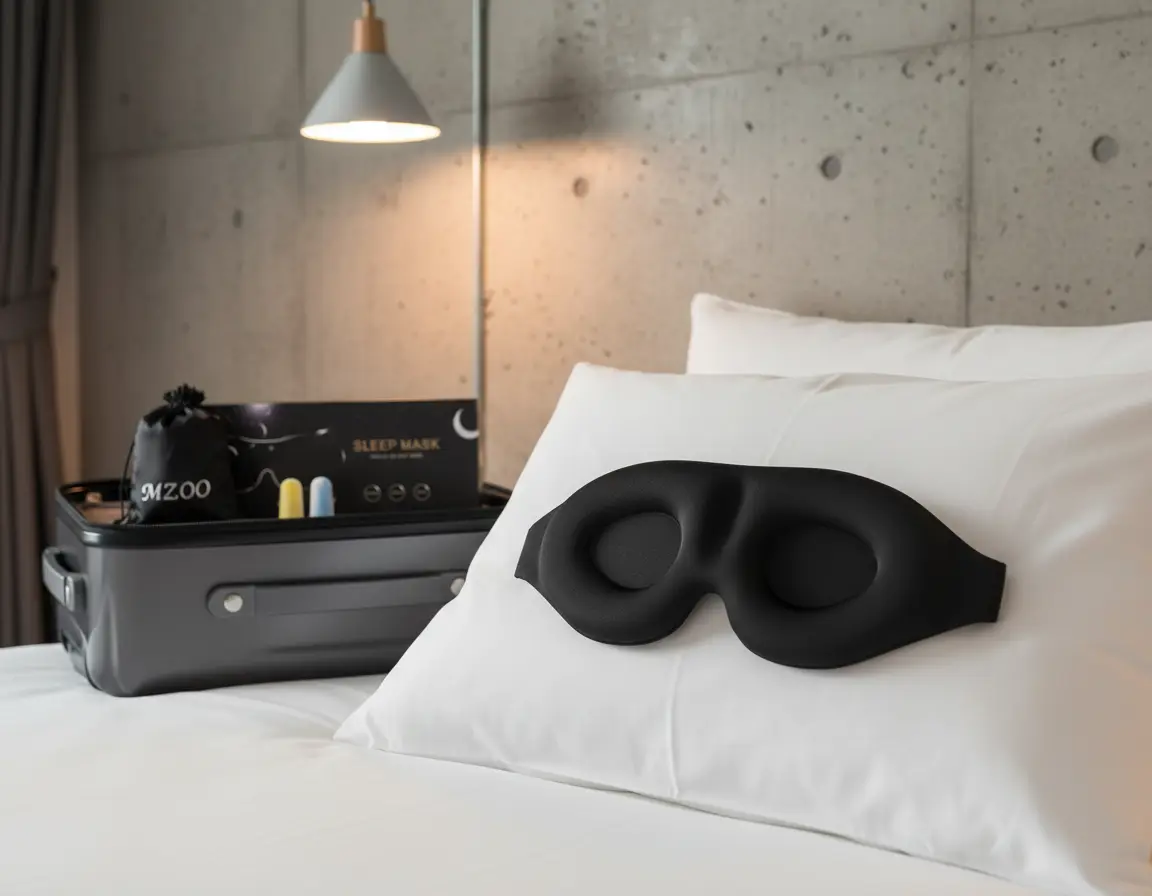
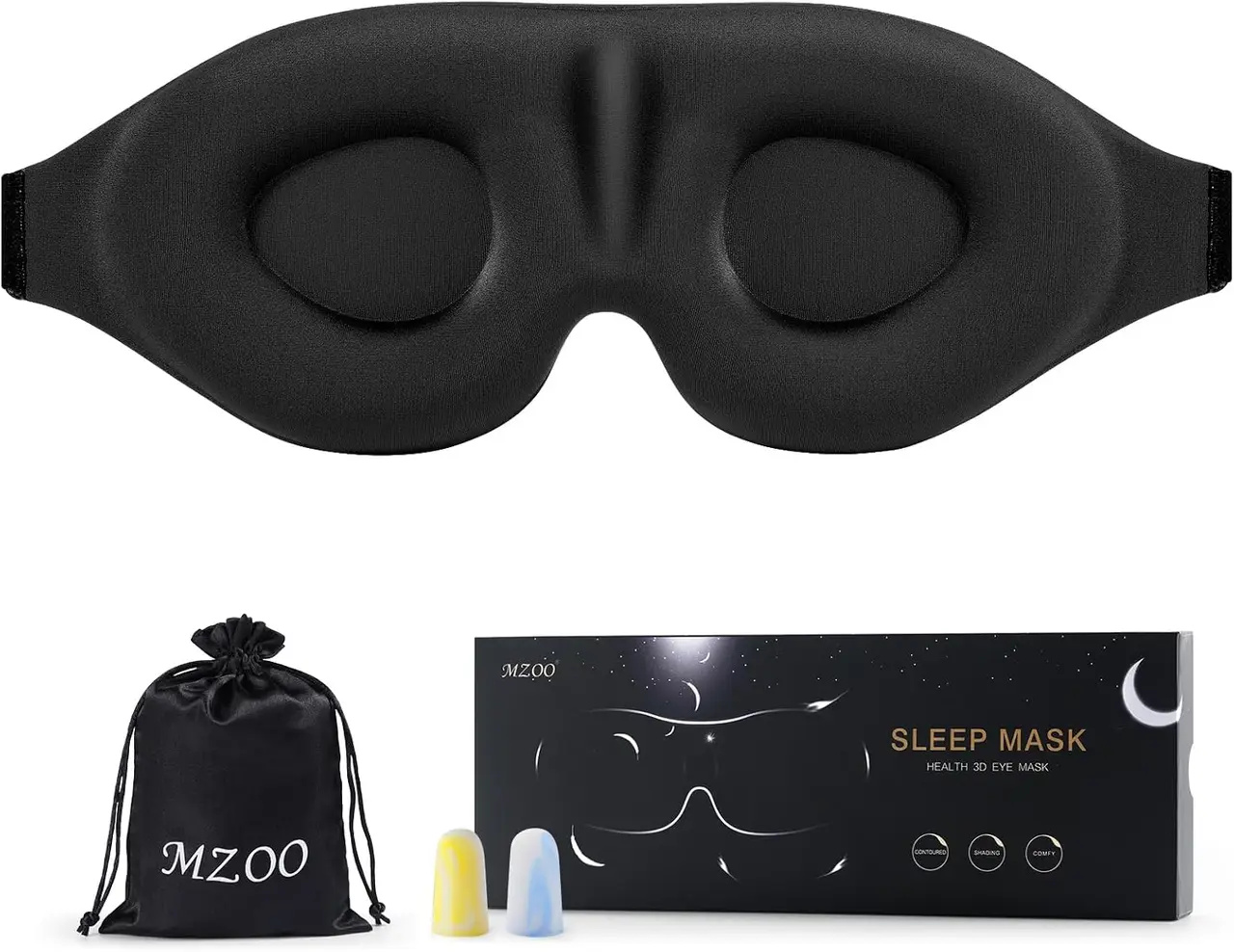
MZOO Luxury Sleep Eye Mask
MZOO · $18-28 when I bought it
I’ve used this on overnight buses and red-eye flights when I need real blackout, not just a soft cover over my eyes. It stays put better than flat masks, but if you sleep hot, the foam can feel a little warm after a few hours.
- Worth knowing:
- The foam eye cups can trap heat on long-haul flights.
- It takes up more space in my toiletry pouch than a flat mask.
Check current price on Amazon (affiliate link)
MZOO Luxury Sleep Eye Mask is the only mask I’ve kept using long enough to stop thinking about it. Before this, I bounced between a flat satin mask from a drugstore and a popular Amazon dupe that looked softer but leaked light at the nose bridge. The drugstore one cost me about $6 and lasted one trip before the elastic started feeling loose. The Amazon dupe was about $12 and was worse in one key way: it shifted every time I rolled onto my side, so I’d wake up with one eye half-exposed to cabin light.
The winning differentiator here is simple and testable: it stays in place when I sleep on my side and block light better than the flat masks. On that 14-hour Lima-to-Cusco bus, I woke up once to use the bathroom and then fell back asleep without readjusting it. That sounds small, but on overnight travel, not having to fuss with your face every hour matters. After that trip, I stopped packing backup masks “just in case.” For me, that’s worth it.
The after part was pretty obvious. I went from waking up annoyed and half-rested to actually getting usable sleep on transit. I’m not saying I slept like I was in my own bed. I’m saying I got enough sleep that I wasn’t wrecked when I arrived. If you’ve had the same issue with light leaking in around the nose, this is exactly why this mask matters.
Field test-wise, the fit is the reason I kept it. It sits over my eyes without pressing directly on them, and it leaves enough room that I’m not blinking into fabric. I can fit it in the same toiletry pouch as a toothbrush, a travel-size face wash, lip balm, and two blister bandages, but it does take more space than a flat mask. On a carry-on-only trip, I noticed that immediately. It’s not bulky, just not tiny.
I also noticed a small quirk after a few weeks: the foam cups make it feel a little warm, especially on long-haul flights when the cabin is already dry but somehow still sweaty around the face. In winter, that’s less annoying. In humid summer weather, it can feel like one more layer I don’t need. After 18 months, the material still held its shape for me, but I’d call it a mask you use because it works, not because it disappears in your bag.
What it won’t do: it is not the best choice if you sleep hot or hate anything that adds warmth around your eyes. It also won’t pack flat the way a satin mask does, so if your toiletry pouch is already crammed, you’ll notice the extra space it takes.
Verdict: worth it for long-haul flights and overnight buses if your main problem is light leakage and constant readjusting. If you need the smallest possible mask or run hot all the time, I’d skip this one and keep looking.
Usage note: 18 months, 11 countries, overnight buses, red-eyes, and a lot of carry-on-only trips. That’s the kind of use that tells me whether something earns a permanent spot or gets replaced next month.
What Didn’t Make the Cut
The $6 flat drugstore sleep mask was my first mistake. I used it on a red-eye from San Francisco and again on a night bus in Peru, and both times it leaked light around the nose and slid up when I turned my head. The cost was not just the $6 — it was the two nights of broken sleep that left me dragging through the next day and spending another $10 on coffee and snacks to stay functional. Skip it if you want actual blackout.
The cheap Amazon satin mask with the pretty color options looked better than it performed. I used it on two flights and one overnight train, and the elastic loosened fast enough that by the second trip it was sitting crooked by hour two. It also crushed flat in my toiletry pouch, which sounds fine until you realize it offered almost no barrier against cabin light. I wasted about $12 and still had to keep adjusting it in the dark. Skip it unless you only need something for short naps.
A padded “luxury” mask I borrowed from a friend was the worst of the bunch for heat. I tried it on a long-haul flight in humid weather, and after about 3 hours it felt damp enough that I wanted it off my face. I didn’t pay for that one, but I did lose sleep, which is the more expensive part. That’s the tradeoff people don’t mention enough. Only if you sleep cold and don’t mind extra bulk.
How It All Fits Together
My carry-on sleep setup is pretty boring, which is the point. The MZOO mask goes in the top pocket of my toiletry pouch with earplugs, a charging cable, lip balm, and a tiny hand cream. I keep the things I need during the flight in one place so I’m not digging around in the dark like an idiot when the cabin lights go off.
The mask works best when I pair it with earplugs and a seat strategy that doesn’t fight it. On overnight buses, I want the aisle side if I can get it, because I’m less likely to get bumped awake. On flights, I put the mask on before the cabin lights dim, not after I’m already irritated by someone’s screen brightness. That sounds obvious, but it saves me from that half-awake frustration where you keep taking gear on and off and never settle.
In cold winter trips, I like the extra coverage around my eyes. In humid summer conditions, I still use it, but I know I’ll get a little warm after a few hours. That’s fine on a 6-hour flight. It’s more noticeable on a 12-hour overnight. So my rule is simple: if I’m doing long-haul and sleep matters, I pack the MZOO. If I’m only trying to catch a 90-minute nap, I don’t bother.
I expected a sleep mask to be a sleep mask—just something to block light for $8 and call it done—but the reality was that cheap flat masks let light seep in around my nose and slipped every time I shifted position during a 14-hour overnight bus from Lima to Cusco. What I actually learned is that spending $20-28 on a mask with proper eye cups that stays put saves you from replacing throwaway versions every few months and actually lets you sleep through a long haul.
I figured the MZOO mask would be bulkier than my old flat ones and run warm in my toiletry pouch, and it did both, but it also delivered 18 months of real blackout across 11 countries without shifting or letting light bleed in around the edges. The honest takeaway: comfort on a plane or overnight bus isn’t about looking sleek—it’s about a mask that doesn’t move when your head does.
FAQ
Is the MZOO mask actually better than a flat sleep mask for flights?
Yes, for me it is. The raised eye cups block light better and stay put when I turn my head, which is the whole problem with flat masks on planes. I’d pick the MZOO again for any flight over 6 hours.
Does it get too hot on long flights?
Sometimes, yes. The foam cups can trap heat after a few hours, especially in humid weather or on a packed cabin with weak airflow. If you usually sleep hot, I’d only buy it if blackout matters more to you than a cooler feel.
Will it fit in a small toiletry pouch?
Yes, but it takes more room than a flat mask. I can still fit mine with earplugs, lip balm, and a few tiny toiletries, but I notice the extra bulk right away on carry-on-only trips. If your pouch is already full, that might bother you.
Is this worth it for short trips, or only long-haul flights?
It’s worth it mostly for long-haul flights, overnight buses, and any situation where you need real blackout for hours. I wouldn’t bother for a quick nap or a 2-hour hop unless light sensitivity is a big issue for you. The value shows up when sleep is harder to get.
What’s the one reason you stopped buying cheaper masks?
They kept failing at the same job: staying put and blocking light at the nose. I got tired of spending $6 to $12 on masks that I’d replace after a trip or two, while the MZOO kept working across 18 months and 11 countries. That’s the difference between a cheap purchase and one I actually keep packing.
 Emma Hayes
What I’d Rebuy Immediately
The MZOO Luxury Sleep Eye Mask is the one thing here I’d replace without shopping around. I’d also keep earplugs and a simple carry-on sleep setup, but the mask is the part that changed how I sleep on transit. It fixed the exact problem I kept having on overnight buses and red-eyes: light leakage, sliding, and waking up angry.
If you sleep hot, I’d think twice. If you want real blackout and don’t mind a little extra bulk, this is the one I’d spend around $18-28 on again. For me, that’s worth it because it replaced a string of cheap masks that never lasted and never worked as well.