
This post contains affiliate links. If you purchase through these links, I earn a small commission at no extra cost to you. I only recommend products I actually use and have tested across multiple trips.
I used to pack like I was trying to win a game I didn’t understand. On a 5-day trip to Mexico City, I dumped everything into my carry-on at 11 p.m., sat on the zipper for 20 seconds, and still had to leave behind a sweater I ended up paying $18 to replace on the road. That was the moment I got serious about packing cubes.
I resisted them for two years because I thought they were just tidy little rectangles for people who enjoy organizing socks. I was wrong. Once I started traveling carry-on only for long-haul flights, humid summers, and cold winter trips, the difference was not subtle. My packing went from a 40-minute mess to about 15 minutes, and I stopped playing suitcase Tetris every time I moved cities.
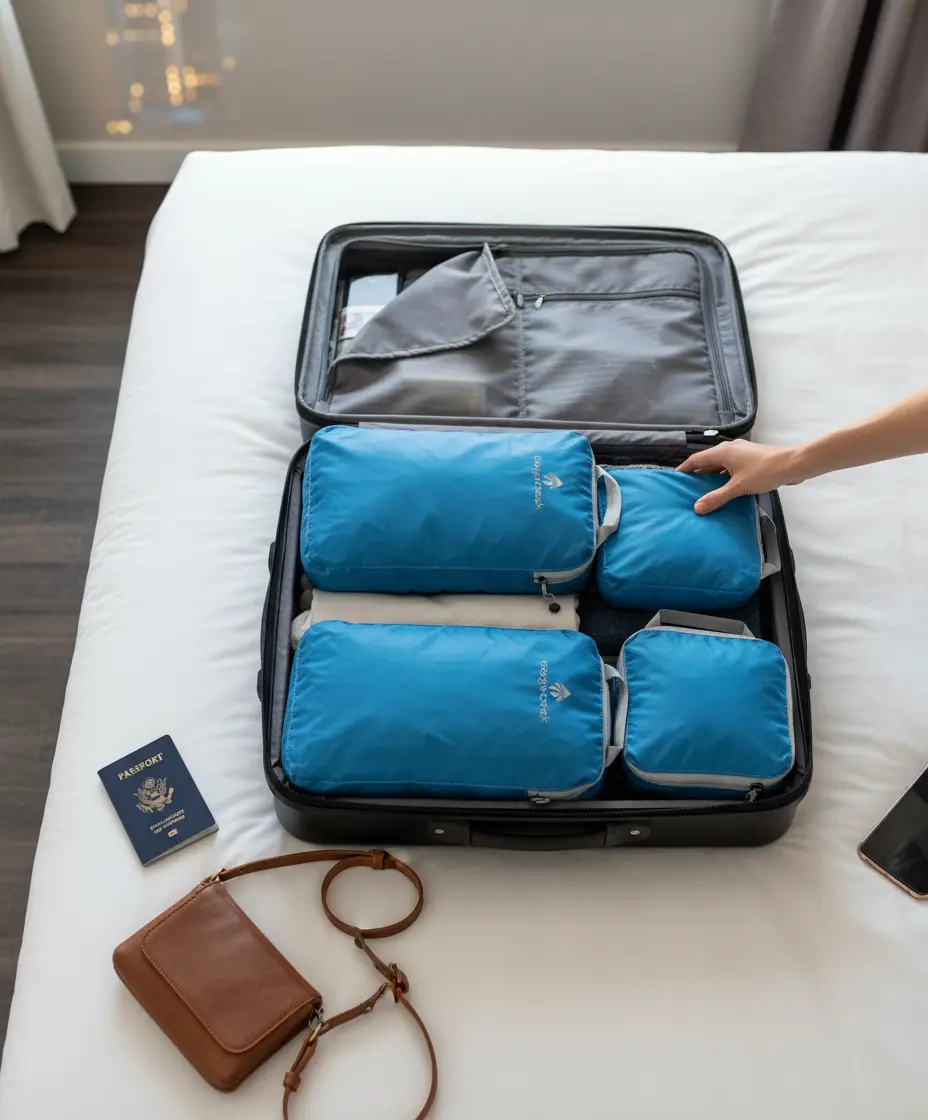
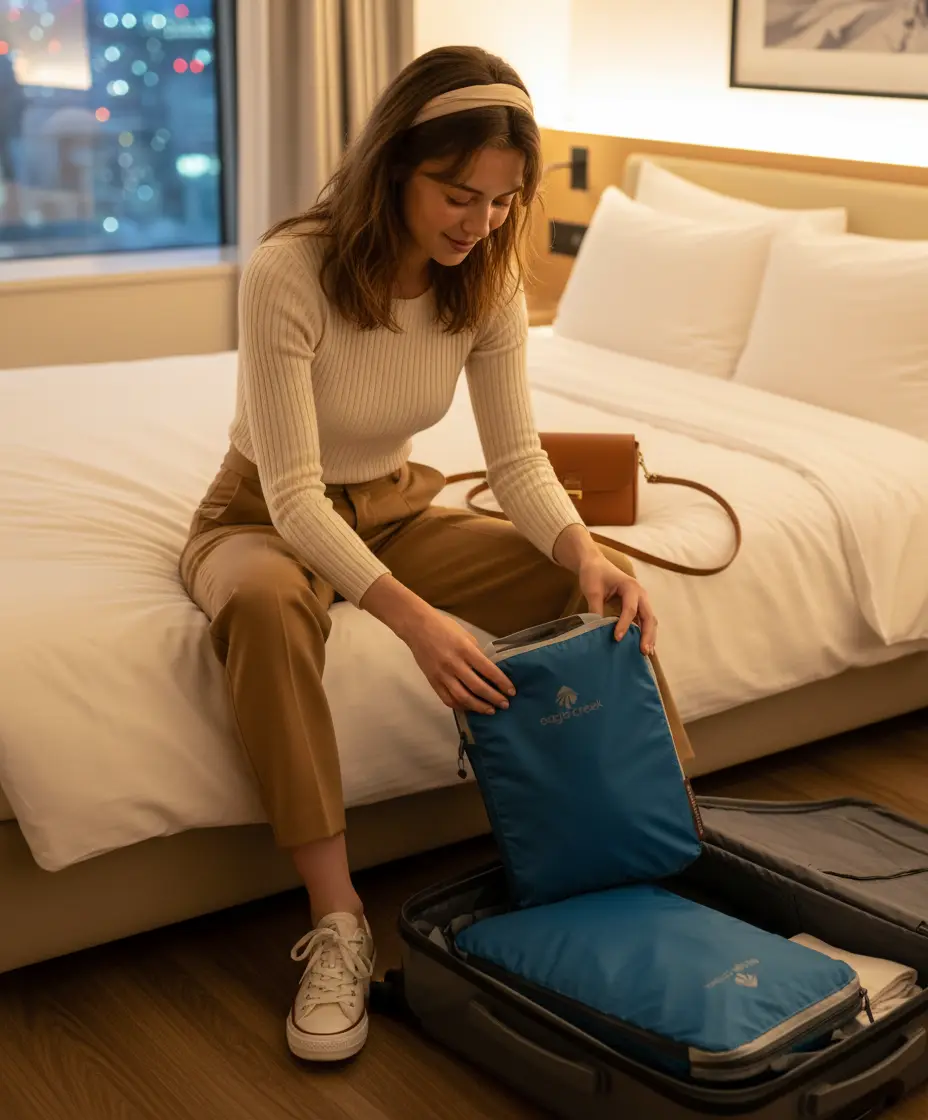
The one I kept reaching for was the Eagle Creek Pack-It Specter Compression Cube Set. I’ve used it for 2 years across 18 countries, and it’s the first cube set that actually earned space in my bag. I fit 7 days of clothes into a 40L carry-on with it, which sounds fake until you watch your pile of clothes shrink under the compression zipper.
The Short Answer
If you want the blunt version: the Eagle Creek Pack-It Specter Compression Cube Set is the one I’d start with for one-bag travel. It cut my packing time from 40 minutes to 15, it lets me see what’s inside through the mesh top, and it actually compresses instead of just pretending to.
I’d still skip compression cubes for bulky winter gear. If your trip is mostly sweaters, jeans, and thick layers, the compression helps less than people expect. For humid summer packing, long-haul flights, and carry-on-only trips where every inch matters, this set is worth it.
For around $25-45 when I bought it, it paid for itself fast because I stopped overpacking and stopped checking a bag. If you’re choosing between cheap Amazon cubes that puff back up and a set that holds shape, this is the one I’d put my money on.
What I Actually Pack in My Carry-On
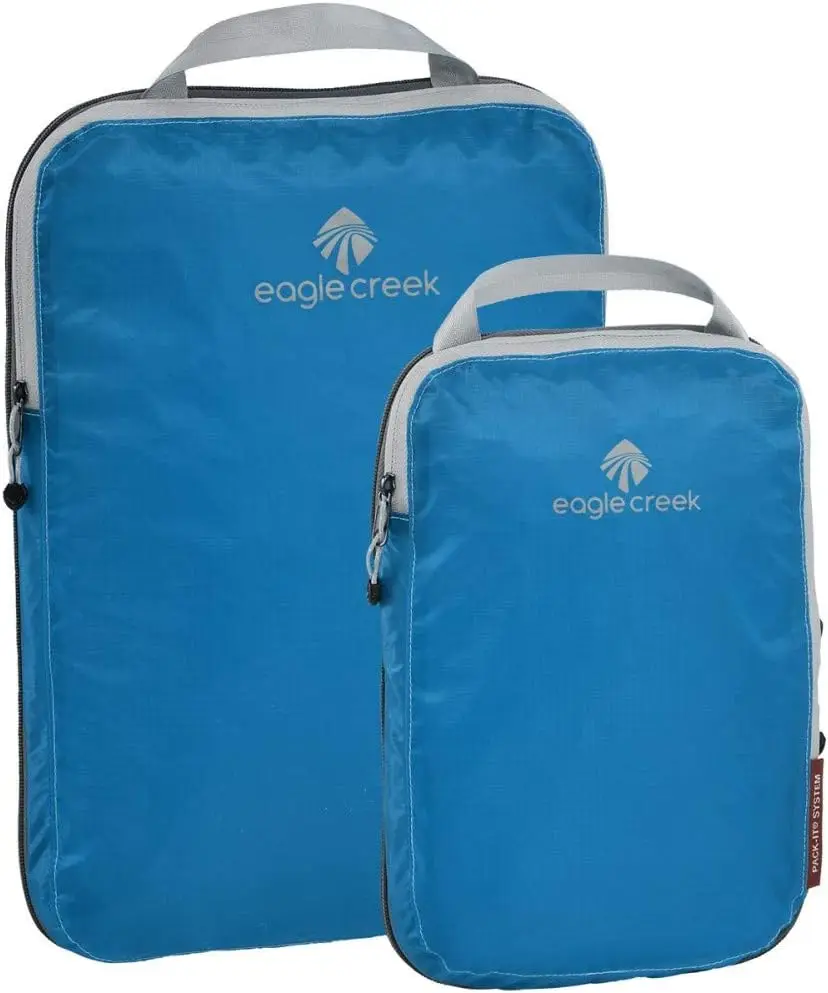
Eagle Creek Pack-It Specter Compression Cube Set
Eagle Creek · $25-45 when I bought it
Cut my carry-on packing time from 40 minutes to 15. The compression version actually works — I fit 7 days of clothes into a 40L bag.
- Worth knowing:
- Compression doesn’t help with bulky winter clothes
- The zipper needs to be handled carefully
Check current price on Amazon (affiliate link)
Eagle Creek Pack-It Specter Compression Cube Set is the only cube set I’ve kept in rotation for 2 years. I’ve used it on 18 countries’ worth of trips, from sticky summer weekends in Southeast Asia-style humidity to cold-weather city breaks where I needed layers without turning my bag into a brick.
Before: I started with a cheap Amazon cube set and a no-name version from a discount store. The Amazon dupe had a zipper that started snagging on trip 3, and by the time I was packing for a 6-day trip to Lisbon, one corner had already split open. The discount-store cubes were worse in a different way: they held clothes, but they didn’t compress much at all, so I still had to sit on my bag to close it. That cost me time, and in one case it cost me $18 for a replacement sweater because I left the first one behind.
Winning differentiator: the Eagle Creek compression zipper actually changes the shape of the load. On a recent carry-on-only pack, I fit 7 days of clothes into a 40L bag and still had room for toiletries, chargers, and a Kindle. The moment I noticed it wasn’t just marketing was in the hotel room before a long-haul flight: I zipped the outer compression panel and watched a stack of tops flatten enough that I didn’t need to play bag-shape games at the end. That’s the difference. If you’ve ever had cubes that look neat but don’t buy you any real space, this fixes that.
After: packing dropped from 40 minutes to 15, mostly because I stopped repacking the same pile three times. I also stopped digging through my whole bag at security. The mesh top lets me see what’s inside without opening every cube, which sounds small until you’re in an airport line and looking for one clean shirt with 90 seconds to spare.
Field test detail: I’ve used the set for jeans, 7 T-shirts, 2 pairs of shorts, underwear, socks, one thin sweater, and a lightweight rain layer in a single carry-on setup. In humid weather, the cubes keep damp-ish laundry from spreading across the whole bag, which I appreciate more than I expected. The zipper is the one thing I baby; I don’t yank it at the corners because that’s where cheap cubes usually fail, and this set rewards a slower hand. After long use, the fabric still looks fine, but the zipper pull has that slightly used feel I trust more than shiny-new plastic.
What it won’t do: it will not magically compress bulky winter clothes into nothing. A thick sweater and heavier layers still eat space, and if your packing list is mostly denim and knitwear, you’ll get less out of it. I’d call it worth it for warm-weather travel and mixed-season trips, only if you want to stay carry-on only.
Verdict: worth it.
What Didn’t Make the Cut
The cheap Amazon dupe cube set was my first try, and it failed on trip 3 when the zipper started catching and one seam looked like it was about to give up in a hostel floor in Porto. I spent about $14 on that set, and it cost me more in annoyance than money. Once a cube starts feeling fragile, I stop trusting it, and that’s not a great feeling when you’re packing the night before a flight.
The discount-store non-compression cubes were fine for storing clothes, but not for one-bag travel. I used them on a 4-day winter trip and still couldn’t close my carry-on without kneeling on it for 20 seconds. They cost me about $12, and the failure was simple: they organized my mess without shrinking it. That’s not enough when you’re trying to travel with one bag only.
A popular TikTok-style compression set looked clever and felt satisfying for about one packing session. On a humid summer trip, the zipper track felt sticky after I packed damp laundry, and by day 5 I was already annoyed by how much effort it took to open and close. I paid around $20 for that set, and I ditched it because it made packing feel fussy instead of faster. If the whole point is saving time, that kind of cube is a skip.
How It All Fits Together
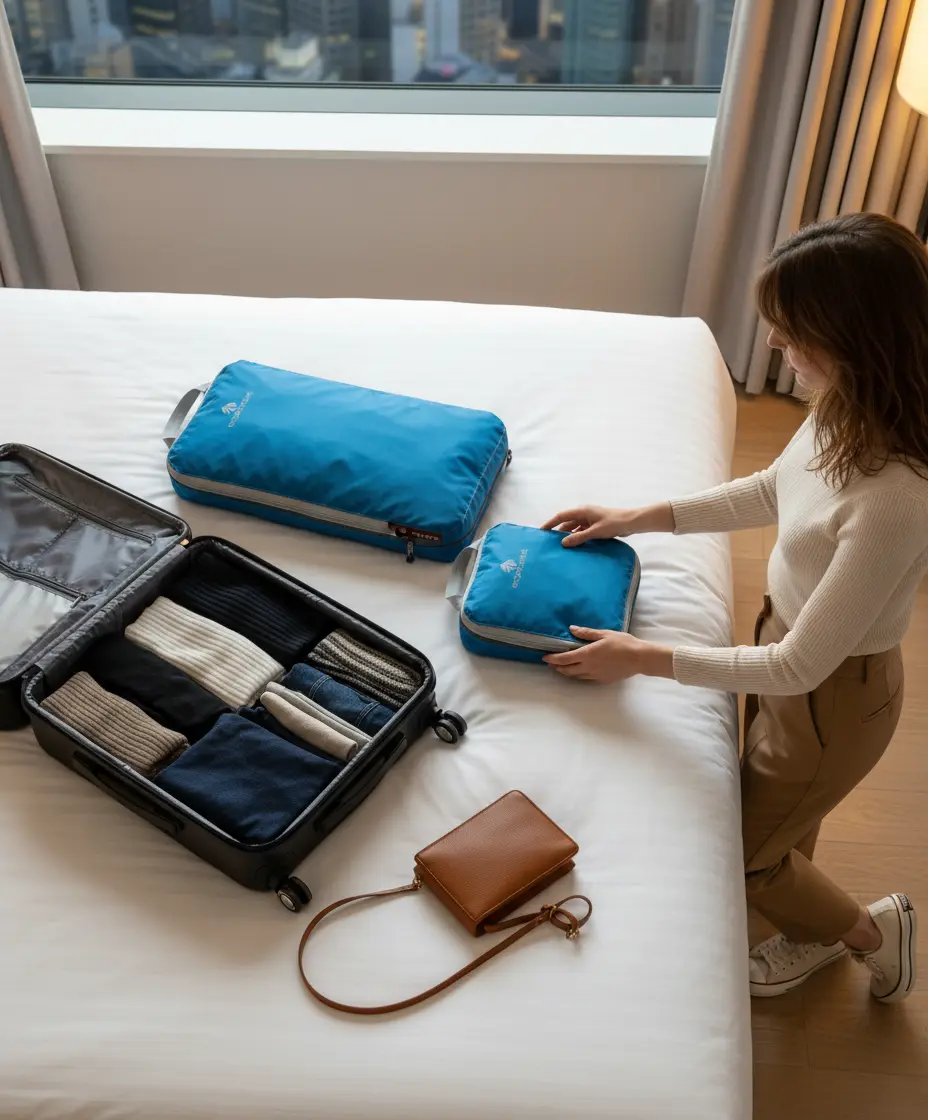
For carry-on only travel, I pack one cube for tops, one for bottoms, and one smaller section for underwear and socks. That setup keeps my 40L bag readable, which matters more than people admit. I can pull one cube out at a hostel or in a tiny hotel room, grab what I need, and put it back without exploding the whole bag onto the bed.
The Eagle Creek set works best when I’m trying to keep my bag under airline limits without sacrificing a second pair of pants or a spare layer. On long-haul flights, I keep one cube with the clothes I’ll want first after landing, so I’m not hunting through everything when I’m tired and half-dead from airport food. In cold weather, I do not rely on compression to save me. I pack fewer bulky pieces instead. That’s the real trick.
If your current system is a pile of folded clothes and a hope, this is the fix. If your current system is already working and you never overpack, you may not care as much. I care because I travel constantly, and a good cube set saves me real time every single trip.
I thought compression cubes were just for obsessive packers who color-coded their socks, so I ignored them for 2 years until a 40-minute packing disaster in Tokyo forced my hand. What actually happened was I grabbed a $32 Eagle Creek set at the airport, stuffed my entire week of clothes into it, and somehow fit everything into my 40L carry-on with room to spare—the compression zipper actually worked instead of just sitting there like decoration. The honest takeaway: stop judging tools before you’ve actually used them, because sometimes the thing you resist is exactly what fixes your problem.
FAQ
Do compression packing cubes actually help for one bag travel?
Yes, they do, and I wouldn’t pack carry-on only without them now. The big win is not just neatness; it’s that they shrink the volume of soft clothes enough that I can fit 7 days into a 40L bag. If you’ve been fighting your zipper every trip, this is the thing that changes the game.
Are these good for humid climates?
Yes, and I like them more in humidity than I expected. They keep a damp T-shirt or worn laundry contained so the rest of my bag doesn’t smell like a locker room after day 3. I still air things out when I can, but the cubes help keep the mess controlled.
Do they work for winter packing?
Only if your winter layers are light and you’re packing smart. I’ve found compression helps less with bulky sweaters and heavier clothes, so I wouldn’t buy these expecting miracles in cold weather. For colder trips, I pack fewer big pieces and use the cubes mainly for organization.
How much time do they actually save when packing?
They cut my packing time from 40 minutes to 15, which is the kind of difference I notice every trip. The reason is simple: I stop re-folding clothes and I know where everything is before I even open the bag. That matters most when I’m leaving early and don’t want to turn my room upside down.
Would you still use these if you checked a bag sometimes?
Yes, but I’d care less. These are worth it most when I’m doing carry-on only and need every inch to count. If you check a bag half the time, they’re still useful, just not as life-changing.
Should I use compression cubes for a winter trip to Tokyo, or will thick winter gear make them pointless?
I’d skip the compression feature if your packing is mostly wool sweaters and puffy jackets—I learned that the hard way on a December trip where compression helped maybe 20% more than regular cubes. But Tokyo in winter isn’t that brutal, so if you’re planning layers of fitted thermal shirts and merino wool instead of full parkas, the cubes will actually work for you.
What’s the real price difference between cheap compression cubes and the Eagle Creek set?
The Eagle Creek set costs $25-45 depending on sales, while the Amazon dupes I tried were $12-15 but failed within 3 trips—one zipper snagged and a corner split by trip 6. Over 2 years and 18 countries, I’ve spent maybe $40 total on one good set versus potentially $60-80 replacing cheap ones every few trips.
Can I fit a week in Tokyo plus souvenirs back in the same carry-on with compression cubes?
Theoretically yes, but realistically I’d plan for half the return space because I’m always tempted by tea sets and small ceramics from Harajuku markets. I usually pack with 3-4 inches of compression cushion on the return so I’m not forcing souvenirs into seams and stressing the zipper.
Are mesh-top compression cubes worth it, or should I get the solid ones?
The mesh top on my Eagle Creek set is the reason I can actually see what’s inside without opening everything—on a 5-day trip through Tokyo and Yokohama where I was changing hotels every night, I didn’t have to unpack and repack cubes to find my charger. Solid cubes are slightly cheaper, but the visibility saves me 5 minutes every time I need something specific.
How do compression cubes handle the humidity and moisture in Tokyo during summer travel?
I learned this the hard way during my July trip to Tokyo—humidity is intense, and I wish I’d invested in cubes with better moisture barriers. The Eagle Creek compression cubes I used (around $60 for a set of three) have a semi-waterproof exterior that actually helped keep my clothes from getting that damp, sticky feeling in my luggage. If you’re traveling during rainy season or summer, I’d specifically look for cubes with rubberized or treated fabrics rather than basic nylon, as they make a real difference in keeping your belongings fresh during the 14-hour flight and humid hotel stays.
 Emma Hayes
What I’d Rebuy Immediately
The Eagle Creek Pack-It Specter Compression Cube Set is the one I’d buy again without thinking. It’s the only cube set I’ve used for 2 years, it survived 18 countries, and it still does the one job I care about: making carry-on packing faster and smaller without turning into junk after a few trips.
If I had to rebuild my travel setup from scratch, I’d rebuy these first, then build the rest of my packing system around them. I’d skip the cheap Amazon cubes, skip the fake-compression ones, and go straight back to the set that actually saved me space. Worth it if you travel carry-on only. Skip it if your bags are already roomy and you never fight the zipper.