

26°C to 33°C, one very sweaty day, and I still spent more time deciding between noodle stalls than temples. That was my Bangkok reality: loud, efficient, annoying in small ways, and weirdly easy once I stopped trying to make it feel calm. For a first trip, I’d choose Bangkok because it gives you more food, better transit, and less wasted time getting around. Choose Chiang Mai only if you want a slower trip with fewer moving parts and you’re okay trading convenience for ease. If you’re deciding between Bangkok or Chiang Mai for first timers, my answer is Bangkok.
Quick Answer: I’d start with Bangkok. The BTS, MRT, river boats, and Grab rides make it easier to move around, and I paid 60 THB for noodle soup, 80 THB for pad kra pao, and 140 THB for a casual mall meal. Chiang Mai is calmer, but Bangkok gave me more value and less friction on a first trip.
Best for Bangkok: first-timers who want fast transit, serious food options, and a city that works even if you land tired.
Best for Chiang Mai: first-timers who want slower days, easier planning, and a softer landing in Thailand.
My pick: Bangkok, because the first trip usually has enough friction already.
Bangkok Is the Better First Base
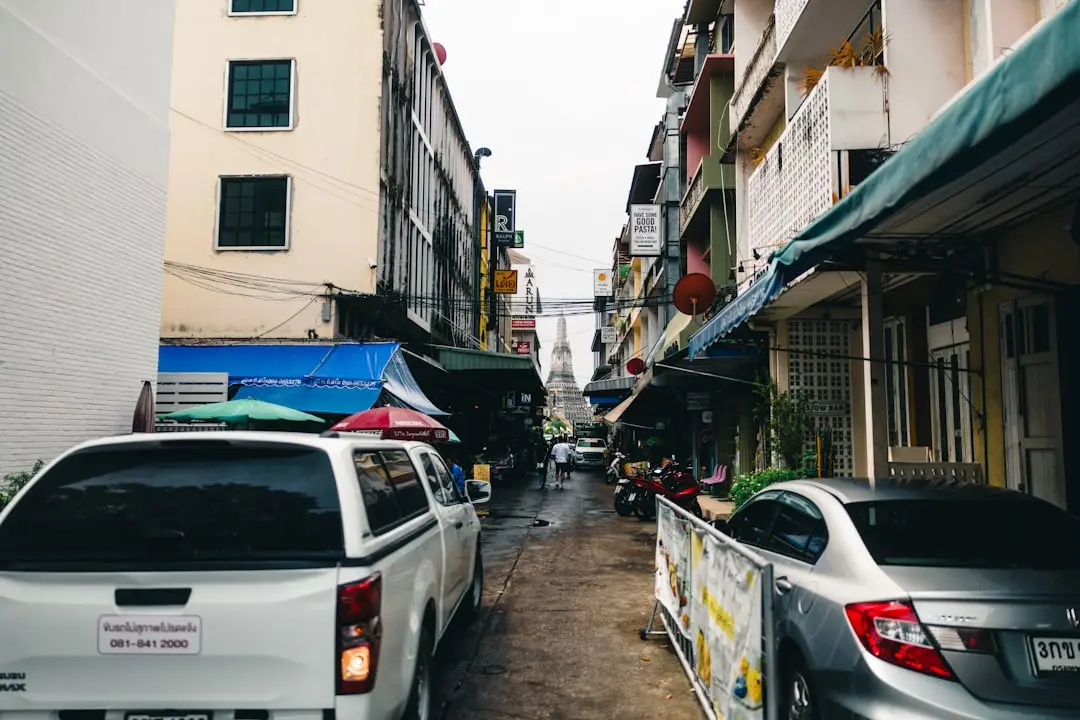
Bangkok works because it solves problems fast. I landed, dropped my bag, and was eating khao man gai in under an hour because I could get from the airport to the city without turning the day into a project. That matters more than people admit. On a first trip, you’re already dealing with heat, jet lag, payment apps, and street-level chaos. Bangkok absorbs that better than Chiang Mai does.
The transit is the real reason I’d start here. A BTS ride usually costs around 17 to 62 THB, and the MRT is similar. I used the trains constantly because traffic on the road is exactly what you think it is: slow, sticky, and not worth pretending otherwise. One afternoon I took a river boat from Sathorn to Tha Tien for around 30 THB, then walked to Wat Pho. That whole transfer felt cleaner and faster than trying to stitch together taxis all day.
Food is another easy win. In Bangkok, I paid 60 THB for a bowl of pork noodle soup, 80 THB for pad kra pao with rice, and 140 THB for a sit-down meal in a casual mall food court when I wanted air-con and a chair with a back. Chiang Mai has good food too, but Bangkok has more of it, closer together, and at more price points. I liked that I could eat well without hunting for the “local” place that five travel bloggers all copied from each other.
Worth it: Bangkok if you care about getting a lot done without paying for it in time or energy.
Skip it: if your dream first trip is mostly slow mornings and one main activity per day.
My pick: Bangkok, because the city does the boring parts better.
I also expected Bangkok to be more exhausting than it was. I figured I’d hate the pace. Instead, the pace only got annoying when I tried to fight it. Once I started using the BTS, eating near where I was already going, and ignoring the idea of “squeezing in” too much, the city clicked. That was the surprise. Not romantic, just useful.
Chiang Mai Is the Easier City, Not the Better First One

Chiang Mai is gentler. I won’t argue with that. The old city is compact, grab rides are cheap, and it’s easier to build a day that doesn’t feel rushed. I spent one morning wandering between temples and coffee shops and paid 40 THB for an iced coffee that lasted me longer than I expected. Fine. Nice even. But I also found myself thinking, okay, now what?
That’s the part people skip when they sell Chiang Mai as the easy answer. Easy is not the same as better for a first timer. If you’re only in Thailand for a week or ten days, Chiang Mai can feel a little too neat. The city doesn’t demand much from you, which sounds appealing until you realize that first trips are often better when the place helps carry the momentum. Bangkok does that. Chiang Mai mostly waits for you to decide what kind of day you want.
I’m not saying Chiang Mai is boring. I’m saying the payoff depends more on your own planning. If you want to sit in cafes, visit a few temples, and maybe do one night market, it works. If you want a city that keeps offering new things without much effort, Bangkok wins. I paid 150 THB for a simple lunch near the old city and then spent another hour deciding whether to keep wandering or go back to my hotel. That’s the Chiang Mai rhythm. Calm, but sometimes a little too calm.
Best for: slow travelers who want an easy layout and low-stress days.
Skip if: you get restless when a city stops surprising you by day two.
My pick: Chiang Mai only if your whole trip is built around slowing down.
I figured Chiang Mai would feel more “authentic,” which is a word I don’t trust much anyway. What I actually got was convenience and comfort, not some magical local reset. That’s not bad. It’s just not the same thing as a stronger first impression.
Cost and Time: Bangkok Gives Better Value

Here’s the part that changed my mind the fastest: Bangkok usually costs a little more to sleep in, but it gives more back in time saved. In a decent midrange area like Sukhumvit or near the river, I’d budget roughly $45 to $90 a night for a clean room that doesn’t waste your life. In Chiang Mai, I could often find something comfortable for about $25 to $60 a night. Cheaper, yes. But then I’d spend more time deciding where to go because the city wasn’t doing as much heavy lifting.
That tradeoff matters. Bangkok’s airport transfer can be easy if you stay near the rail line. From Suvarnabhumi, the Airport Rail Link into the city is around 15 to 45 THB depending on where you get off, and it saves you from sitting in traffic right after a flight. Chiang Mai’s airport is closer to town, which is nice, but that convenience mostly shows up on arrival day. After that, Bangkok’s transit keeps paying you back.
For daily spending, my Bangkok days usually landed around $35 to $60 if I wasn’t splurging: cheap meals, transit, one coffee, maybe a ticket or two. Chiang Mai could come in a little lower, around $25 to $45, especially if I stayed in the old city and didn’t move much. But cheap isn’t the whole story. In Bangkok, I could get from my hotel to a market, then to a temple, then to dinner without feeling like I’d burned the day on transport. In Chiang Mai, the day itself was cheaper, but I had fewer useful chunks of time.
I made one mistake in Bangkok that I don’t repeat anymore. I booked a place that looked fine online because the nightly rate was about $12 less than the better option near the BTS. The trigger was simple: I wanted to save money. The consequence was a 20-minute walk in hot humidity, then another 15 minutes waiting for a ride when I was already sweaty and annoyed. I saved maybe $24 over two nights and lost enough energy that the “cheap” room didn’t feel cheap anymore. Next time I’d pay the extra $10 to $15 a night and stay near the train.
Rough daily estimates from my own trip. Prices shift by season.
Worth it: Bangkok if you’d rather pay a bit more for less daily friction.
Only if: Chiang Mai if your main goal is stretching the budget, not maximizing what you can do in a day.
If bangkok matters to your trip, my Bangkok For Couples has the specifics.
Vibe and Rhythm: Bangkok Feels Like a City, Chiang Mai Feels Like a Pause Button
This is the one thing that doesn’t show up in hotel filters. Bangkok feels alive in a way that can be annoying at first and useful later. I’m not talking about some cinematic energy. I mean traffic, people, food carts, malls, river boats, and a million little decisions all happening at once. It’s messy, but it keeps you moving.
Chiang Mai gives you more breathing room. I liked walking around the old city walls, stopping for coffee, and not feeling like I had to defend my schedule. One afternoon I sat in a café for nearly an hour with an iced tea and watched rain clouds build up over the street. That slower rhythm is the point. It’s also why Chiang Mai can feel thin if you’re looking for a first trip that keeps you engaged from morning to night.
Bangkok wins on variety. One day I ate boat noodles near Victory Monument, crossed to a mall for air conditioning, then ended the evening at a night market where I paid 100 THB for grilled pork and sticky rice. That mix is hard to copy elsewhere. Chiang Mai has night markets too, and I did like them, but after a couple of evenings they started to feel like a repeat with different stalls.
I expected Bangkok nightlife to be the thing I liked least. I’m not a big club person, and I thought the city would push that on me. It didn’t. I could keep nights simple and still have enough going on. That’s actually why I’d send first-timers there. You can make Bangkok loud or quiet depending on the neighborhood and the day. Chiang Mai is quieter by default, which is nice, but less flexible.
Best for: travelers who want a city that stays interesting after dinner.
Skip if: crowded streets and constant motion drain you fast.
My pick: Bangkok, because I’d rather have options than silence.
Where I’d Stay, and Why Location Matters More in Bangkok

If I were sending a first-timer to Bangkok, I’d put them near the BTS or MRT and not argue about it. Sukhumvit, Silom, and parts of Sathorn are the easy answer because they cut down on taxi dependence. I checked a few places in central Bangkok and the difference between a slightly cheaper hotel and one near the station was often just $10 to $20 a night. That gap is small compared with the cost of extra rides and wasted time.
See current Bangkok hotel prices on Agoda →
In Chiang Mai, staying inside the old city or just outside it makes sense because the distances are shorter and the city is more forgiving. I stayed in a place that was walkable to cafes and temples, and that worked fine. I wouldn’t overpay there unless you want a nicer room or a quieter lane. In Bangkok, though, I’d pay extra for location without thinking too hard. The city rewards it.
Worth it: paying more for a Bangkok base near transit.
Skip if: you’re planning to taxi everywhere anyway, because then the location advantage disappears fast.
What I’d Do Differently
I’d spend less time trying to make Chiang Mai “earn” a longer stay. I liked it, but I also overestimated how much I’d want to slow down after Bangkok. Not every first trip needs a reset city.
I’d also book my Bangkok hotel closer to the train the first time instead of trying to save a few dollars on the nightly rate. That mistake cost me more in energy than money, and that’s usually the bigger bill in this city.
And I’d stop pretending I could do both cities equally well on a short trip. If you only have a week, Bangkok first gives you a stronger base. Chiang Mai is the add-on, not the anchor.
I usually book Bangkok tours on Klook — the best time slots go fast, especially in peak season.
FAQ
Is Bangkok too overwhelming for a first trip to Thailand?
No, not if you stay near the BTS or MRT and keep your first two days simple. Bangkok feels busy, but the transit and food make it easier than people expect. I found it more manageable once I stopped trying to “see everything” on day one.
Can Chiang Mai work as a first stop instead?
Yes, Chiang Mai works well if you want an easy arrival and slower days. I’d pick it for travelers who care more about calm than variety, especially if they’re planning cafes, temples, and early nights. It’s just not the city I’d use to set the tone for a first Thailand trip.
Which city is cheaper to stay in?
Chiang Mai is usually cheaper for accommodation, and I saw that gap most clearly in midrange rooms. Bangkok can cost $10 to $30 more per night for a better location, but I think that money often comes back in saved transport and time. If you’re watching every dollar, Chiang Mai helps more on paper.
Do I need more than three days in Bangkok?
Yes, I’d give Bangkok at least three full days if you can. The city is too spread out to rush, and one bad transfer can eat an hour fast. With three days, the trains, boat rides, and food stops start to feel worth the effort.
If I only have one week, should I split time between both cities?
No, I’d keep it to one city unless you really want the contrast. A split trip sounds efficient, but the airport transfer, packing, and reset time add up fast. For a week, I’d do Bangkok alone and save Chiang Mai for a longer return trip.
 Emma Hayes